Pyrus pashia
Buchanan-Hamilton ex D. Don
Wild Himalayan Pear, Pashia Pear
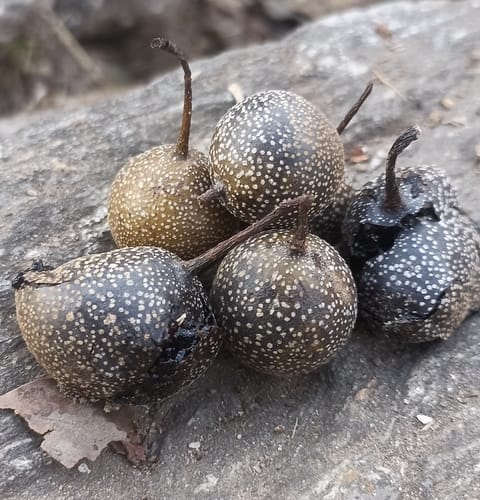
(c) Rajendra Koranga, some rights reserved (CC BY-NC)
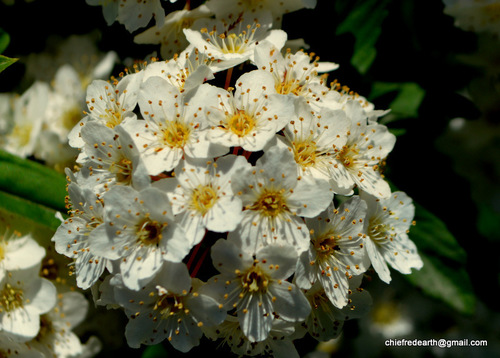
(c) Chief RedEarth, some rights reserved (CC BY-NC-ND), uploaded by Chief RedEarth
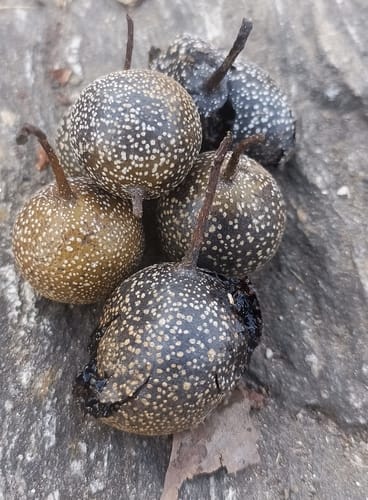
(c) Rajendra Koranga, some rights reserved (CC BY-NC)
What to Eat
Edible parts: Fruit, Flowers, Leaves - tea, Leaves
The fruit, up to 2.5cm in diameter, can be eaten raw or cooked and is usually bletted before eating. Even when bletted it is not always sweet, but fully ripe fruit has a reasonable flavour and becomes sweet and very pleasant after bletting; it is also tasty when dried. A mature tree yields around 45kg of fruit per year. The fruit contains approximately 6.8% sugars, 3.7% protein, 1% ash, and 0.4% pectin. Vitamin C content is very low at about 1.2mg per 100g.
Known Hazards
Where to Find It
It is a temperate plant. In Vietnam it grows between 1,000 and 2,000 m altitude. In Nepal it grows between 700-2600 m altitude. It grows in open, rocky places. In Yunnan in China it grows between 1000-1500 m altitude. It grows in secondary forest. It suits hardiness zones 5-9. Arboretum Tasmania. In Sichuan.
Afghanistan, Asia, Australia, Bhutan, China, Himalayas, India, Indochina, Iran, Laos, Myanmar, Nepal, Northeastern India, NW India, Pakistan, SE Asia, Sikkim, Tasmania, Thailand, Tibet, Vietnam,
How to Identify
A tree. It grows 8-12 m high. It loses its leaves during the year. The leaves have stalks. The leaves are smooth. They are 3-7 cm long by 1.5-3 cm wide. They are oval to sword shaped. They taper to the tip. They have shallow rounded teeth along the edge. They are shiny and are often woolly underneath on young plants. The flowers are white. They have stalks. The fruit is round and covered with white dots.
Nutrition Score: 10/100
| Part | Moisture | kJ | kcal | Protein | Vit A | Vit C | Iron | Zinc |
|---|---|---|---|---|---|---|---|---|
| Fruit | 26.3 | — | — | 1.8 | — | — | — | — |
How to Grow
Prefers a good well-drained loam in full sun. Grows well in heavy clay soils. Tolerates light shade but does not fruit so well in such a position. Tolerates atmospheric pollution, excessive moisture and a range of soil types if they are moderately fertile. Established plants are drought tolerant. Plants are hardy to at least -15°c.
Propagation: Seed is best sown in a cold frame as soon as it is ripe in autumn, when it will typically germinate in mid to late winter. Stored seed requires 8–10 weeks of cold stratification at 1°C and should be sown as early in the year as possible. Temperatures above 15–20°C can induce a secondary dormancy. Prick out seedlings into individual pots once large enough to handle, and grow on in light shade in a cold frame or greenhouse through their first year. Plant out in late spring or early summer the following year.
Medicinal Uses
The juice of the ripe fruit is used in the treatment of diarrhoea, making use of its astringent properties.
Other Uses
This species can be used as a rootstock for cultivated pear. The wood is compact, fine-grained, hard, and durable, though liable to split and warp during seasoning. It is used for small implements, walking sticks, and fuel.
Wikipedia
Source ↗Pyrus pashia, the wild Himalayan pear, is a small to medium size deciduous tree of the small and oval shaped crown with ovate, finely toothed leaves, attractive white flowers with red anthers and small pear-like fruits. It is a fruit bearing tree that is native to southern Asia. Locally, it is known by many names such as batangi (Urdu), tangi (Kashmiri), mahal mol (Hindi) and passi (Nepal).
Other Information
It is sold in local markets.
Names & Synonyms
Arem naspati, Batangay, Batangi, Bulthing, Chalthei, Chitishi, Chotia, Ghandali, Guo kei gai, Ja-toh, Kaenth, Kainth, Kean schein, Kitsu, Magwgai, Mahal, Mak chong, Mak chong pa, Mapak chi, Mayal, Mehal, Mehel mol, Mel, Melal, Melu, Moc-cot, Mol, Mole, Nashpati, Naspati, Nepalese wild pear, Passi, Sakhaw, Sano mayal, San tan ngai, Shagal, Shegal, Sheghel, Shiara, Si li, Soh-jhur, Soh-shur, Suilan, Tang liu guo, Tanchi, Tang, Tangai, Tangeer, Taoshi, Tayana, Thittaw-thi-pin, Thulo mayal, Vul, Zha shuo si li
References (81)
- Agarwal, R. & Chandra, V., 2019, Diversity of wild edible plants in the Mandal-Chopta forest, Uttarakhand. Journal of Medicinal Plants Studies 2019; 7(1): 89-92
- Altschul, S.V.R., 1973, Drugs and Foods from Little-known Plants. Notes in Harvard University Herbaria. Harvard Univ. Press. Massachusetts. no. 1401
- Ambasta S.P. (Ed.), 2000, The Useful Plants of India. CSIR India. p 507
- Aryal, K. P. et al, 2009, Uncultivated Plants and Livehood Support - A case study from the Chepang people of Nepal. Ethnobotany Research and Applications. 7:409-422
- Aryal, K. P., et al, 2018, Diversity and use of wild and non-cultivated edible plants in the Western Himalaya. Journal of Ethnobiology and Ethnomedicine (2018) 14:10
- Awan, M. R., et al, 2011, Studies on traditional knowledge of economically important plants of Kaghan Valley, Mansehra District, Pakistan. Journal of Medicinal Plants Research Vol. 5(16), pp. 3958-3967
- Bajracharya, D., 1980, Nutritive Values of Nepalese Edible Wild Fruits. Z. Lebensm. Unters. Forsch. 171: 363-366
- Bhatia, H., et al, 2018, Traditionally used wild edible plants of district Udhampur, J&K, India. Journal of Ethnobiology and Ethnomedicine (2018) 14:73
- Bodkin, F., 1991, Encyclopedia Botanica. Cornstalk publishing, p 859
- Cao, Y., et al, 2020, Ethnobotanical study on wild edible plants used by three trans-boundary ethnic groups in Jiangcheng County, Pu’er, Southwest China. Journal of Ethnobiology and Ethnomedicine (2020) 16:66
- Chase, P. & Singh, O. P., 2016, Bioresources of Nagaland: A Case of Wild 4 Edible Fruits in Khonoma Village Forest. in J. Purkayastha (ed.), Bioprospecting of Indigenous Bioresources of North-East India. p 51
- Cheng, Z., et al, 2022, Ethnobotanical study on wild edible plants used by Dulong people in northwestern Yunnan, China. Journal of Ethnobiology and Ethnomedicine (2022) 18:3
- Chettri, N. & Sharma, E., Non-timber Forest Produce: Utilization, Distribution and Status in the Khangchendzonga Biosphere Reserve, Sikkim, India.
- Cundall, P., (ed.), 2004, Gardening Australia: flora: the gardener's bible. ABC Books. p 1119
- Dangol, D. R. et al, 2017, Wild Edible Plants in Nepal. Proceedings of 2nd National Workshop on CUAOGR, 2017.
- Dobriyal, M. J. R. & Dobriyal, R., 2014, Non Wood Forest Produce an Option for Ethnic Food and Nutritional Security in India. Int. J. of Usuf. Mngt. 15(1):17-37
- Ethnobotanical Study of Tehsil Kabal, Swat District, KPK, Pakistan, Table 1
- Facciola, S., 1998, Cornucopia 2: a Source Book of Edible Plants. Kampong Publications, p 206
- Flora of China @ efloras.org Volume 9
- Gangwar, A. K. & Ramakrishnan, P. S., 1990, Ethnobotanical Notes on Some Tribes of Arunachal Pradesh, Northeastern India. Economic Botany, Vol. 44, No. 1 pp. 94-105
- Gautam, R. S., et al, 2020, Wild Edible Fruits of Nepal. Int. J. Appl. Sci. Biotechnol. Vol 8(3): 289-304
- Geng, Y., et al, 2016, Traditional knowledge and its transmission of wild edibles used by the Naxi in Baidi Village, northwest Yunnan province. Journal of Ethnobiology and Ethnomedicine. 12:10
- Ghorbani, A., et al, 2012, A comparison of the wild food plant use knowledge of ethnic minorities in Naban River Watershed Nature Reserve, Yunnan, SW China. Journal of Ethnobiology and Ethnomedicine; 8:17
- Glowinski, L., 1999, The Complete Book of Fruit Growing in Australia. Lothian. p 29, 37
- Haj, F., et al, 2012, Species Diversity and Ethno Botanical Classes of the Flora of Allai Valley District Battagram Pakistan. International Journal of Plant Research 2012, 2(4): 111-123
- Hamayun, M., Ethnobotanical Studies of some Useful Shrubs and Trees of District Buner, NWFP, Pakistan
- Hedrick, U.P., 1919, (Ed.), Sturtevant's edible plants of the world. p 541
- Hu, Shiu-ying, 2005, Food Plants of China. The Chinese University Press. p 450
- Jabeen, A., et al, 2009, Indigenous uses of economically important flora of Margallah Hills National Park, Islamabad, Pakistan. African Journal of Biotechnology Vol. 8 (5), pp. 763-784
- Jin, Chen et al, 1999, Ethnobotanical studies on Wild Edible Fruits in Southern Yunnan: Folk Names: Nutritional Value and Uses. Economic Botany 53(1) pp 2-14
- Joshi, A. R.. and Joshi, J., 2009, Plant Diversity and Ethnobotanical Notes on tree species of Syabru Village, Langtang National Park, Nepal. Ethnobotanical Leaflets 13:651-64
- Ju, Y., et al, 2013, Eating from the wild: diversity of wild edible plants used by Tibetans in Shangri-la region, Yunnan, China, Journal of Ethnobiology and Ethno medicine 9:28
- Kala, C. P., 2007, Prioritization of cultivated and wild edibles by local people in the Uttaranchal hills of Indian Himalaya. Indian Journal of Traditional Knowledge. 6(1) pp 239-244
- Kar, A., et al, 2013, Wild Edible Plant Resources used by the Mizos of Mizoram, India. Kathmandu University Journal of Science, Engineering and Technology. Vol. 9, No. 1, July, 2013, 106-126
- Karki, S., et al, 2017, Minor Fruits in Nepal: Utilization and Conservation Efforts. Proceedings of 2nd National Workshop on CUAPGR, 2017.
- Khan, A. H., et al, 2023, Traditional foraging for ecological transition? Wild food ethnobotany among three ethnic groups in the highlands of the eastern Hindukush, North Pakistan. Journal of Ethnobiology and Ethnomedicine 19:9
- Khan, D. & Shaukat, S.S., 2006, The Fruits of Pakistan: Diversity, Distribution, Trends of Production and Use. Int. J. Biol. Biotech., 3(3):463-499
- Khan, M. & Hussain, S., 2014, Diversity of wild edible plants and flowering phenology of district Poonch (J & K) in the northwest Himalaya. Indian Journal of Sci, Res. 9(1): 032-038
- Khan, M. T., et al, 2016, Ethnobotanical Study of Wild Flora in the Remote Areas of Northern Pakistan. Wulfenia Journal Vol. 23, No 10 p 159
- Khan, W., et al, Ethnomedicinal plants of Kakul Hills, District Abbottabad, KPK, Pakistan.
- Kumar, A., et al, 2012, Ethnobotanical Edible Plant Biodiversity of Lepcha Tribes. Indian Forester, 138 (9):798-803
- Kumar, P. D., et al, 2015, Ethnobotanical Knowledge and Usage of Wild Plants in Theog Forest Division, Himachal Pradesh, North Western Himalaya. The Journal of Ethnobiology and Traditional Medicine. Photon 124(2015) 922-935
- Liu, Yi-tao, & Long, Chun-Lin, 2002, Studies on Edible Flowers Consumed by Ethnic Groups in Yunnan. Acta Botanica Yunnanica. 24(1):41-56
- Manandhar, N.P., 2002, Plants and People of Nepal. Timber Press. Portland, Oregon. p 387
- Masoodi, H. U. R. & Sundriyal, R. C., 2020, Richness of non-timber forest products in Himalayan communities—diversity, distribution, use pattern and conservation status. Journal of Ethnobiology and Ethnomedicine 16:56
- Medhi, P. & Borthakur, S. K., 2012, Phytoresources from North Cachur Hills of Assam -3: Edible plants sold at Hflong market. Indian Journal of Natural Products and Resources. 3(1) pp 84-109
- Mehta, P. S. et al, 2010, Native plant genetic resources and traditional foods of Uttarakhand Himalaya for sustainable food security and livelihood. Indian Journal or Natural products and Resources. Vol 1(1), March 2010 pp 89-96
- Meitei, L. R., et al, 2022, An ethnobotanical study on the wild edible plants used by forest dwellers in Yangoupokpi Lokchao Wildlife Sanctuary, Manipur, India. Ethnobotany Research and Application 23:15
- Mozhui, R., et al, 2011, Wild edible fruits used by the tribals of Dimapur district of Nagaland, India. Pleione 5(1): 56 - 64.
- Murtem, G. & Chaudhrey, P., 2016, An ethnobotanical note on wild edible plants of Upper Eastern Himalaya, India. Brazilian Journal of Biological Sciences, 2016, v. 3, no. 5, p. 63-81
- Negi, P. S. & Subramani, S. P., 2015, Wild Edible Plant Genetic Resources for Sustainable Food Security and Livelihood of Kinnaur District, Himachal Pradesh, India, International Journal of Conservation Science. 6 (4): 657-668
- Parmar, C., & Kaushel, M. K., 1982, In Wild Fruits. Kalyani Publishers, New Delhi, India. p 78-80
- Pfoze, N. L., et al, 2012, Survey and assessment of floral diversity on wild edible plants from Senapati district of Manipur, Northeast India. Journal of Biodiversity and Environmental Sciences. 1(6):50-52
- Pham-Hoang Ho, 1999, An Illustrated Flora of Vietnam. Nha Xuat Ban Tre. p 781
- Plants for a Future database, The Field, Penpol, Lostwithiel, Cornwall, PL22 0NG, UK. http://www.scs.leeds.ac.uk/pfaf/
- Polunin, O., & Stainton, A., 2006, Flowers of the Himalaya, Oxford India Paperbacks. p 121
- Prodr. fl. nepal. 236. 1825
- Radha, B., et al, 2013, Wild Edible Plant Resources of the Lohba Range of Kedarnath Forest Division (KFD), Garhwal Himalaya, India. Int. Res J. Biological Sci. Vol. 2 (11), 65-73
- Rashid, A., Anand, V.K. & Serwar, J., 2008, Less Known Wild Plants Used by the Gujjar Tribe of District Rajouri, Jammu and Kashmir State. International Journal of Botany 4(2):219-244
- Ryan, S., 2008, Dicksonia. Rare Plants Manual. Hyland House. p 50
- Rymbai, H., et al, 2016, Analysis study on potential underutilized edible fruit genetic resources of the foothills track of Eastern Himalayas, India. Genetic. Resourc. Crop Evol. (2016) 63:125-139
- Sam, H. V. et al, 2004, Trees of Laos and Vietnam: A Field Guide to 100 Economically or Ecologically Important Species. BLUMEA 49: 201-349
- Sawian, J. T., et al, 2007, Wild edible plants of Meghalaya, North-east India. Natural Product Radiance Vol. 6(5): p 421
- Sharma, P., et al, 2013, Wild edibles of Murari Devi and surrounding areas in Mandi district of Himachal Pradesh, India. International Journal of Biodiversity and Conservation. Vol. 5(9), pp. 580-592, September 2013
- Sher, H. et al, 2011, Ethnobotanical and Economic Observations of Some Plant Resources from the Northern Parts of Pakistan. Ethnobotany research & Applications 9:027-041
- Sher, Z., Hussain, F., & Ibrar, M., 2014, Traditional knowledge on plant resources of Ashezai and Salarzai Valleys, District Buner, Pakistan. African Journal of Plant Science. Vol. 8(1), pp. 42-53, January 2014
- Singh, H.B., Arora R.K.,1978, Wild edible Plants of India. Indian Council of Agricultural Research, New Delhi. p 69
- Singh, V. B., et al, (Ed.) Horticulture for Sustainable Income and Environmental Protection. Vol. 1 p 219
- Sundriyal, M., et al, 1998, Wild edibles and other useful plants from the Sikkim Himalaya, India. Oecologia Montana 7:43-54
- Sundriyal, M., et al, 2004, Dietary Use of Wild Plant Resources in the Sikkim Himalaya, India. Economic Botany 58(4) pp 626-638
- Suresh, C. P. et al, 2014, Wild Edible Tree Fruits of Sikkim Himalayas. Journal of Tree Sciences 33(1): 43-48
- Tanaka,
- Tewari, D.N., 1994, Important Plants of India. International Book Distributors, India. p 41
- Thakur, D., et al, 2017, Why they eat, what they eat: patterns of wild edible plants consumption in a tribal area of Western Himalaya. Journal of Ethnobiology and Ethnomedicine (2017) 13:70
- Tsering, J., et al, 2017, Ethnobotanical appraisal on wild edible plants used by the Monpa community of Arunchal Pradesh. Indian Journal of Traditional Knowledge. Vol 16(4), October 2017, pp 626-637
- Upreti, K., et al, 2010, Diversity and Distribution of Wild Edible Fruit Plants of Uttarakhand. Bioversity Potentials of the Himalaya. p 183
- Van Sam, H. et al, 2004, Trees of Laos and Vietnam: A Field Guide to 100 Economically or Ecologically Important Species. Blumea 29 (2004) 201-349
- Wang, J. et al, 2013, A Study on the Utilization of Wild Plants for Food in Liangshan Yi Autonomous Prefecture. Plant Diversity and Resources. 35(4): 416-471
- Wang, J., et al, 2020, An ethnobotanical survey of wild edible plants used by the Yi people of Liangshan Prefecture, Sichuan Province, China. Journal of Ethnobiology and Ethnomedicine 16:10 p 9
- www.efloras.org Flora of China Volume 9
- Zamani, A., et al, 2012, A synopsis of the genus Pyrus (Rosaceae) in Iran. Nordic Journal of Botany 30: 310–332
More from Rosaceae


