Raphionacme burkei
N. E. Br.
Bi
iNaturalist · cc-by-nc
(c) Alison Young, some rights reserved (CC BY-NC)
(c) Alison Young, some rights reserved (CC BY-NC)
iNaturalist · cc0
no rights reserved
no rights reserved
iNaturalist · cc0
no rights reserved
no rights reserved
What to Eat
Edible parts: Tuber, Root, Caution
The tubers are eaten raw after being scraped and squeezed, and serve as a source of drinking water.
Where to Find It
It is a subtropical plant. It grows in the Kalahari.
Africa, Botswana, Lesotho, Namibia, South Africa, Southern Africa,
Countries: Angola, Burkina Faso, Burundi, Benin, Botswana, Congo (DRC), Central African Republic, Congo (Republic), Cote d'Ivoire, Cameroon, Cape Verde, Djibouti, Algeria, Egypt, Eritrea, Ethiopia, Gabon, Ghana, Gambia, Guinea, Equatorial Guinea, Guinea-Bissau, Kenya, Comoros, Liberia, Lesotho, Libya, Morocco, Madagascar, Mali, Mauritania, Mauritius, Malawi, Mozambique, Namibia, Niger, Nigeria, Rwanda, Seychelles, Sudan, Sierra Leone, Senegal, Somalia, South Sudan, Sao Tome & Principe, Eswatini, Chad, Togo, Tunisia, Tanzania, Uganda, South Africa, Zambia, Zimbabwe
How to Identify
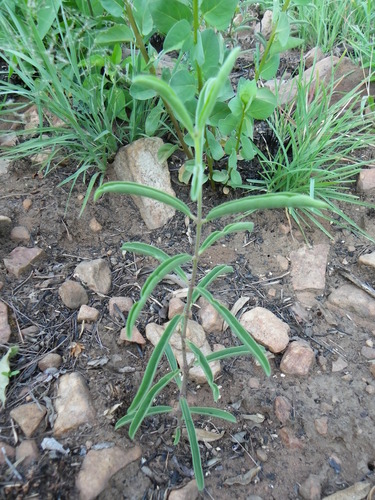
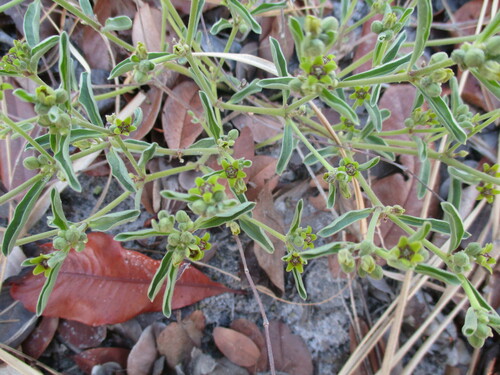
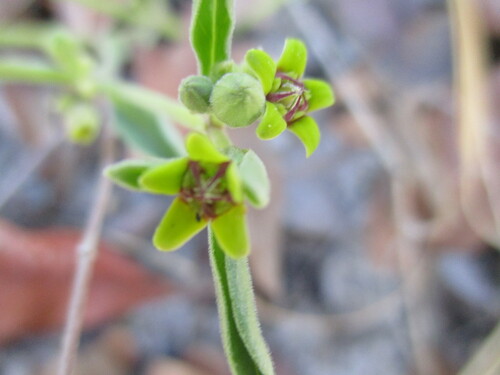
A herb. It has a thick round tuber. It is 15 cm across. The stems arise from this tuber during the growing season. The stems have milky latex. The flowers are green and hairy. They occur in clusters among the leaves. The fruit are long thin capsules. Probably now Raphionacme velutina
Nutrition Score: 24/100
| Part | Moisture | kJ | kcal | Protein | Vit A | Vit C | Iron | Zinc |
|---|---|---|---|---|---|---|---|---|
| Tuber | 89.7 | 145 | 35 | 1.1 | — | 10.4 | 0.8 | 0.2 |
Production
The round storage root can weigh 2.5 kg.
Notes
It is also put in the family Periplocaceae.
Names & Synonyms
Bie a, Ella
References (8)
- Fox, F. W. & Young, M. E. N., 1982, Food from the Veld. Delta Books. p 291
- Maguire, 1978,
- Peters, C. R., O'Brien, E. M., and Drummond, R.B., 1992, Edible Wild plants of Sub-saharan Africa. Kew. p 66
- Silberbauer, 1965,
- Story, 1958,
- Tanaka, 1980,
- van Wyk, Be., & Gericke, N., 2007, People's plants. A Guide to Useful Plants of Southern Africa. Briza. p 94
- Wehmeyer, A. S, 1986, Edible Wild Plants of Southern Africa. Data on the Nutrient Contents of over 300 species


