Raphionacme hirsuta
(E. Mey.) R. A. Dyer
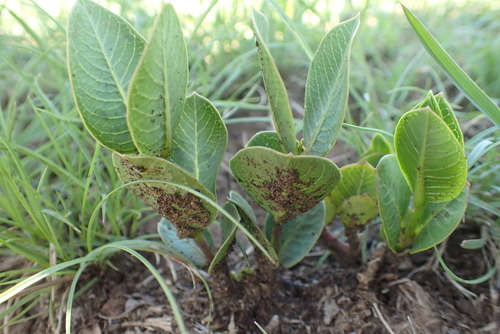
(c) David Hoare, some rights reserved (CC BY-NC-SA), uploaded by David Hoare

(c) juddkirkel, some rights reserved (CC BY-NC)

(c) Robert Archer, some rights reserved (CC BY-NC), uploaded by Robert Archer
What to Eat
Edible parts: Tuber, Root, Fruit, Caution
The underground tuber is mixed with sugar and brewed to make beer, and the fruit are eaten as a snack.
Known Hazards
Where to Find It
It is a subtropical plant. In Swaziland it grows only in the highveld.
Africa, Botswana, Eswatini, South Africa, Southern Africa, Swaziland,
How to Identify
A herb. It forms a large, flattened round tuber. Several short forked shoots develop from this. These are less than 15 cm long. They have a few pairs of leaves that have short stalks. The leaf blades are 5 cm long by 2 cm wide. The midrib is easy to see. The flowers are low down on the branches. They are purple and slightly hairy.
Nutrition Score: 26/100
| Part | Moisture | kJ | kcal | Protein | Vit A | Vit C | Iron | Zinc |
|---|---|---|---|---|---|---|---|---|
| Tubers | 85 | 203 | 49 | 1 | — | 10.4 | 0.8 | 0.2 |
How to Grow
A plant of the subtropics, just entering into the tropics in southern Africa. Requires a very free-draining soil with plenty of moisture in the growing season and a distinct dry season when it is dormant.
Medicinal Uses
The tuber is traditionally brewed into a beverage preparation.
Names & Synonyms
Ghali, Indzema, Khadiwortel
References (11)
- Facciola, S., 1998, Cornucopia 2: a Source Book of Edible Plants. Kampong Publications, p 168
- Fox, F. W. & Young, M. E. N., 1982, Food from the Veld. Delta Books. p 292
- Lee, 1979,
- Long, C., 2005, Swaziland's Flora - siSwati names and Uses http://www.sntc.org.sz/flora/
- Ogle & Grivetti, 1985,
- Peters, C. R., O'Brien, E. M., and Drummond, R.B., 1992, Edible Wild plants of Sub-saharan Africa. Kew. p 66
- Ruiters-Welcome, A. K., 2019, Food plants of southern Africa. Ph.D. thesis. Univ. of Johannesburg p 27
- Swaziland's Flora Database http://www.sntc.org.sz/flora
- van Wyk, Be., & Gericke, N., 2007, People's plants. A Guide to Useful Plants of Southern Africa. Briza. p 110
- Wehmeyer, A. S, 1986, Edible Wild Plants of Southern Africa. Data on the Nutrient Contents of over 300 species
- Welcome, A. K. & Van Wyk, B.-E., 2019, An inventory and analysis of the food plants of southern Africa. South African Journal of Botany 122 (2019) 136–179


