Rhus aromatica
Aiton
Lemon sumach, Fragrant sumach, Polecat bush
(c) Andrew Scott, some rights reserved (CC BY-NC), uploaded by Andrew Scott

(c) Corey Lange, some rights reserved (CC BY-NC)

(c) Corey Lange, some rights reserved (CC BY-NC)
What to Eat
Edible parts: Fruit
The fruit can be eaten raw or cooked. It is small with little flesh, but is easily harvested and makes a very refreshing lemonade-like drink when soaked for 10–30 minutes in hot or cold water. The mixture should not be boiled, as this releases tannic acids and makes the drink astringent. The fruit can also be dried, ground into a powder, and mixed with cornmeal for use in cakes and porridges.
Known Hazards
Where to Find It
It is a temperate plant. It suits hardiness zones 8-11.
Australia, Canada, Europe, Mexico, North America, Turkey, Türkiye, USA,
How to Identify
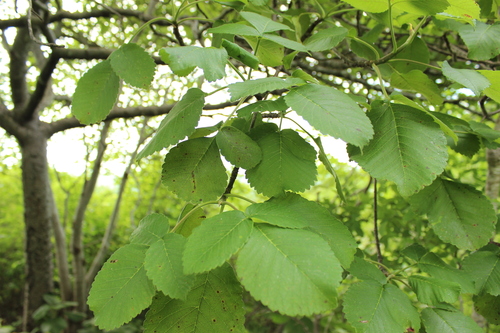
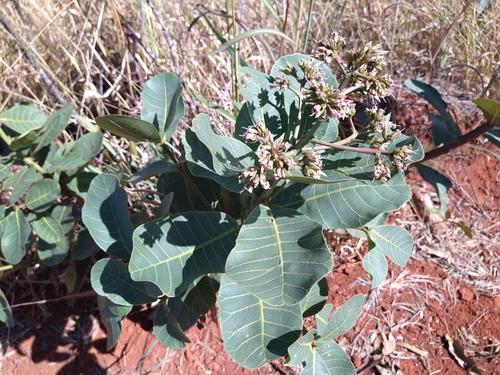
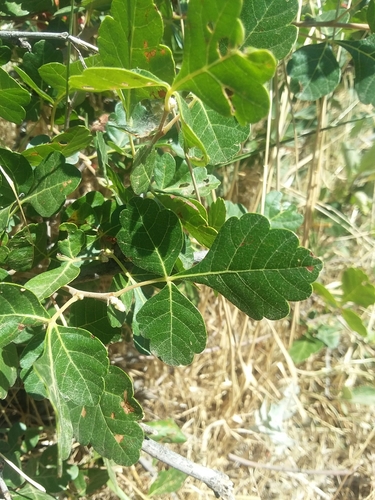
A shrub which develops suckers. It grows 0.9-1.5 m tall and spreads 1.5 m wide. The leaves have leaflets spread out like fingers on a hand. These are oval and have teeth along the edge. They have an aroma. The flowers are small and yellow. The fruit is round and red.
How to Grow
Succeeds in a well-drained fertile soil in full sun. Tolerates poor soils. Established plants are drought resistant. A very hardy plant when fully dormant, tolerating temperatures down to about -25°c. However, the young growth in spring can be damaged by late frosts. Many of the species in this genus are highly toxic and can also cause severe irritation to the skin of some people, whilst other species such as this one are not poisonous. It is relatively simple to distinguish which is which, the poisonous species have axillary panicles and smooth fruits whilst non-poisonous species have compound terminal panicles and fruits covered with acid crimson hairs. The toxic species are sometimes separated into their own genus, Toxicodendron, by some botanists. This species is a low suckering shrub. There is a specially low growing form, var. arenaria, that is found growing on sand dunes in the mid-west of N. America. A polymorphic species. Plants are susceptible to coral spot fungus. Plants have brittle branches that are easily damaged in very strong winds. Plants in this genus are notably resistant to honey fungus. This species transplants easily. The plant has an offensive smell. Or, to go by another nose, the bruised leaves emit a delicious resinous scent. Dioecious. Male and female plants must be grown if seed is required. A clumping plant, forming a colony from shoots away from the crown but with a limited spread.
Propagation: Seed is best sown in a cold frame as soon as it is ripe. Pre-soak for 24 hours in hot water (starting at 80–90°C and allowed to cool) to leach out germination inhibitors; this soak water has a delicious lemon flavour and can be drunk. Stored seed also requires hot water treatment and can be sown in early spring in a cold frame. Prick seedlings into individual pots when large enough to handle and grow on under glass for their first winter. Plant out in late spring or early summer after the last expected frosts. Half-ripe cuttings of 10cm with a heel can be taken in July/August in a frame. Root cuttings 4cm long taken in December should be potted vertically in a greenhouse — good success rate. Suckers can be taken in late autumn to winter.
Medicinal Uses
The leaves are astringent and diuretic, and were used to treat colds, stomachaches, and bleeding. The root bark is also astringent and diuretic; an infusion treats diarrhoea and dysentery, while external application addresses excessive vaginal discharge and skin eruptions, and a gargle treats sore throats. Use of the root bark is contraindicated when inflammation is present. The root is harvested in autumn and dried for later use. The fruits are astringent and diuretic; they have been chewed to treat stomachaches, toothaches, and gripe, and used as a gargle for mouth and throat complaints. They help reduce fevers and may be of benefit in treating late-onset diabetes. Some caution is advised in using the leaves and stems of this plant regarding toxicity.
Other Uses
The leaves are rich in tannin (up to 25%) and can be collected as they fall in autumn for use as a brown dye or mordant. The bark is also a good tannin source. An oil extracted from the seeds attains a tallow-like consistency on standing and is used to make candles, which burn brilliantly but emit a pungent smoke. The plant has an extensive root system and is sometimes used to prevent soil erosion. Split stems are used in basket making.
Wikipedia
Source ↗Rhus aromatica, commonly known as fragrant sumac, smooth sumac, aromatic sumac, lemon sumac, skunk bush, polecat bush, polecat sumac, or simply sumac, is a deciduous shrub in the family Anacardiaceae native to North America. It is native to southern and eastern Canada, most of the contiguous United States, and Mexico.
Notes
There are about 200 Rhus species.
Names & Synonyms
Agrito, Oak-leaf sumac, Skunkbush
References (10)
- Anderson, B. A., (Rev.) 1996, Desert Plants of Utah. Utah State University Extension p 57
- Cundall, P., (ed.), 2004, Gardening Australia: flora: the gardener's bible. ABC Books. p 1204
- Desert Survivors Online Plant Database
- Facciola, S., 1998, Cornucopia 2: a Source Book of Edible Plants. Kampong Publications, p 10
- Hedrick, U.P., 1919, (Ed.), Sturtevant's edible plants of the world. p 559
- Hort. kew. 1:367. 1789
- Kermath, B. M., et al, 2014, Food Plants in the Americas: A survey of the domesticated, cultivated and wild plants used for Human food in North, Central and South America and the Caribbean. On line draft. p 743
- Moerman, D. F., 2010, Native American Ethnobotany. Timber Press. p 471
- Piedra-Malagón, E. M. et al, 2022, Edible native plants of the Gulf of Mexico Province. Biodiversity Data Journal 10: e80565 p 9
- Plants for a Future database, The Field, Penpol, Lostwithiel, Cornwall, PL22 0NG, UK. http://www.scs.leeds.ac.uk/pfaf/