Rosa pratincola
Greene
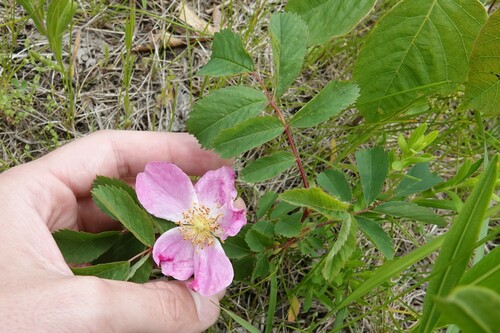
iNaturalist · cc-by-nc
(c) Michael R Ostrowski, some rights reserved (CC BY-NC)
(c) Michael R Ostrowski, some rights reserved (CC BY-NC)
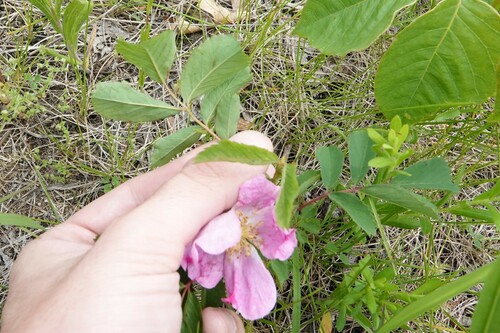
iNaturalist · cc-by-nc
(c) Michael R Ostrowski, some rights reserved (CC BY-NC)
(c) Michael R Ostrowski, some rights reserved (CC BY-NC)
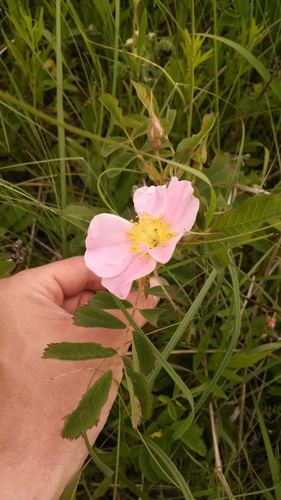
iNaturalist · cc-by-nc-sa
(c) Derek Ziomber, some rights reserved (CC BY-NC-SA)
(c) Derek Ziomber, some rights reserved (CC BY-NC-SA)
What to Eat
Edible parts: Fruit
The fruit are eaten.
Where to Find It
It is a temperate plant.
North America, USA,
Countries: Antigua & Barbuda, Barbados, Bahamas, Belize, Canada, Costa Rica, Cuba, Dominica, Dominican Republic, Grenada, Guatemala, Honduras, Haiti, Jamaica, St Kitts & Nevis, St Lucia, Mexico, Nicaragua, Panama, Puerto Rico, El Salvador, Trinidad & Tobago, United States, St Vincent
How to Identify
A shrub of the Rosaceae family found in temperate regions.
Nutrition Score: 8/100
| Part | Moisture | kJ | kcal | Protein | Vit A | Vit C | Iron | Zinc |
|---|---|---|---|---|---|---|---|---|
| Fruit | 58.7 | 134 | 32 | — | — | — | — | — |
Notes
There are about 150 Rosa species and many cultivated varieties.
References (5)
- Beckstrom-Sternberg, Stephen M., and James A. Duke. "The Foodplant Database." http://probe.nalusda.gov:8300/cgi-bin/browse/foodplantdb.(ACEDB version 4.0 - data version July 1994)
- GILMORE,
- Phillips, K. M., et al, 2014, Nutrient composition of selected traditional United States Northern Plains Native American plant foods. Journal of Food Composition and Analysis 34 (2014) 136–152 141
- Pittonia 4:13. 1899
- Yanovsky, E., 1936, Food Plants of the North American Indians. United States Department of Agriculture Miscellaneous Publication No 237. Washington, D.C.
More from Rosaceae

Acaena anserinifolia
Bidgee widgee, Buzzy, New Zealand Bur
No photo
Acaenia anserinifolia - (J.R.Forst.&G.Forst.)Druce.
Pirri-Pirri Bur

Adenostoma sparsifolium
Red shanks, Ribbonwood

Agrimonia eupatoria
Agrimony, Salt and Pepper

Agrimonia odorata
Adour agrimony, Liver-wort

Agrimonia pilosa
Indian chestnut, Agrimony