Rubus apetalus
Poir.
(c) Charles Stirton, some rights reserved (CC BY-SA), uploaded by Charles Stirton
(c) Charles Stirton, some rights reserved (CC BY-SA), uploaded by Charles Stirton
(c) Charles Stirton, some rights reserved (CC BY-SA), uploaded by Charles Stirton
What to Eat
Edible parts: Fruit
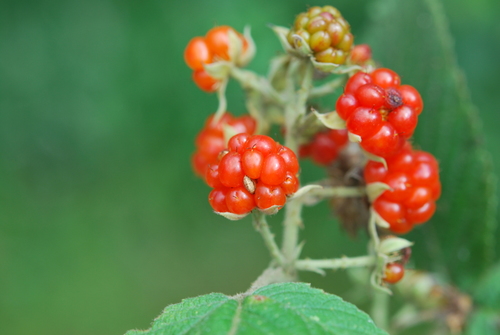
Fruit - raw. Eaten as a snack, they are much liked by people of all ages. Both jam and juice can also be made from the ripe fruits. The purple-black, compound fruit is up to 15mm long, made up of more than 40 single-seeded, small, fleshy drupes.
Dangerous Lookalikes
This plant can be confused with the following toxic species. Always verify identification carefully before consuming any wild plant.


Red Baneberry: Short herbaceous plant (no thorns), berries on thick red stems, each berry has a single seed, compound sharply-toothed leaves.
Rubus apetalus: Thorny woody canes (brambles), aggregate berry made of many drupelets, berries pull easily from receptacle.
Where to Find It
It is a tropical plant. It grows in hilly and mountain regions near forests in West Africa. It grows along the edges of forests. In Kenya it grows between 1,450-2,700 m altitude.
Africa, Botswana, Burundi, Cameroon, Central Africa, Congo DR, East Africa, Eswatini, Ethiopia, Gabon, Kenya, Madagascar, Malawi, Mozambique, Nigeria, Reunion, Rwanda, South Africa, Southern Africa, Swaziland, Tanzania, Uganda, West Africa, Zambia, Zimbabwe,
How to Identify
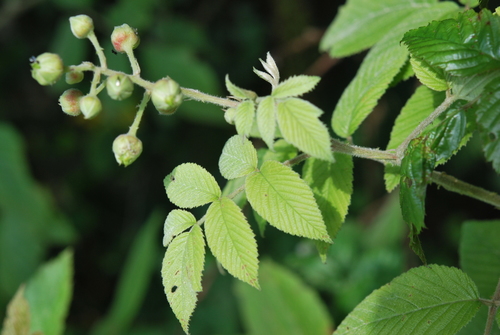
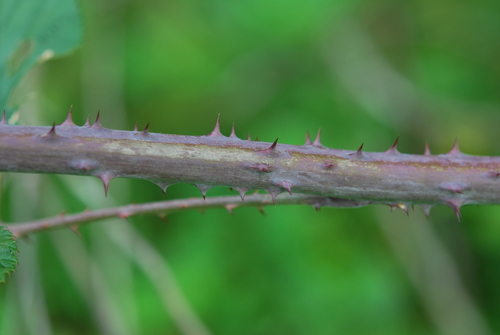
A scrambling shrub. It grows 1.5 m high. The flowering branches have a few yellow or white hairs. The prickles are slender and curved. The leaves are 7-16 cm long by 6-13 cm wide. They have teeth along the edge. The fruit are round and 0.5-0.8 cm long. They are purplish-black. They are edible when ripe.
How to Grow
It can be used as a hedge. Plants can be grow by seeds or suckers.
Propagation: Seed - germinates best if given a period of cold stratification prior to sowing in containers. Stored seed requires one month stratification at about 3°c and is best sown as early as possible in the growing season. Prick out the seedlings when they are large enough to handle and grow on until large enough to plant out. Cuttings of half-ripe wood in a frame. Tip layering towards the end of the growing season Division just before the plant comes into new growth or as it enters dormancy.
Medicinal Uses
The ripe fruits are boiled in water, stirred and filtered. Sugar is added and the liquid drunk to treat anaemia. An infusion of the leaves is used for treating diabetes.
Other Uses
The plant is sometimes grown as a boundary marker. Its hooked prickles will help to deter unwanted guests.
Production
Ripe fruit are collected during the rainy season.
Other Information
The fruit are enjoyed by children and all ages.
Notes
There are about 250 Rubus species.
Names & Synonyms
Amakerre, Enjori, Ewandwandwa, Gora, Gormach, Gorra, Injera, Kaa, Kaliwa-bangwe, Komora, Kuamangongo, Luemya, Lukelele, Lumwino, Mashawa, Olayakuji, Sak "b", Voaroy fotsy, Worichu go'ra, Yedega-enjori
References (38)
- Addis, G., et al, 2005, Ethnobotanical Study of Edible Wild Plants in Some Selected Districts of Ethiopia. Human Ecology, Vol. 33, No. 1, pp. 83-118
- Alemneh, D., 2020, Ethnobotany of wild edible plants in Yilmana Densa and Quarit Districts of West Gojjam Zone, Amhara Region, Ethiopia. Ethnobotany Research & Applications. 20:47
- Asfaw, Z. and Tadesse, M., 2001, Prospects for Sustainable Use and Development of Wild Food Plants in Ethiopia. Economic Botany, Vol. 55, No. 1, pp. 47-62
- Balemie, K., & Kebebew, F., 2006, Ethnobotanical study of wild edible plants in Derashe and Kucha Districts, South Ethiopia. Journal of Ethnobiology and Ethnomedicine. 2:53
- Burkill, H. M., 1985, The useful plants of west tropical Africa, Vol. 4. Kew.
- Bussman, R. W., 2006, Ethnobotanyof the Samburu of Mt Nyiru, South Turkana, Kenya. Journal of Ethnobiology and Ethnomedicine. 2:35 (Also as Rubus adolfi-friederici)
- Dalziel, J. M., 1937, The Useful plants of west tropical Africa. Crown Agents for the Colonies London.
- East African Herbarium records, 1981,
- Eilu, G. & Bukenya-Ziraba, R., 2004, Local Use of Climbing Plants of Budongo Forest Reserve, Western Uganda. Journal of Ethnobiology 24(2): 307-327
- Encycl. 6:242. 1804
- Fleuret, 1979,
- Flora Zambesiaca. http://apps.kew.org/efloras
- Fowler, D. G., 2007, Zambian Plants: Their Vernacular Names and Uses. Kew. p 55
- Glover. et al, 1966b,
- Grivetti, L. E., 1980, Agricultural development: present and potential role of edible wild plants. Part 2: Sub-Saharan Africa, Report to the Department of State Agency for International Development. p 45
- Hedrick, U.P., 1919, (Ed.), Sturtevant's edible plants of the world. p 574 (As Rubus borbonicus)
- Jardin, C., 1970, List of Foods Used In Africa, FAO Nutrition Information Document Series No 2.p 159
- JSTOR Global Plants edible
- Karhagomba, I. B., et al, 2013, The cultivation of wild food and medicinal plants for improving community livelihood: The case of the Buhozi site, DR Congo. Nutrition Research and Practice (Nutr Res Pract) 2013;7(6):510-518
- Kebebew, M. & Leta, G., 2016, Wild Edible Plant Bio-diversity and Utilization System in Nech Sar National Park, Ethiopia. International Journal of Bio-resource and Stress Management 2016, 7(4):885-896
- Kidane, B., et al, 2014, Ethnobotany of Wild and Semi-wild Edible Fruit Species used by Maale and Ari Ethnic Communities in South Ethiopia. Ethnobotany Research and Applications. Vol. 12, 1546-3465-12-455
- Lulekal, E., et al, 2011, Wild edible plants in Ethiopia: a review on their potential to combat food insecurity. Afrika Focus - Vol. 24, No 2. pp 71-121
- Maundu, P. et al, 1999, Traditional Food Plants of Kenya. National Museum of Kenya. 288p
- Mbuvi, M. T. E., et al, 2019, Annonated checklist of plant species of Loita Forest Narok County, Kenya. Int. J. Adv. Res. Biol. Sci. (2019). 6(3): 54-110
- Msola, D. K., 2007, The role of Wild Foods in Household Income and Food Security in Mufundi District, Tanzania. Morogoro, Tanzania. p 44
- Mutie, F. M., et al, 2023, Important Medicinal and Food Taxa (Orders and Families) in Kenya, Based on Three Quantitative Approaches. Plants 2023, 12, 1145
- Peters, C. R., O'Brien, E. M., and Drummond, R.B., 1992, Edible Wild plants of Sub-saharan Africa. Kew. p 167
- Regassa, T., et al, 2014, Ethnobotany of Wild and Semi-Wild Edible Plants of Chelia District, West-Central Ethiopia. Science, Technology and Arts Research Journal. 3(4): 122-134
- Ruffo, C. K., Birnie, A. & Tengnas, B., 2002, Edible Wild Plants of Tanzania. RELMA p 576
- Sina, B. & Degu, H. D., 2015, Knowledge and use of Wild Edible Plants in the Hula District of the Sidama Zone. International Journal of Bio-resource and Stress Management 6(3):352-365
- Styger, E., et al, 1999, Indigenous fruit trees of Madagascar: potential components of agroforestry systems to improve human nutrition and restore biological diversity. Agroforestry Systems 46: 289-310
- Swaziland's Flora Database http://www.sntc.org.sz/flora
- Terashima, H., et al, 1992, Ethnobotany of the Lega in the Tropical Rainforest of Eastern Zaire (Congo): Part Two, Zone de Walikale, African Study Monographs, Suppl. 19:1-60
- Terashima, H., & Ichikawa, M., 2003, A comparative ethnobotany of the Mbuti and Efe hunter-gatherers in the Ituri Forest, Democratic Republic of Congo. African Study Monographs, 24 (1, 2): 1-168, March 2003
- von Katja Rembold, 2011, Conservation status of the vascular plants in East African rain forests. Dissertation Universitat Koblenz-Landau p 181
- White, F., Dowsett-Lemaire, F. and Chapman, J. D., 2001, Evergreen Forest Flora of Malawi. Kew. p 455
- World Checklist of Useful Plant Species 2020. Royal Botanic Gardens, Kew
- Yimer, A., et al, 2021, Ethnobotanical study of wild edible plants used by Meinit Ethnic Community at Bench-Maji Zone, Southwest Ethiopia. Research Square. p 6
More from Rosaceae


