Rubus hispidus
L.
Swamp dewberry, Running blackberry, Swamp blackberry
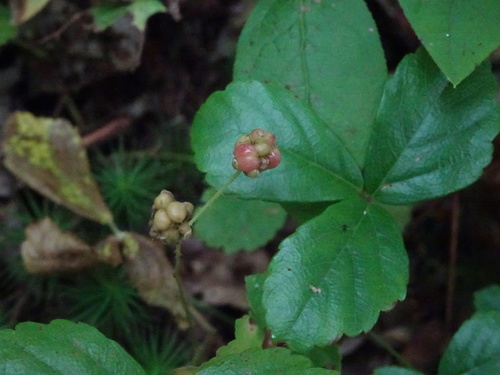
(c) Jenn Megyesi, some rights reserved (CC BY-NC), uploaded by Jenn Megyesi
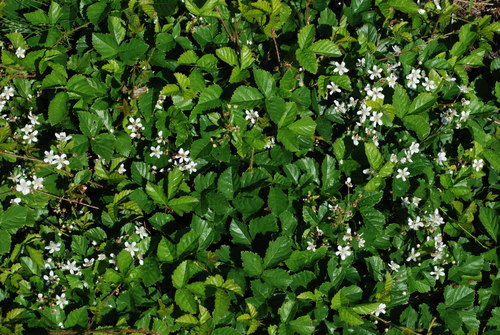
(c) Douglas Goldman, some rights reserved (CC BY-SA), uploaded by Douglas Goldman

(c) Steven G. Johnson, some rights reserved (CC BY-SA)
What to Eat
Edible parts: Fruit
The fruit, about 12mm in diameter, has a sour flavour and is best used in preserves rather than eaten raw. While reasonably flavoured, it is not considered worth picking when better varieties are available.
Dangerous Lookalikes
This plant can be confused with the following toxic species. Always verify identification carefully before consuming any wild plant.


Red Baneberry: Short herbaceous plant (no thorns), berries on thick red stems, each berry has a single seed, compound sharply-toothed leaves.
Swamp dewberry: Thorny woody canes (brambles), aggregate berry made of many drupelets, berries pull easily from receptacle.
Where to Find It
It is a temperate plant.
Canada, North America, USA,
How to Identify
A plant which trails on the ground. The fruit have a few large grains. They are red or purple.
How to Grow
Easily grown in a good well-drained loamy soil in sun or semi-shade. This species is a blackberry with biennial stems, it produces a number of new stems each year from the perennial rootstock, these stems fruit in their second year and then die. The plant produces apomictic flowers, these produce fruit and viable seed without fertilization, each seedling is a genetic copy of the parent. Plants in this genus are notably susceptible to honey fungus.
Propagation: Seed requires stratification and is best sown in early autumn in a cold frame. Stored seed needs one month stratification at about 3°C and should be sown as early as possible in the year. Prick out seedlings when large enough to handle and grow on in a cold frame, then plant out into permanent positions in late spring of the following year. Cuttings of half-ripe wood can be taken in July/August in a frame. Tip layer in July and plant out in autumn. Divide in early spring or just before leaf-fall in autumn.
Medicinal Uses
The plant has astringent properties. Juice from the plant has been used to treat diarrhoea and dysentery. An infusion of the fruits in warm water has been used as a vermifuge. An infusion of the roots has been used in the treatment of consumption, coughs, and fevers.
Other Uses
A purple to dull blue dye is obtained from the fruit. The plant also makes a good ground cover.
Wikipedia
A low-growing evergreen shrub reaching 0.2 meters tall and spreading to 1 meter. Flowers bloom June to July on hermaphroditic plants pollinated by insects, reproducing via apomixis. Hardy to UK zone 3, it grows in light sandy to heavy clay soils, preferring well-drained conditions in mildly acid to mildly alkaline pH, tolerating semi-shade or full sun with preference for moist soil.
Notes
There are about 250 Rubus species.
References (7)
- Beckstrom-Sternberg, Stephen M., and James A. Duke. "The Foodplant Database." http://probe.nalusda.gov:8300/cgi-bin/browse/foodplantdb.(ACEDB version 4.0 - data version July 1994)
- Kermath, B. M., et al, 2014, Food Plants in the Americas: A survey of the domesticated, cultivated and wild plants used for Human food in North, Central and South America and the Caribbean. On line draft. p 761
- Kiple, K.F. & Ornelas, K.C., (eds), 2000, The Cambridge World History of Food. CUP p 1768
- Moerman, D. F., 2010, Native American Ethnobotany. Timber Press. p 488
- Plants for a Future database, The Field, Penpol, Lostwithiel, Cornwall, PL22 0NG, UK. http://www.scs.leeds.ac.uk/pfaf/
- Sp. pl. 1:493. 1753
- Toupal, R. S. & Hollenback, K., 2009, An Ethnobotany of Indiana Dunes National Lakeshore: Plant Uses of the Ojibwa People. Bureau of Applied Research in Anthropology. University of Arizona
More from Rosaceae


