Rubus pubescens
Raf.
Dwarf red blackberry
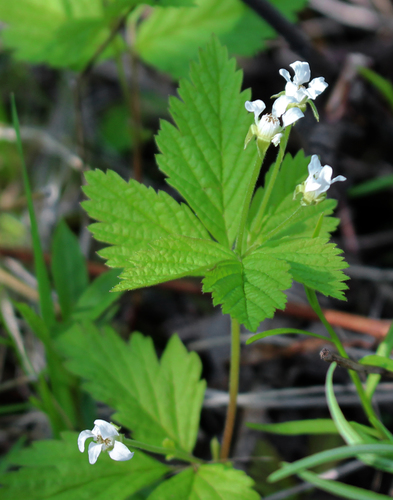
(c) aarongunnar, some rights reserved (CC BY), uploaded by aarongunnar
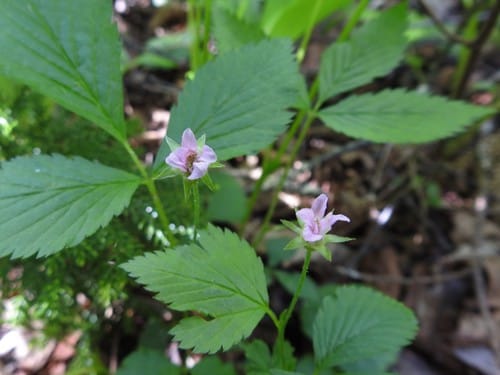
(c) William Van Hemessen, some rights reserved (CC BY-NC)
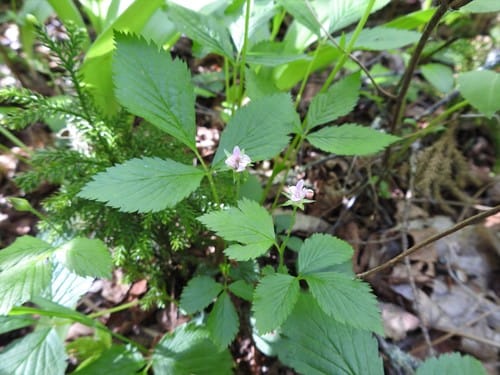
(c) William Van Hemessen, some rights reserved (CC BY-NC)
What to Eat
Edible parts: Fruit
The fruit can be eaten raw or cooked and is notably delicate and delicious. It can also be mashed, formed into small cakes, then dried and stored for later use.
Dangerous Lookalikes
This plant can be confused with the following toxic species. Always verify identification carefully before consuming any wild plant.


Red Baneberry: Short herbaceous plant (no thorns), berries on thick red stems, each berry has a single seed, compound sharply-toothed leaves.
Dwarf red blackberry: Thorny woody canes (brambles), aggregate berry made of many drupelets, berries pull easily from receptacle.
Where to Find It
It is a temperate plant. It grows in damp woods and thickets.
Canada, North America, USA,
How to Identify
A trailing plant. The leaves are alternate and compound. There are 3 or 5 oval leaflets. They have sharp teeth. They are green on both sides. The flowers are white or pinkish. They are 12 mm across. They occur as several in small clusters. The fruit is a round berry.
How to Grow
We have very little information on this species and do not know if it will be hardy in Britain, though judging by its native range it should succeed outdoors in many parts of the country. The following notes are based on the general needs of the genus. Easily grown in a good well-drained loamy soil in sun or semi-shade. Plants in this genus are notably susceptible to honey fungus.
Propagation: Seed requires stratification and is best sown in early autumn in a cold frame. Stored seed needs one month of stratification at about 3°c and should be sown as early as possible in the year. Prick out seedlings when large enough to handle and grow on in a cold frame, then plant out into permanent positions in late spring of the following year. Cuttings of half-ripe wood can be taken in July or August in a frame. Tip layering can be done in July, with plants set out in autumn. Division is possible in early spring or just before leaf-fall in autumn.
Medicinal Uses
The leaves are astringent and stomachic. A decoction has been used to treat the vomiting of blood and blood-spitting. An infusion of the plant combined with wild strawberry (Fragaria spp) has been used to treat irregular menstruation.
Other Uses
A purple to dull blue dye is obtained from the fruit.
Wikipedia
Source ↗Rubus pubescens (dwarf red blackberry, dwarf red raspberry, dewberry) is a herbaceous perennial widespread across much of Canada and the northern United States, from Alaska to Newfoundland, south as far as Oregon, Colorado, and West Virginia.
Notes
There are about 250 Rubus species.
Names & Synonyms
Dewberry, Trailing raspberry
References (12)
- Beckstrom-Sternberg, Stephen M., and James A. Duke. "The Foodplant Database." http://probe.nalusda.gov:8300/cgi-bin/browse/foodplantdb.(ACEDB version 4.0 - data version July 1994)
- Cormack, R. G. H., 1967, Wild Flowers of Alberta. Commercial Printers Edmonton, Canada. p 162
- Fisk, J. R. & Hoover, E., 2015, Wild Fruits of Minnesota. A Filed Guide. University of Minnesota p10
- Hedrick, U.P., 1919, (Ed.), Sturtevant's edible plants of the world. p 581 (As Rubus triflorus)
- J. Franklin, Narr. journey Polar Sea 747. 1823 (Bot. App. 19) (As Rubus triflorus)
- Kermath, B. M., et al, 2014, Food Plants in the Americas: A survey of the domesticated, cultivated and wild plants used for Human food in North, Central and South America and the Caribbean. On line draft. p 764
- MacKinnon, A., et al, 2009, Edible & Medicinal Plants of Canada. Lone Pine. p 94
- Med. Repos. ser. 3, 2:333. 1811
- Moerman, D. F., 2010, Native American Ethnobotany. Timber Press. p 492
- Plants for a Future database, The Field, Penpol, Lostwithiel, Cornwall, PL22 0NG, UK. http://www.scs.leeds.ac.uk/pfaf/
- Toupal, R. S. & Hollenback, K., 2009, An Ethnobotany of Indiana Dunes National Lakeshore: Plant Uses of the Ojibwa People. Bureau of Applied Research in Anthropology. University of Arizona
- Turner, N., 1997, Food Plants of Interior First Peoples. Royal BC Museum Handbook p 151
More from Rosaceae


