Rubus rugosus
Smith
Himalayan blackberry

(c) Christopher Stephens, some rights reserved (CC BY-SA), uploaded by Christopher Stephens

(c) Christopher Stephens, some rights reserved (CC BY-SA), uploaded by Christopher Stephens
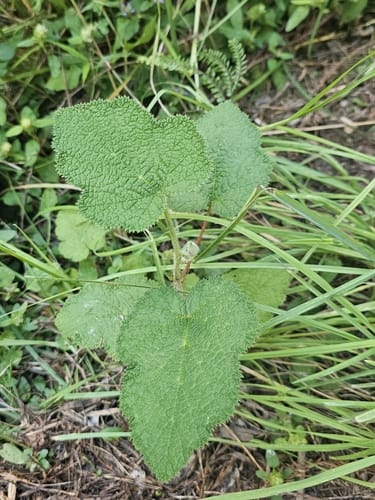
(c) wellmaintainedhedge, some rights reserved (CC BY-NC)
What to Eat
Edible parts: Fruit
The ripe fruit are eaten raw and are also used in the preparation of yeast culture.
Dangerous Lookalikes
This plant can be confused with the following toxic species. Always verify identification carefully before consuming any wild plant.


Red Baneberry: Short herbaceous plant (no thorns), berries on thick red stems, each berry has a single seed, compound sharply-toothed leaves.
Himalayan blackberry: Thorny woody canes (brambles), aggregate berry made of many drupelets, berries pull easily from receptacle.
Where to Find It
A tropical plant. In Nepal they grow between 1000-2000 m altitude. They grow in open rocky places. In Vietnam it has been recorded at 1,000 m above sea level. It occurs in the Western Ghats in India.
Asia, Australia, Cambodia, Himalayas, India, Indochina, Laos, Malaysia, Myanmar, Nepal, Northeastern India, SE Asia, Sikkim, Sri Lanka, Tasmania, Thailand, Vietnam,
How to Identify
A climbing shrub. The leaves have stalks. They are oval and 5-7 lobed. They have irregular teeth. They are deeply heart shaped. They have a yellowish layer underneath and are wrinkled above. The flowers are pink or white. They occur either in the axils of leaves or at the ends of branches. The fruit are red or dark purple.
How to Grow
Plants are grown from root offshoots or seeds.
Notes
There are about 250 Rubus species.
Names & Synonyms
Amreng sobai, Ban ainselu, Bhaise aiselu, Dum nham, Goru ainselu, Jetulipoka, Keriberry, Kohamoushush, Morok jemben, Mullu pazham, Naichin, Shiinghokoghoshi, Sukhaith ri, Ta:sinpusin, Thekhi-sambak, Thesobai
References (19)
- Ambasta S.P. (Ed.), 2000, The Useful Plants of India. CSIR India. p 533
- Ethnobotany of Karbis. Chapter 4 in p 105
- Lungphi, P., Wangpan, T. & Tangjang, S., 2018, Wild edible plants and their additional uses by the Tangsa community living in the Changlang district of Arunachal Pradesh, India. Pleione 12(2): 151 - 164. 2018.
- Manandhar, N.P., 2002, Plants and People of Nepal. Timber Press. Portland, Oregon. p 405
- Mozhui, R., et al, 2011, Wild edible fruits used by the tribals of Dimapur district of Nagaland, India. Pleione 5(1): 56 - 64
- Nayaham, M. C., et al, 1993, Less Known Edible Fruit - Yielding plants of Nilgiris. Ancient Science of Life. Vol. X11 Nos. 3 & 4, pp 363-376
- Paczkowska, G . & Chapman, A.R., 2000, The Western Australian Flora. A Descriptive Calatogue. Western Australian Herbarium. p 513
- Pegu, R., et al, 2013, Ethnobotanical study of Wild Edible Plants in Poba Reserved Forest, Assam, India. Research Journal of Agriculture and Forestry Sciences 1(3):1-10
- Pfoze, N. L., et al, 2012, Survey and assessment of floral diversity on wild edible plants from Senapati district of Manipur, Northeast India. Journal of Biodiversity and Environmental Sciences. 1(6):50-52
- A. Rees, Cycl. 30: Rubus no. 34. 1815
- Sasi, R. et al, 2011, Wild edible plant Diversity of Kotagiri Hills - a Part of Nilgiri Biosphere Reserve, Southern India. Journal of Research in Biology. Vol. 1 No. 2, pp 80-87
- Sasi, R. & Rajendran, A., 2012, Diversity of Wild Fruits in Nilgiri Hills of the Southern Western Ghats - Ethnobotanical Aspects. IJABPT, 3(1) p 82-87
- Singh, B., et al, 2012, Wild edible plants used by Garo tribes of Nokrek Biosphere Reserve in Meghalaya, India. Indian Journal of Traditional Knowledge. 11(1) pp 166-171
- Singh, V. B., et al, (Ed.) Horticulture for Sustainable Income and Environmental Protection. Vol. 1 p 219
- Teron, R. & Borthakur, S. K., 2016, Edible Medicines: An Exploration of Medicinal Plants in Dietary Practices of Karbi Tribal Population of Assam, Northeast India. In Mondal, N. & Sen, J.(Ed.) Nutrition and Health among tribal populations of India. p 155
- Thapa, L. B., et al, 2014, Wild Edible Plants used by endangered and Indigenous Raji Tribe in Western Nepal. International Journal of Applied Sciences and Biotechnology. Vol 2(3):243-252
- USDA, ARS, National Genetic Resources Program. Germplasm Resources Information Network - (GRIN). [Online Database] National Germplasm Resources Laboratory, Beltsville, Maryland. Available: www.ars-grin.gov/cgi-bin/npgs/html/econ.pl (10 April 2000)
- Wiersema, J. H. & Leon, B., 2013, World Economic Plants. A Standard Reference CRC Press. 2nd Ed. p 599
- www.Efloras.org Annotated checklist of the Flowering Plants of Nepal.
More from Rosaceae


