Rubus runssorensis
Engl.
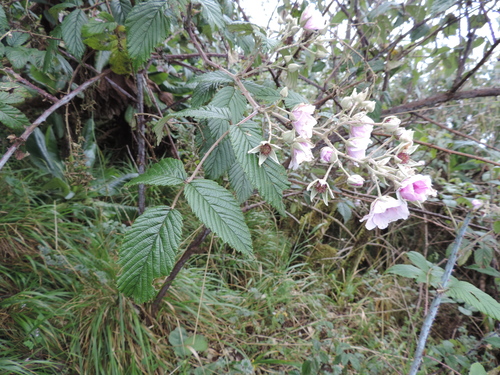
(c) Marco Schmidt, some rights reserved (CC BY-NC-SA), uploaded by Marco Schmidt
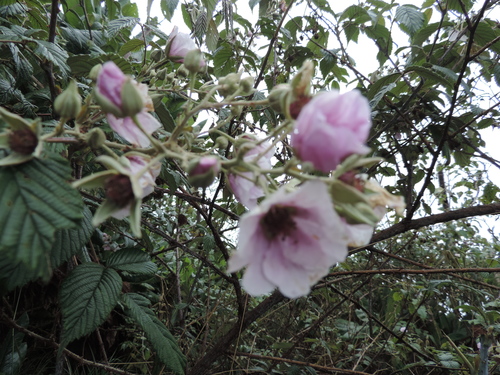
(c) Marco Schmidt, some rights reserved (CC BY-NC-SA), uploaded by Marco Schmidt
What to Eat
Edible parts: Fruit
The ripe fruits are edible.
Dangerous Lookalikes
This plant can be confused with the following toxic species. Always verify identification carefully before consuming any wild plant.


Red Baneberry: Short herbaceous plant (no thorns), berries on thick red stems, each berry has a single seed, compound sharply-toothed leaves.
Rubus runssorensis: Thorny woody canes (brambles), aggregate berry made of many drupelets, berries pull easily from receptacle.
Where to Find It
A tropical plant.
Africa, Central Africa, Congo, East Africa,
How to Identify
A scrambling shrub. It grows 6 m tall. It has long hanging branches. The flowering stems have hooked prickles. The leaves have leaflets with one at the end. The leaflets are broadly oval and 4-12 cm long by 3-7 cm wide. The flower petals are white to pale red. The fruit are 2 cm long and deep red but turning black as they ripen.
Notes
There are about 250 Rubus species.
References (1)
- Jardin, C., 1970, List of Foods Used In Africa, FAO Nutrition Information Document Series No 2.p 159
More from Rosaceae


