Rubus setosus
Bigelow.
Bristly blackberry, Small bristleberry

(c) Ed Morris, some rights reserved (CC BY-NC-ND), uploaded by Ed Morris
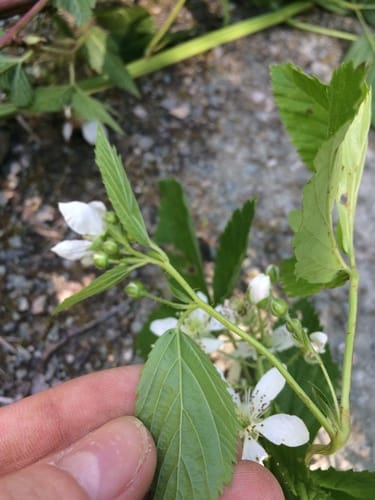
no rights reserved
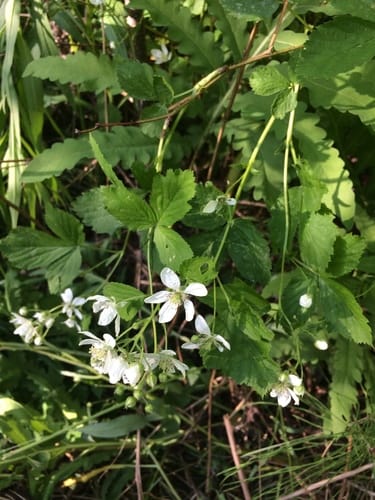
no rights reserved
What to Eat
Edible parts: Fruit
The fruit is edible.
Dangerous Lookalikes
This plant can be confused with the following toxic species. Always verify identification carefully before consuming any wild plant.


Red Baneberry: Short herbaceous plant (no thorns), berries on thick red stems, each berry has a single seed, compound sharply-toothed leaves.
Bristly blackberry: Thorny woody canes (brambles), aggregate berry made of many drupelets, berries pull easily from receptacle.
Where to Find It
It is a temperate plant.
Canada, North America, USA,
How to Identify
A bristly shrub growing 20-100 cm tall, native to temperate regions. It belongs to the Rosaceae family, which also includes numerous other berry-producing Rubus species.
Wikipedia
Source ↗Rubus setosus is a North American species of bristleberry in the genus Rubus, a member of the rose family. It is native to the northeastern United States and adjacent Canada.
Notes
There are about 250 Rubus species.
Names & Synonyms
Setose Blackberry
References (7)
- Fl. boston. ed. 2, 198. 1824
- Fisk, J. R. & Hoover, E., 2015, Wild Fruits of Minnesota. A Field Guide. University of Minnesota p 19 (As Rubus groutianus)
- Jennings, D. L., 1979, Raspberries and blackberries, in Simmonds, N.W., (ed), Crop Plant Evolution. Longmans. London. p 251
- Jennings, D. L., 1995, Raspberries and blackberries Rubus (Rosaceae). Pp. 429-434 In Evolution of crop plants. (J. Smartt and N.W. Simmonds, eds.). Longman Scientific & Technical, NY.
- Jennings, D.L., H.A. Daubeny and J. N. Moore, 1990, Blackberries and raspberries (Rubus). Pp. 331-389 In Small fruit crop management, Vol. 1 (G.J. Galletta and D.G. Himelrick, eds.). Prentice-Hall, New Jersey.
- Plants for a Future database, The Field, Penpol, Lostwithiel, Cornwall, PL22 0NG, UK. http://www.scs.leeds.ac.uk/pfaf/ (As Rubus nigricans)
- Reis, S. V. and Lipp, F. L., 1982, New Plant Sources for Drugs and Foods from the New York Botanical Garden herbarium. Harvard. p 103 (As Rubus nigricans)
More from Rosaceae


