Rubus vitifolius
Cham. & Schltdl.
Californian blackberry, Pacific blackberry
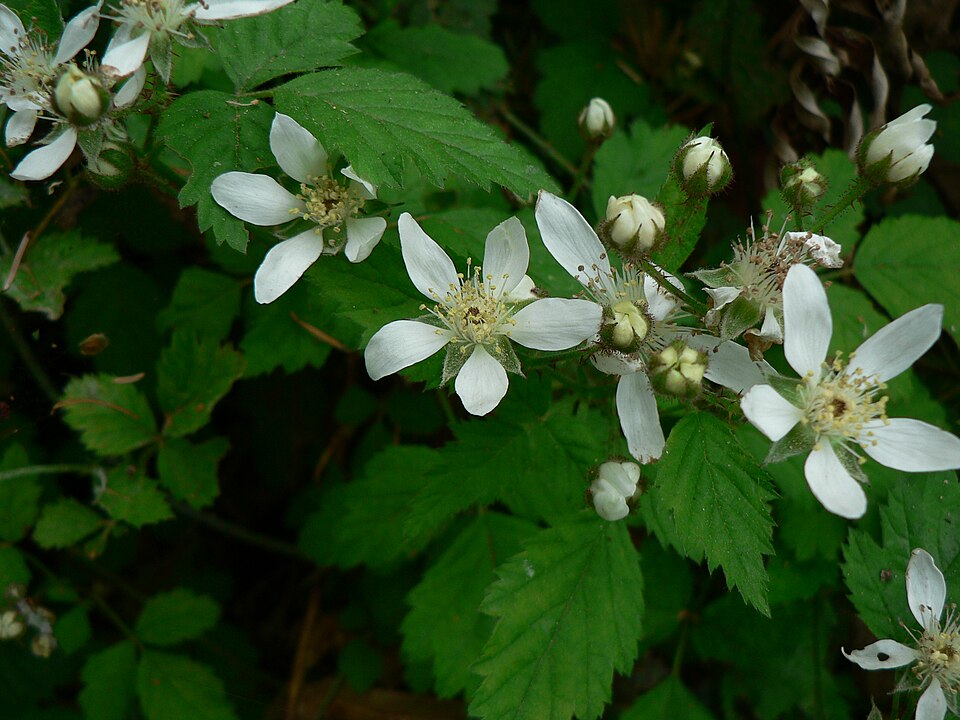
Wikimedia Commons - Walter Siegmund

Wikimedia Commons - Dominic
What to Eat
Edible parts: Fruit
The black, sweet fruit is eaten fresh.
Dangerous Lookalikes
This plant can be confused with the following toxic species. Always verify identification carefully before consuming any wild plant.


Red Baneberry: Short herbaceous plant (no thorns), berries on thick red stems, each berry has a single seed, compound sharply-toothed leaves.
Californian blackberry: Thorny woody canes (brambles), aggregate berry made of many drupelets, berries pull easily from receptacle.
Where to Find It
It is a temperate plant.
North America, USA,
How to Identify
A creeping shrub in the Rosaceae family native to temperate regions, producing sweet black fruits. The Californian blackberry is a thornless or less thorny bramble suited to cool climates.
Notes
There are about 250 Rubus species.
References (5)
- Beckstrom-Sternberg, Stephen M., and James A. Duke. "The Foodplant Database." http://probe.nalusda.gov:8300/cgi-bin/browse/foodplantdb.(ACEDB version 4.0 - data version July 1994)
- Bocek, B. R., 1984, Ethnobotany of Costanoan Indians, California, Based on Collections by John P. Harrington. Economic Botany 38(2): 240-255
- Facciola, S., 1998, Cornucopia 2: a Source Book of Edible Plants. Kampong Publications, p 210
- Jennings, D.L., 1979, Raspberries and blackberries, in Simmonds, N.W., (ed), Crop Plant Evolution. Longmans. London. p 253
- Linnaea 2:10. 1827
More from Rosaceae


