Rubus volkensii
Engl.
Anjori
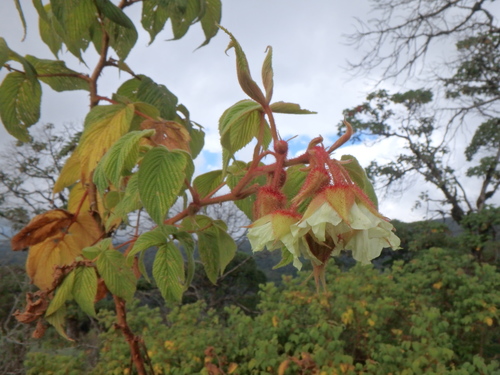
(c) Pádraic Flood, some rights reserved (CC BY-NC-SA), uploaded by Pádraic Flood
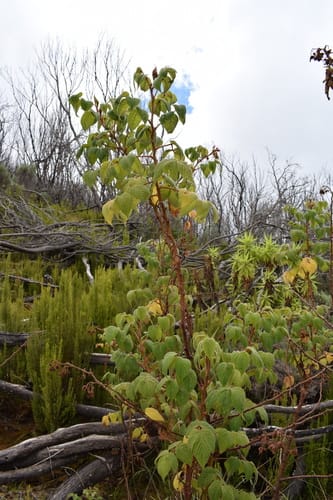
(c) Pádraic Flood, some rights reserved (CC BY-NC-SA)
What to Eat
Edible parts: Fruit
The fruit are eaten raw and are sold in local markets.
Dangerous Lookalikes
This plant can be confused with the following toxic species. Always verify identification carefully before consuming any wild plant.


Red Baneberry: Short herbaceous plant (no thorns), berries on thick red stems, each berry has a single seed, compound sharply-toothed leaves.
Anjori: Thorny woody canes (brambles), aggregate berry made of many drupelets, berries pull easily from receptacle.
Where to Find It
It is a tropical plant. In Kenya it grows in high altitude forest between 2,150-3,550 m.
Africa, East Africa, Ethiopia, Kenya, Tanzania, Uganda,
How to Identify
A prickly shrub. It grows 4 m high. The stems have hooked prickles. There are also brown sticky hairs. The leaves are compound with up to 7 leaflets. The leaflets are hairy. There are teeth along the edge. The flowers are yellow to white. The fruit are 1.5 cm across. They are orange to red when ripe.
Other Information
Fruit are sold in local markets.
Notes
There are about 250 Rubus species.
Names & Synonyms
Allichchu go'ra, Aquqotta, Yedega injorii
References (11)
- Asfaw, Z. and Tadesse, M., 2001, Prospects for Sustainable Use and Development of Wild Food Plants in Ethiopia. Economic Botany, Vol. 55, No. 1, pp. 47-62
- Glover et al, 1966b,
- Grivetti, L. E., 1980, Agricultural development: present and potential role of edible wild plants. Part 2: Sub-Saharan Africa, Report to the Department of State Agency for International Development. p 45
- Jardin, C., 1970, List of Foods Used In Africa, FAO Nutrition Information Document Series No 2.p 159
- JSTOR Global Plants edible
- Lulekal, E., et al, 2011, Wild edible plants in Ethiopia: a review on their potential to combat food insecurity. Afrika Focus - Vol. 24, No 2. pp 71-121
- Maundu, P. et al, 1999, Traditional Food Plants of Kenya. National Museum of Kenya. 288p
- Mutie, F. M., et al, 2023, Important Medicinal and Food Taxa (Orders and Families) in Kenya, Based on Three Quantitative Approaches. Plants 2023, 12, 1145
- Peters, C. R., O'Brien, E. M., and Drummond, R.B., 1992, Edible Wild plants of Sub-saharan Africa. Kew. p 167
- Seyoum, Y., et al, 2015, Edible Wild Fruit Trees and Shrubs and Their Socioeconomic Significance in Central Ethiopia. Ethnobotany Research & Applications. 14:183-197
- Sina, B. & Degu, H. D., 2015, Knowledge and use of Wild Edible Plants in the Hula District of the Sidama Zone. International Journal of Bio-resource and Stress Management 6(3):352-365
More from Rosaceae


