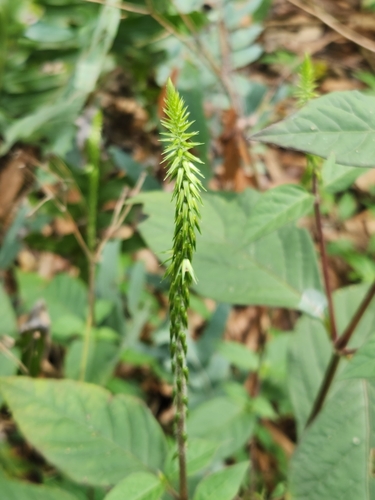
Salsola foetida
(Delile) Vest. ex. Schult.
AmaranthaceaeLeaves

iNaturalist · cc-by-nc
(c) Zaidi, some rights reserved (CC BY-NC)
(c) Zaidi, some rights reserved (CC BY-NC)

iNaturalist · cc-by-nc
(c) Zaidi, some rights reserved (CC BY-NC)
(c) Zaidi, some rights reserved (CC BY-NC)

iNaturalist · cc-by-nc
(c) Zaidi, some rights reserved (CC BY-NC)
(c) Zaidi, some rights reserved (CC BY-NC)
What to Eat
Edible parts: Manna, Leaves
The manna secreted by the plant is collected and eaten. Young seedling plants are also eaten.
Where to Find It
It is a Mediterranean climate plant.
Afghanistan, Asia, Egypt, India, North Africa, Somalia,
Countries: United Arab Emirates, Afghanistan, Armenia, Azerbaijan, Bangladesh, Bahrain, Brunei, Bhutan, China, Algeria, Egypt, Georgia, Indonesia, Israel, India, Iraq, Iran, Jordan, Japan, Kyrgyzstan, Cambodia, North Korea, South Korea, Kuwait, Kazakhstan, Laos, Lebanon, Sri Lanka, Libya, Morocco, Myanmar, Mongolia, Maldives, Malaysia, Nepal, Oman, Philippines, Pakistan, Qatar, Saudi Arabia, Sudan, Singapore, Somalia, Syria, Thailand, Tajikistan, Timor-Leste, Turkmenistan, Tunisia, Turkey, Taiwan, Uzbekistan, Vietnam, Yemen
How to Identify
A shrub. It grows 30-120 cm high. It has a strong bad smell. There are many small branches. These are woody and point upwards. The leaves are small. They are alternate and round. They are fleshy. The flowers are in short dense spikes.
Notes
Also put in the family Chenopodiaceae.
Names & Synonyms
Deberrah, Ella kura, Gora lane, Laman, Moti lane, Mulley, Shora, Shorag
Caroxylon foetidum Moquin
References (4)
- Arora, R. K., 2014, Diversity in Underutilized Plant Species - An Asia-Pacific Perspective. Bioversity International. p 45
- HOOPER,
- Thiselton-Dywer, W.T., (Ed.), 1913, Flora of Tropical Africa. Vol VI-section 1. Reeve, p 88
- WATT,