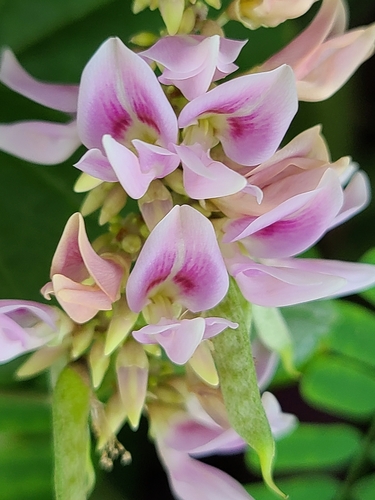
Saraca dives
Pierre
Vang-anh
(c) 小铖/Smalltown, some rights reserved (CC BY-NC), uploaded by 小铖/Smalltown
(c) 小铖/Smalltown, some rights reserved (CC BY-NC), uploaded by 小铖/Smalltown
(c) 小铖/Smalltown, some rights reserved (CC BY-NC), uploaded by 小铖/Smalltown
What to Eat
Edible parts: Medicine
Where to Find It
A tropical plant. It grows naturally by riversides and is also cultivated. It grows between 200-1,000 m above sea level. In XTBG Yunnan.
Asia, China, Indochina, Laos, SE Asia, Vietnam,
How to Identify
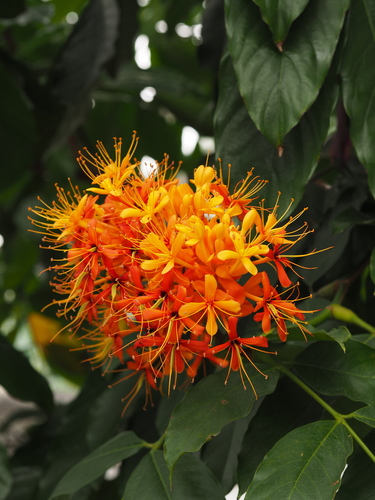
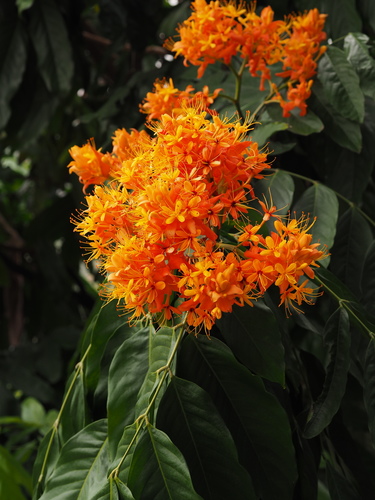
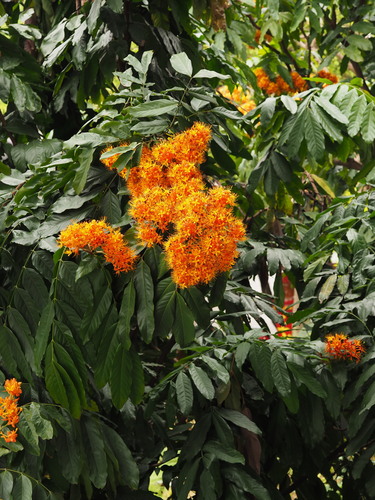
A tree. It grows to 7-20 m tall. The trunk is 25 cm across. The leaves have 5 or 6 pairs of leaflets. They hang down. They are oval and 15-35 cm long by 5-12 cm wide. The flowers are yellow but do not have petals. The fruit or pod is on 4 cm long stalks. The pod is 22-30 cm long by 5-7 cm wide. The valves are twisted. There are 5-9 seeds.
Nutrition Score: 16/100
| Part | Moisture | kJ | kcal | Protein | Vit A | Vit C | Iron | Zinc |
|---|---|---|---|---|---|---|---|---|
| Leaves | 93.7 | 60 | 14 | 0.9 | — | 19 | — | — |
How to Grow
Succeeds in full sun and in moderate shade. Requires a moist, well-drained soil rich in organic matter. Although many species within the family Fabaceae have a symbiotic relationship with soil bacteria, this species is said to be devoid of such a relationship and therefore does not fix atmospheric nitrogen.
Propagation: Seed - if the seed is harvested when ripe and sown immediately, preferably after soaking in water for 12 hours, it will germinate within 3 weeks and will be ready to plant out within 6 - 12 months. Air layering.
Medicinal Uses
Used in traditional medicine.
Other Uses
The reddish wood is soft. It is not used commercially.
Wikipedia
Source ↗Saraca dives, is a tree species in genus Saraca belonging to the family Fabaceae, native to China, Laos, and Vietnam.
Notes
There are about 10 Saraca species. They occur in tropical Asia. Also as Caesalpinaceae.
Names & Synonyms
Vang-anh
References (2)
- Mot So Rau Dai an Duoc O Vietnam. Wild edible Vegetables. Ha Noi 1994, p 110
- Pham-Hoang Ho, 1999, An Illustrated Flora of Vietnam. Nha Xuat Ban Tre. p 865