Archidendron bubalinum
(Jack) Neilson
Kerdas, Keredas

(c) Ong Jyh Seng, some rights reserved (CC BY-SA), uploaded by Ong Jyh Seng
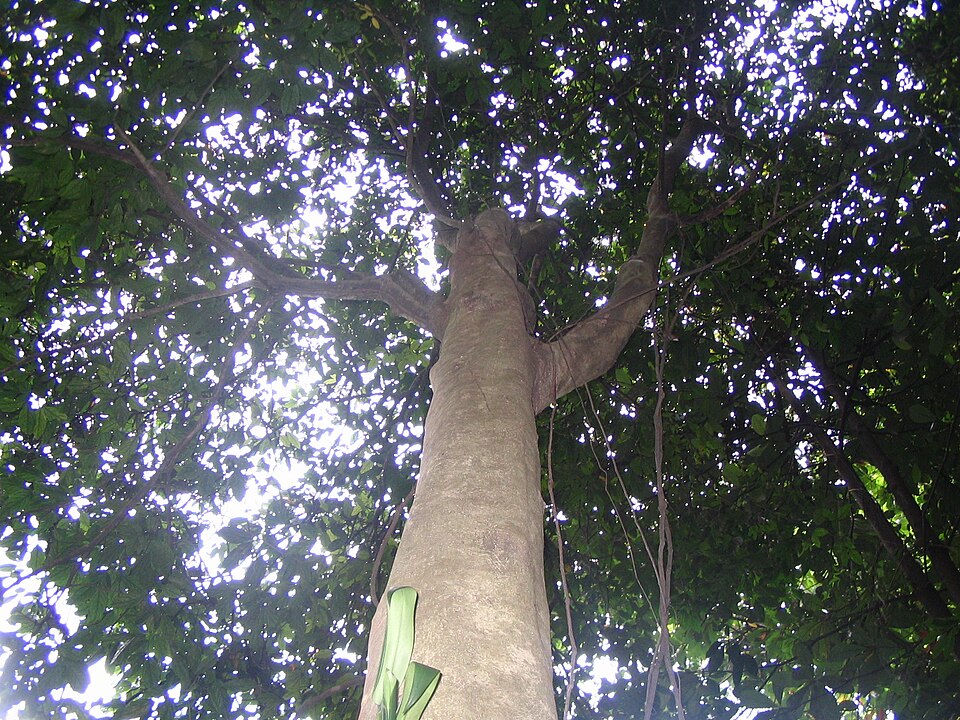
Wikimedia Commons - Patrice78500
What to Eat
Edible parts: Seeds - flavouring, Fruit
The seeds are used for flavouring food and have a garlic-like smell (though they require treatment before use). The fruit is also eaten.
Known Hazards
Where to Find It
A tropical plant. It grows in rainforest often amongst regrowth. Plants are mostly from sea level to 100 m but they can be up to 900 m altitude.
Asia, Indochina, Indonesia, Malaysia, SE Asia, Thailand,
How to Identify
A small tree. Occasionally it can grow to 20 m high. The trunk is 25 cm across. The bark is smooth or with tiny cracks. The small branches are rounded, red and glossy. The leaf stalk is 0.5-4 cm long. The leaves are twice divided. The first leaflets are one pair 2-10 cm long and these have one or two pairs of second leaflets 5.5-16 cm long by 3-10 cm wide. The flower cluster is at the end of the branch or in the axils of leaves towards the ends of the branches. These are made up of about 5 flowers clustered closely together in a head and these are white and have a sweet smell. The fruit is a pod which can be green or red but ripens to yellow outside and reddish inside. The pods are 3.5-10 cm long by 1.5-2.5 cm wide and can be straight or curved. They are stiff and woody. They split open along both sides. The seeds are black and fill the entire cavity of the pod. The seeds in the centre are like a disk while those near the end are like a top.
How to Grow
Plants are grown from seed. Seed should be sown fresh. If dry they should be soaked before planting.
Other Uses
The heartwood is cream coloured, the sapwood white to pale yellow The wood is said to be durable. The freshly cut wood has a smell of garlic, as do the twigs and pods. The wood is used for planking.
Production
Trees fruit from January to October.
Notes
There are 90 Archidendron species. The seeds contain large amounts of djenkol acid. Also as Mimosaceae.
Names & Synonyms
Kabau, Kaladeh, Sikabau
References (12)
- Burkill, I.H., 1966, A Dictionary of the Economic Products of the Malay Peninsula. Ministry of Agriculture and Cooperatives, Kuala Lumpur, Malaysia. Vol 2 (I-Z) p 1789 (As Pithecellobium bubalinum)
- Hanum, F. I., 1999, Plant Diversity and Conservation Value of Ayer Hitam Forest, Selangor, Peninsula Malaysia. Pertanika J. Trop. Agric. Sci. 22(2):73-83
- Mohd, N. G. et al, 2014, A Preliminary Flora Survey in Gunung Kajang, Pulau Tioman, Pahang Darul Makmur, Malaysia. Malays. Appl. Biol. 43(2): 17-23
- Lim, T. K. Edible Medicinal and Non-Medicinal Plants Volume 2, Fruits. Springer p 541
- Milow, P., et al, 2013, Malaysian species of plants with edible fruits or seeds and their evaluation. International Journal of Fruit Science. 14:1, 1-27 (As Pithecellobium bubalinum)
- Neilsen, 1992, Flora Malesiana 11(1) p 96
- Pawera, L., et al, 2020, Wild Food Plants and Trends in Their Use: From Knowledge and Perceptions to Drivers of Change in West Sumatra, Indonesia, Foods. 2020, 9, 1240
- Saw, L.G., LaFrankie, J. V. Kochummen, K. M., Yap S. K., 1991, Fruit Trees in a Malaysian Rain Forest. Economic Botany, Vol. 45, No. 1, pp. 120-136
- Sosef, M. S. M., Hong, L. T., & Prawirohatmodjo, S., (Eds.), 1998, Timber tree: Lesser-known timbers. Plant Resources of South-East Asia, 5(3), p 84
- Wickens, G.E., 1995, Edible Nuts. FAO Non-wood forest products. FAO, Rome. p 141 (As Pithecellobium bubalinum)
- Zawiah, N. & Othaman, H., 2012, 99 Spesies Buah di FRIM. Institut Penyelidikan Perhutanan Malaysia. p 26
- www.frim.gov.my




