Scaevola calendulacea
(Andr.) Druce
Sweet fan flower, Dune Fan Flower

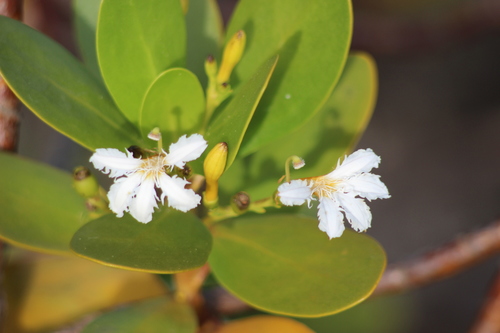
(c) Murray NZ, some rights reserved (CC BY), uploaded by Murray NZ
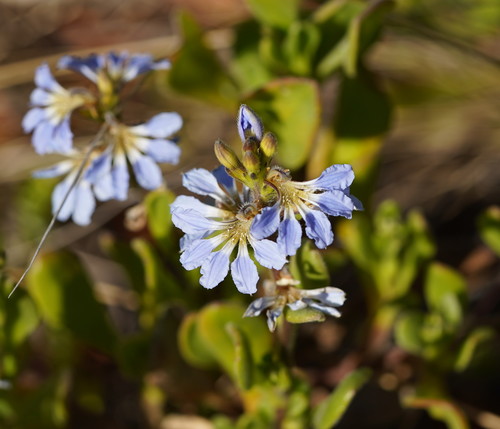
(c) Reiner Richter, some rights reserved (CC BY-NC-SA), uploaded by Reiner Richter
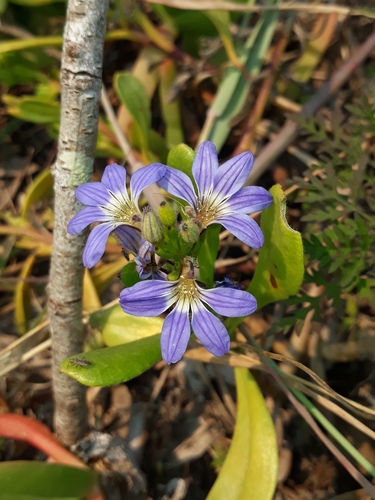
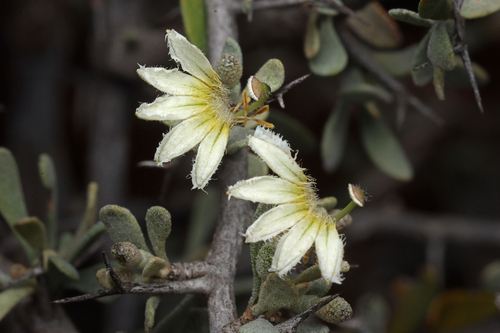
(c) Nick Lambert, some rights reserved (CC BY-NC-SA), uploaded by Nick Lambert
What to Eat
Edible parts: Fruit
The purple berry-like fruit are eaten.
Where to Find It
It is a tropical plant. It grows on sand dunes near the coast. It can tolerate salt spray. It grows on sand islands along the Queensland coast. It cannot tolerate frost. Coffs Harbour Botanical Gardens.
Australia*,
How to Identify
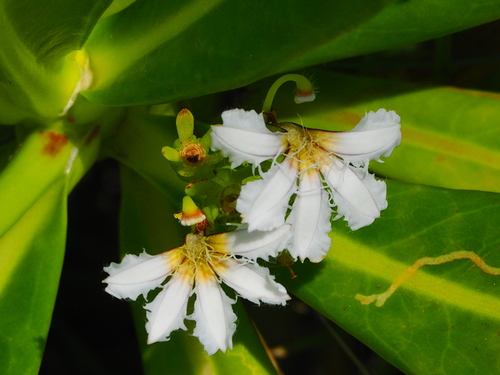
A sprawling creeper or low shrub. It can spread for several metres. It keeps growing from year to year. The leaves are fleshy and covered with fine hairs. The flowers have 5 petals which are on the one side of the flower. The flowers are blue. The fruit are purple and berry-like.
How to Grow
Plants can be grown from cuttings. It can be grown from seeds by putting them in a cool dark location unit they germinate.
Wikipedia
Source ↗Scaevola calendulacea commonly known as dune fan-flower, is a flowering plant in the family Goodeniaceae. It is a small, mat-forming shrub with blue fan-shaped flowers with a yellow centre and grows on sand dunes in eastern and southern Australia.
Notes
There are about 100 Scaevola species. Most are in Australia. They mostly grow by the sea.
References (9)
- Anon., 2003, Native Plants for the Fitzroy basin. Society for Growing Australian Plants Inc. (Rockhampton Branch) p 73
- Breidahl H., 1997, Australian Southern Shores. Lothian. p 80
- Curtis, W.M., 1963, The Students Flora of Tasmania Vol 2 p 403 (Recorded in error)
- Dashorst, G.R.M., and Jessop, J.P., 1998, Plants of the Adelaide Plains & Hills. Botanic Gardens of Adelaide and State Herbarium. p 138
- Greig, D., 1996, Flowering Natives for Home Gardens. Angus & Robertson. p 304
- Low, T., 1992, Bush Tucker. Australia’s Wild Food Harvest. Angus & Robertson. p 52
- Melzer, R. & Plumb, J., 2011, Plants of Capricornia. Belgamba, Rockhampton. p 148
- Ryan, M. (Ed.), 2003, Wild Plants of Greater Brisbane. Queensland Museum. p 23
- Tasmanian Herbarium Vascular Plants list p 34