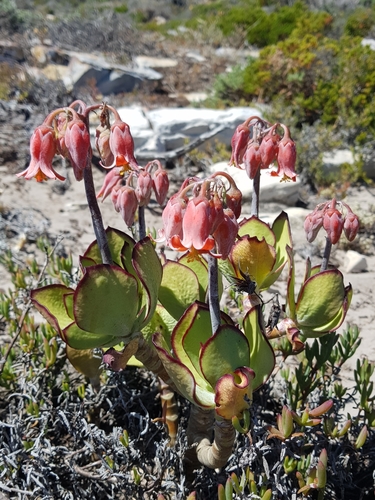
Sedum anacampseros
L.
Loce restorer, Evergreen orpine
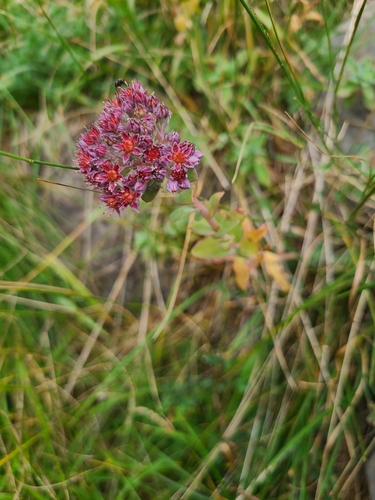
(c) Anne-Hélène Paradis, some rights reserved (CC BY-NC)
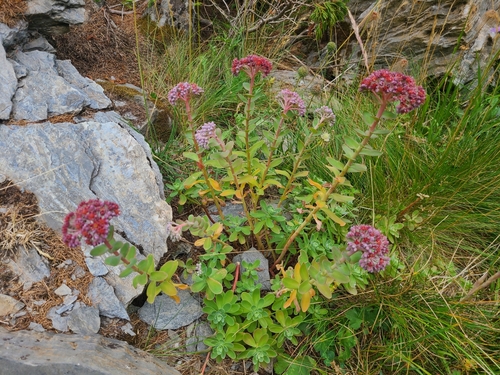
(c) Anne-Hélène Paradis, some rights reserved (CC BY-NC)
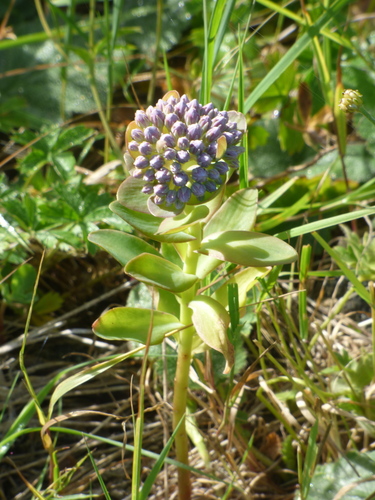
(c) Gabriele La Grasta, some rights reserved (CC BY-NC)
What to Eat
Edible parts: Leaves
The leaves can be eaten raw or cooked and are used as a vegetable in soups. They have a distinctly bitter flavour.
Where to Find It
It is a temperate plant.
Alps, Europe, Italy, Spain,
How to Identify
A herb. It forms a low clump of leaves, They are rounded and blue-green. The flowers are dusky purple in clusters on the end of stems.
How to Grow
An easily grown plant, it succeeds in most soils but prefers a fertile well-drained soil. Dislikes lime. Shade tolerant, though it prefers a sunny position. Established plants are drought tolerant. Hardy to at least -15°c. Spreads rapidly at the roots, but it is easily controlled. All members of this genus are said to have edible leaves, though those species that have yellow flowers can cause stomach upsets if they are eaten in quantity. Plants in this genus seem to be immune to the predations of rabbits.
Propagation: Surface sow seed in spring in well-drained soil in a sunny greenhouse position, keeping the soil moist. Prick out seedlings into individual pots when large enough. Plant out during summer if growth is sufficient; otherwise overwinter in a cold frame or greenhouse and plant out in early summer the following year. Division can be done at almost any time in the growing season, though spring or early summer is preferred. Large divisions can go directly into permanent positions; smaller ones do best potted up and grown on in a lightly shaded cold frame until well established.
Medicinal Uses
None known.
Other Uses
The plants work well as ground cover, spaced approximately 30cm apart each way.
Wikipedia
Source ↗Sedum anacampseros is a perennial reaching 10cm tall and spreading to 50cm. Flowers July to August with seed maturation August to September. Hardy to UK zone 6 and not frost tender. Tolerates light sandy, medium loamy, and heavy clay soils with preference for well-drained soil. Suitable for mildly acidic and neutral pH. Grows in semi-shade or full sun but cannot thrive in deep shade. Handles both drought and moist soil conditions.
Notes
There are about 400 Sedum species.
Names & Synonyms
References (3)
- Hedrick, U.P., 1919, (Ed.), Sturtevant's edible plants of the world. p 602
- Plants for a Future database, The Field, Penpol, Lostwithiel, Cornwall, PL22 0NG, UK. http://www.scs.leeds.ac.uk/pfaf/
- Sp. pl. 1:430. 1753