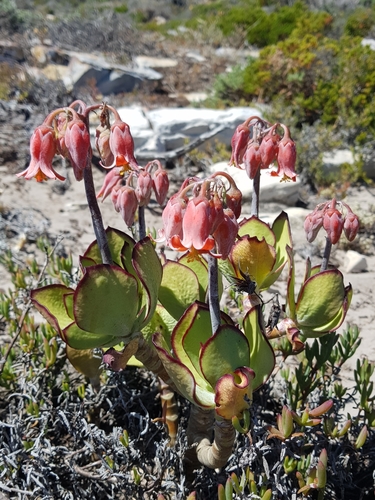
Sedum spurium
M. Bieb.
Caucasian stonecrop, Two-row Stonecrop
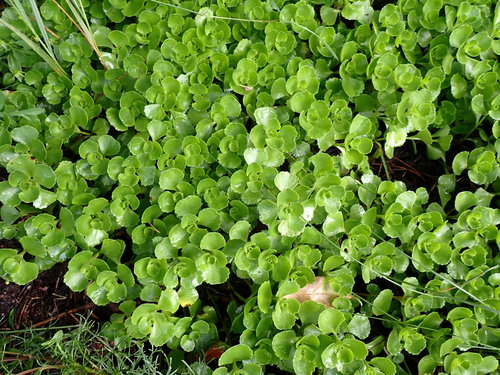
(c) Dariusz Kamiński, some rights reserved (CC BY-NC)
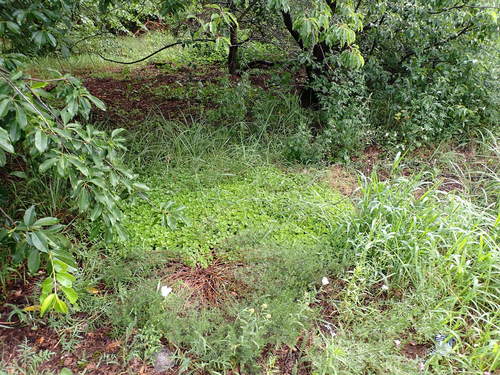
(c) Dariusz Kamiński, some rights reserved (CC BY-NC)
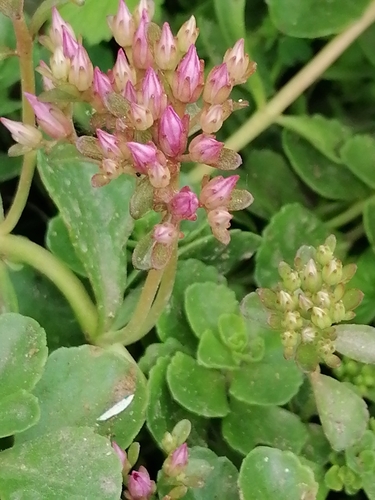
(c) Ольга Лапшина, some rights reserved (CC BY-NC)
What to Eat
Edible parts: Leaves
The leaves can be eaten raw or cooked. They are thick and juicy but somewhat astringent with a slight bitterness.
Where to Find It
It is a temperate plant. It suits hardiness zones 7-10.
Australia, Britain, Canada, Caucasus, Europe, Georgia, Iran, Middle East, North America, Russia, Slovenia, Turkey, Türkiye, USA,
How to Identify
A small succulent herb. It grows 15 cm high and spreads 30-50 cm wide. It is evergreen and keeps growing from year to year. It forms mats. The branches are spreading. The leaves are rounded and opposite. They are fleshy and have teeth along the edge. They develop red tints in sunlight. The flowers are purple, red or white and on erect stems.
How to Grow
Succeeds in most soils but prefers a fertile well-drained soil in a sunny position. Established plants are drought tolerant. Tolerates poor soils. Hardy to about -5°c. A mat-forming plant, it is very invasive. The flowers of this species are white or pink. All members of this genus are said to have edible leaves, though those species that have yellow flowers can cause stomach upsets if they are eaten in quantity. Plants in this genus seem to be immune to the predations of rabbits.
Propagation: Surface sow seed in spring in well-drained soil in a sunny greenhouse position, keeping the soil consistently moist. Prick seedlings into individual pots when large enough to handle. Plant out during summer if sufficient growth has been made, otherwise overwinter in a cold frame or greenhouse and plant out the following early summer. Division is straightforward at almost any point during the growing season, though spring or early summer is preferred. Larger divisions can go directly into permanent positions; smaller ones are best potted up and grown on in a lightly shaded cold frame until well established, then planted out in summer.
Medicinal Uses
None known.
Other Uses
Suitable as a ground cover plant in a sunny position, though weeding is required for the first year or so.
Wikipedia
Evergreen perennial growing 20 cm tall and spreading to 50 cm. Hardy to UK zone 7, not frost tender. Year-round foliage with July to August flowering, seeds ripening August to September. Hermaphrodite, self-fertile, insect-pollinated. Tolerates light sandy, medium loamy, and heavy clay soils, preferring well-drained conditions and poor soil. Suitable for mildly acidic to basic pH. Requires full sun. Adapts to dry or moist soil with excellent drought tolerance.
Notes
There are about 400 Sedum species.
Names & Synonyms
Al pisikulağı, Neprava homulica
References (8)
- Bussman, R. W., et al, 2016, A comparative ethnobotany of Khevsureti, Samtskhe-Javakheti, Tusheti, Svaneti, and Racha-Lechkhumi, Republic of Georgia (Sakartvelo), Caucasus. Journal of Ethnobiology and Ethnomedicine (2016) 12:4 (As Sedum oppositifolium)
- Cundall, P., (ed.), 2004, Gardening Australia: flora: the gardener's bible. ABC Books. p 1331
- Ertug, F, Yenen Bitkiler. Resimli Türkiye Florası -I- Flora of Turkey - Ethnobotany supplement (As Phedimus spurius)
- Fl. taur.-caucas. 1:352. 1808
- Hibbert, M., 2002, The Aussie Plant Finder 2002, Florilegium. p 289
- http://www.botanic-gardens-ljubljana.com/en/plants
- Kaliszewska, I & Kolodziejska-Degorska, I, 2015, The social context of wild leafy vegetables uses in Shiri, Daghestan. Journal of Ethnobiology and Ethnomedicine, 11:63
- Plants for a Future database, The Field, Penpol, Lostwithiel, Cornwall, PL22 0NG, UK. http://www.scs.leeds.ac.uk/pfaf/