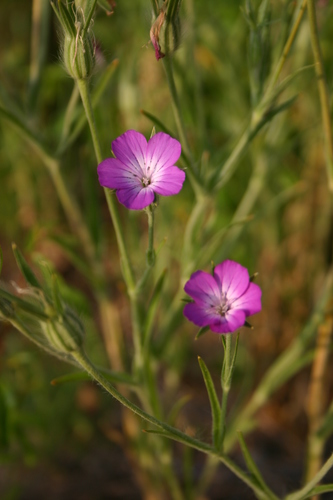
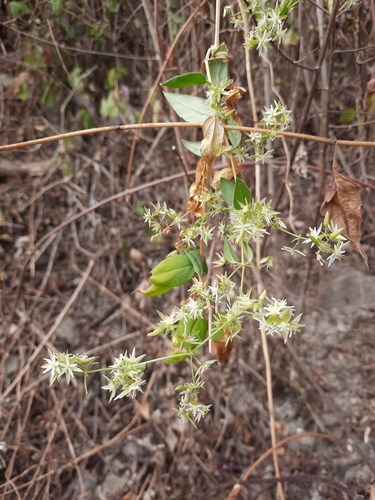
Silene acaulis
(L.) Jacq.
Cushion-pink, Moss Campion

(c) Katrin Simon, some rights reserved (CC BY), uploaded by Katrin Simon

(c) Lars Falkdalen Lindahl, some rights reserved (CC BY-NC-SA)
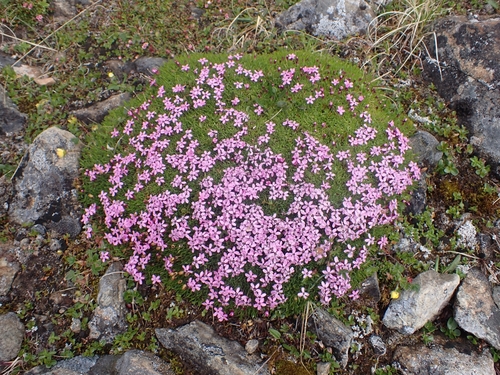
(c) Matt Muir, some rights reserved (CC BY), uploaded by Matt Muir
What to Eat
Edible parts: Leaves
The plant is cooked and eaten as a vegetable in Iceland and in Arctic and Alpine regions. The raw root skins have also been used as food — this use refers specifically to the subspecies S. acaulis exscapa (All.)DC.
Known Hazards
Where to Find It
It is a cold temperate plant. It grows in the Arctic. It grows on high mountains in Western and Central Europe and in the Rocky Mountains in Canada. It is often in stony places above the tree line. It suits hardiness zones 2-8.
Arctic, Asia, Australia, Britain, Canada, Europe, Iceland, North America, Norway, Scandinavia, Slovenia, Spain, Tasmania,
How to Identify
A herb. It forms small hummocks of leafy stems. They are woody at the base. They are 5-15 cm tall. It spreads 10-100 cm wide. The dead leaves remain attached. The leaves are very narrow. The flowers are single and pink or purple. They sit just above the leaves.
How to Grow
It can be grown by seed or by division.
Propagation: Sow seed in early spring in a cold frame. When large enough to handle, prick seedlings out into individual pots and grow them on in the greenhouse through their first winter. Plant out into permanent positions in late spring or early summer, after the last expected frosts. Can also be propagated by division in spring.
Medicinal Uses
The plant has been used in the treatment of colic in children.
Other Uses
Plants form a rooting carpet suitable for use as ground cover when planted approximately 25 cm apart each way.
Wikipedia
Source ↗Silene acaulis, known as moss campion or cushion pink, is a small wildflower that is common all over the high arctic and tundra and in high mountains of Eurasia and North America (Alps, Carpathians, southern Siberia, Pyrenees, British Isles, Iceland, Faroe Islands, Greenland, Rocky Mountains). It is an evergreen perennial flowering plant in the carnation family Caryophyllaceae. It is also called the compass plant, since the flowers appear first on the south side of the cushion. (Various other plants also have this name.)
Notes
There are about 500-800 Silene species.
Names & Synonyms
Fjellsmelle
References (14)
- Cormack, R. G. H., 1967, Wild Flowers of Alberta. Commercial Printers Edmonton, Canada. p 90
- Cundall, P., (ed.), 2004, Gardening Australia: flora: the gardener's bible. ABC Books. p 1340
- Enum. stirp. Vindob. 78, 242. 1762
- Facciola, S., 1998, Cornucopia 2: a Source Book of Edible Plants. Kampong Publications, p 74
- Girard, N. J., 2020, Sustainable Foraging of Wild Edible Plants in Norway. A Biocultural Approach. M. Sc. thesis Norwegian University. p 130
- Hibbert, M., 2002, The Aussie Plant Finder 2002, Florilegium. p 291
- http://www.botanic-gardens-ljubljana.com/en/plants
- Kermath, B. M., et al, 2014, Food Plants in the Americas: A survey of the domesticated, cultivated and wild plants used for Human food in North, Central and South America and the Caribbean. On line draft. p 805
- Moerman, D. F., 2010, Native American Ethnobotany. Timber Press. p 530 (As Silene acaulis var. exscapa)
- Morley, B. & Everard, B., 1970, Wild Flowers of the World. Ebury press. Plate 3
- Plants for a Future database, The Field, Penpol, Lostwithiel, Cornwall, PL22 0NG, UK. http://www.scs.leeds.ac.uk/pfaf/
- Porsild, A.E., 1974, Rocky Mountain Wild Flowers. Natural History Series No. 2 National Museums of Canada. p 162
- Svanberg, I., et al, 2012, Edible wild plant use in the Faroe Islands and Iceland. Acta Societatis Botanicorum Poloniae 81(4): 233-238
- Whitney, C. W., et al, 2012, A Survey of Wild Collection and Cultivation of Indigenous Species in Iceland. Human Ecology 40:781-787