Sorbus aria
(L.) Crantz
Whitebeam, Chess apple
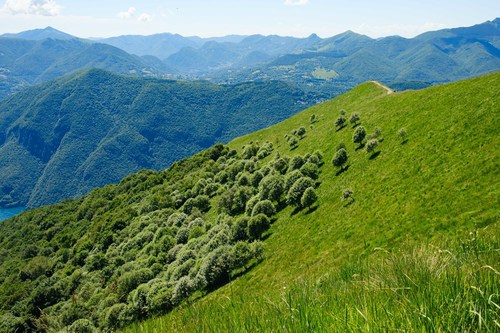
(c) Alexander Rumpel, some rights reserved (CC BY-NC)
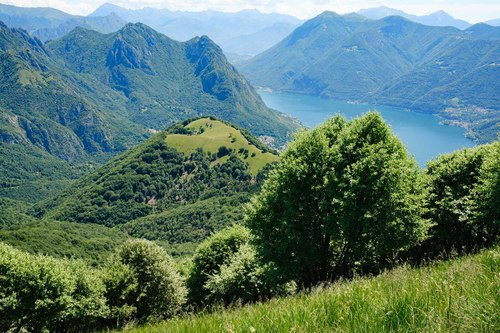
(c) Alexander Rumpel, some rights reserved (CC BY-NC)
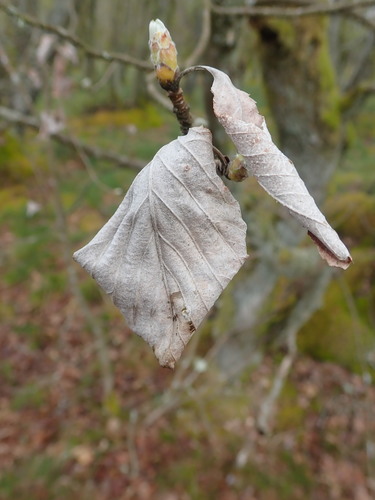
(c) Julien Preud'homme, some rights reserved (CC BY-NC)
What to Eat
Edible parts: Fruit
The fruit can be eaten raw or cooked, and is commonly used in preserves. For raw eating, the fruit is typically bletted — stored in a cool, dry place until it reaches the verge of over-ripeness, at which point it develops a rich, tropical-fruit flavour. Fruit from some trees has a pleasantly mild flavour and mealy texture even without bletting. It can also be dried, ground into a powder, and mixed with cereals such as wheat. The fruit measures about 10–12mm across.
Where to Find It
It is a temperate plant. It is native to Europe. It grows from the lowlands to mountains. It is frost hardy. It often grows in lime rich soils. It suits hardiness zones 5-9. Arboretum Tasmania.
Australia, Balkans, Bosnia, Britain, Bulgaria, Europe, Falklands, France, Greece, India, Ireland, Italy, Luxembourg, Mediterranean, Norway, San Marino, Scandinavia, Sicily, Slovakia, Slovenia, Spain, Sweden, Switzerland, Tasmania,
How to Identify
A deciduous tree. It grows 15-25 m tall and spreading 9-12 m wide. The leaves are alternate. They have 9-12 pairs of parallel veins. There are irregular teeth around the edge. They are silver when young. These become bright green with silver hairs remaining underneath. The leaves eventually turn gold then brown. The flowers are white. They are 1 cm across. The fruit are berries produced in clusters. They are 1.2 cm across. They are green but turn crimson.
How to Grow
Propagation: Seed is best sown as soon as it is ripe in a cold frame. Where seed is plentiful, it can be sown in an outdoor seedbed. Stored seed benefits from 2 weeks of warm stratification followed by 14–16 weeks of cold stratification, so sow as early in the year as possible. Prick out seedlings into individual pots once large enough to handle. Top-growth is very slow in the first year or two as the plant focuses on root development. Keep seedlings in pots in a cold frame through their first winter, then plant out into permanent positions in late spring.
Medicinal Uses
Both the flowers and the fruit are mildly diuretic, laxative, and emmenagogue. An infusion is used in the treatment of painful menstruation, constipation, and kidney disorders.
Other Uses
Very tolerant of exposed maritime conditions, this species makes a useful windbreak near the coast and serves as a pioneer tree, particularly on chalky soils and in windy situations. The flowers are rich in nectar and pollen, attracting bees, butterflies, and other pollinators. The fruit is eaten by birds and mammals, and the dense canopy provides shelter and roosting opportunities for birds. Fallen leaves and bark contribute to invertebrate overwintering habitat. The wood is hard, heavy, and close-grained, and is used for beams and similar structural purposes.
Wikipedia
Source ↗Deciduous tree reaching 12m tall by 8m wide, growing at medium rate. Hardy to UK zone 5, frost-hardy. Hermaphroditic flowers May to June; seeds ripen September to October. Not self-fertile. Noted for wildlife attraction. Adapts to light sandy, medium loamy, and heavy clay soils; prefers well-drained conditions and tolerates very acid to very alkaline pH. Grows in semi-shade to full sun and prefers moist soil. Tolerates maritime exposure and atmospheric pollution.
Notes
There are about 75 Sorbus species.
Names & Synonyms
Alier, Alize, Karusniak, Mehlbeerbaum, Mostaja, Mukinja, Mukinya, Skorucha, Skorusa
References (31)
- Abbet, C., et al, 2014, Ethnobotanical survey on wild alpine food plants in Lower and Central Valais (Switzerland). Journal of Ethnopharmacology 151 (2014) 624–634
- Bodkin, F., 1991, Encyclopedia Botanica. Cornstalk publishing, p 939
- Brickell, C. (Ed.), 1999, The Royal Horticultural Society A-Z Encyclopedia of Garden Plants. Convent Garden Books. p 970
- Cerne, M., 1992, Wild Plants from Slovenia used as Vegetables. Acta Horticulturae 318
- Coombes, A.J., 2000, Trees. Dorling Kindersley Handbooks. p 274
- Cundall, P., (ed.), 2004, Gardening Australia: flora: the gardener's bible. ABC Books. p 1355
- Facciola, S., 1998, Cornucopia 2: a Source Book of Edible Plants. Kampong Publications, p 211
- Harris, E & J., 1983, Field Guide to the Trees and Shrubs of Britain. Reader's Digest. p 86
- Hedrick, U.P., 1919, (Ed.), Sturtevant's edible plants of the world. p 537 (As Pyrus aria)
- Hibbert, M., 2002, The Aussie Plant Finder 2002, Florilegium. p 292
- Irving, M., 2009, The Forager Handbook, A Guide to the Edible Plants of Britain. Ebury Press p 284
- Joyce, D., 1998, The Garden Plant Selector. Ryland, Peters and Small. p 119
- Lord, E.E., & Willis, J.H., 1999, Shrubs and Trees for Australian gardens. Lothian. p 73
- Luczaj, L., 2012, Ethnobotanical review of wild edible plants of Slovakia. Acta Societatis Botanicorum Poloniae 81(4):245-255
- Mabey, R., 1973, Food for Free. A Guide to the edible wild plants of Britain, Collins. p 180
- Nedelcheva A., 2013, An ethnobotanical study of wild edible plants in Bulgaria. EurAsian Journal of BioSciences 7, 77-94
- Pardo-de-Santayana, M., et al, 2005, The gathering and consumption of wild edible plants in the Campoo (Cantabria, Spain). International Journal of Food Sciences and Nutrition. 56(7): 529-542
- Pardo-de-Santayana, M., et al, 2007, Traditional knowledge of wild edible plants used in the northwest of the Iberian Peninsula (Spain and Portugal): a comparative study. Journal of Ethnobiology and Ethnomedicine 2007, 3:27
- Pasta, S., et al, 2020, An Updated Checklist of the Sicilian Native Edible Plants: Preserving the Traditional Ecological Knowledge of Century-Old Agro-Pastoral Landscapes. Frontiers in Plant Science. Volume 11|Article 388
- Pieroni, A.,& Giusti, M. E., 2009, Alpine Ethnobotany in Italy: Journal of Ethnobiology and Ethnomedicine. 5:32
- Plants for a Future database, The Field, Penpol, Lostwithiel, Cornwall, PL22 0NG, UK. http://www.scs.leeds.ac.uk/pfaf/
- Redzic, S. J., 2006, Wild Edible Plants and their Traditional Use in the Human Nutrition in Bosnia-Herzegovina. Ecology of Food and Nutrition, 45:189-232
- Rivera, C., et al, 2005, The Ethnobotanical Study of Local Mediterranean Food Plants as Medicinal Resources in Southern Spain. Journal of Physiologyand Pharmacology. 56, Suppl. 1, 97-114
- Ryan, S., 2008, Dicksonia. Rare Plants Manual. Hyland House. p 56
- SAYCE,
- Sfikas, G., 1984, Trees and shrubs of Greece. Efstathiadis Group. Athens. p 66
- Stirp. austr. fasc. 2:46. 1763
- Tardio, J., et al, Ethnobotanical review of wild edible plants in Spain. Botanical J. Linnean Soc. 152 (2006), 27-71
- UPHOF,
- Upson, R., & Lewis R., 2014, Updated Vascular Plant Checklist and Atlas for the Falkland Islands. Falklands Conservation and Kew.
- van Wyk, B., 2005, Food Plants of the World. An illustrated guide. Timber press. p 351
More from Rosaceae


