Spartium junceum
L.
Spanish Broom
(c) zebedeugalinha, some rights reserved (CC BY)

(c) npskaty, some rights reserved (CC BY-NC)
(c) alberto_aguzzi, some rights reserved (CC BY-NC)
What to Eat
Edible parts: Seeds, CAUTION
None known
Known Hazards
Where to Find It
It is a temperate plant. It can tolerate light frosts. It can grow in dry places. It needs well-drained soils. It needs full sun. It is often on calcareous soils. In Argentina it grows below 500 m above sea level. It suits hardiness zones 6-9. Tasmania Herbarium.
Afghanistan, Africa, Albania, Algeria, Andes, Angola, Argentina, Asia, Australia, Belgium, Bolivia, Bulgaria, Canada, Canary Islands, Caucasus, Central Africa, Central Asia, Chad, Chile, Colombia, Ecuador, Ethiopia, Europe, France, Greece, Guatemala, Hawaii, Himalayas, India, Indonesia, Iraq, Japan, Kenya, Lebanon, Libya, Mediterranean*, Middle East, Morocco, New Zealand, North Africa, North America, Pakistan, Palestine, Peru, Portugal, Romania, San Marino, Sicily, Slovenia, South Africa, Southern Africa, South America, Spain, Sri Lanka, Syria, Tajikistan, Tanzania, Tasmania, Tunisia, Turkey, Türkiye, Turkmenistan, Ukraine, Uruguay, USA, Yugoslavia,
How to Identify
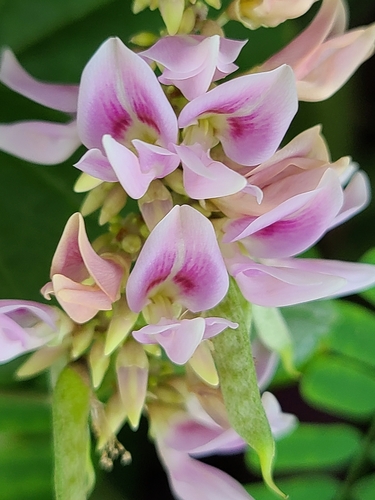
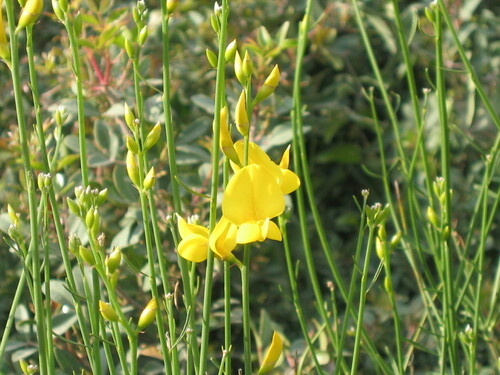
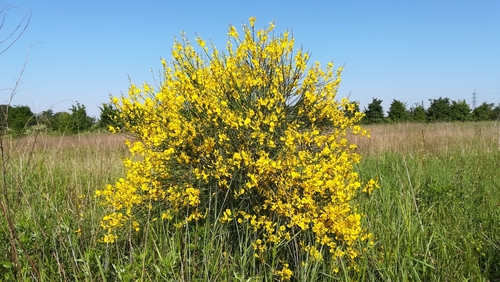
A deciduous shrub. It grows 2.5-3 m high and 2.2-3 m wide. The leaves are very small and spear shaped. The leaves fall off almost immediately and the green branches process sunlight. The flowers are pea-like. They are rich yellow. The fruit are seed pods. These are brownish-black. They are flat and split open when ripe.
How to Grow
Succeeds in any well-drained but not too fertile soil in a sunny position. Prefers a lime free soil according to one report whilst another says that it thrives on alkaline and poor sandy soils. Very wind resistant, tolerating maritime exposure. Tolerates atmospheric pollution and thrives on hot dry banks. A very ornamental plant, it is hardy to between -10 and -18°c when in a suitable position. The flowers have a fragrance that has been likened to oranges. Plants can become leggy if grown in a sheltered position or too rich a soil, but they can be pruned almost to the ground and will resprout from the base. They can also be trimmed in early spring in order to keep them more compact. Plants are intolerant of root disturbance, they are best grown in pots and planted out into their permanent positions whilst still small. Plants often self-sow in Britain. Rabbits love eating this plant when it is young. This species has a symbiotic relationship with certain soil bacteria, these bacteria form nodules on the roots and fix atmospheric nitrogen. Some of this nitrogen is utilized by the growing plant but some can also be used by other plants growing nearby.
Propagation: Pre-soak seed for 24 hours in hot water, then sow in February or March in a greenhouse. Germination is usually prompt and reliable. Seed can also be sown in autumn as soon as it is ripe in a cold frame. Prick out seedlings into individual pots when large enough to handle. If sufficient growth has been made, plant out in summer; otherwise overwinter in a cold frame and plant out in late spring the following year.
Medicinal Uses
The young herbaceous tips of flowering shoots, harvested in spring (generally May), can be used fresh or dried. They are cardiotonic, cathartic, diuretic, emetic, and purgative. The seeds can also be used medicinally. The plant is an efficacious and potent diuretic — 5 to 6 times more active than the medicinally similar Cytisus scoparius — and should be used with caution, as large doses are likely to upset the stomach and cause purging.
Other Uses
A fibre from the stems serves as a hemp substitute, used to make thread, cordage, and coarse fabrics, as well as for stuffing pillows and making paper. Smaller stems are used in basket making, and branches are often made into brooms. A yellow dye is obtained from the flowers. An essential oil extracted from the flowers is used in perfumery — 1200kg of flowers yields 300–350g of absolute.
Wikipedia
Source ↗Spartium junceum is a fast-growing deciduous shrub reaching 3.5 m tall with a 3 m spread. Hardy to UK zone 8, it flowers June to September with seeds ripening August to October. Hermaphroditic flowers are insect-pollinated. The plant fixes nitrogen and tolerates light sandy, medium loamy, and heavy clay soils, preferring well-drained conditions and thriving in poor soils. It requires full sun, tolerates drought, and can grow in coastal and polluted environments.
Production
It is fast growing.
Other Information
It is cultivated.
Notes
There is only one Spartium species. It is cultivated for essential oils. It can be invasive.
Names & Synonyms
Broom absolute, Ginesta, Navadna žuka, Retama macho, Weaver's Broom
References (26)
- Ambasta, S.P. (Ed.), 2000, The Useful Plants of India. CSIR India. p 590
- Blamey, M and Grey-Wilson, C., 2005, Wild flowers of the Mediterranean. A & C Black London. p 84
- Blanco-Salas, J., et al, 2019, Wild Plants Potentially Used in Human Food in the Protected Area “Sierra Grande de Hornachos” of Extremadura (Spain). Sustainability 2019, 11, 456
- Bodkin, F., 1991, Encyclopedia Botanica. Cornstalk publishing, p 941
- Bonet, M. A. & Valles, J., 2002, Use of non-crop food vascular plants in Montseny biosphere reserve (Catalonia, Iberian Peninsula). International Journal of Food Sciences and Nutrition (2002) 53, 225–248
- Bremness, L., 1994, Herbs. Collins Eyewitness Handbooks. Harper Collins. p 130
- Brickell, C. (Ed.), 1999, The Royal Horticultural Society A-Z Encyclopedia of Garden Plants. Convent Garden Books. p 973
- Cundall, P., (ed.), 2004, Gardening Australia: flora: the gardener's bible. ABC Books. p 1360
- Dashorst, G.R.M., and Jessop, J.P., 1998, Plants of the Adelaide Plains & Hills. Botanic Gardens of Adelaide and State Herbarium. p 80
- Hibbert, M., 2002, The Aussie Plant Finder 2002, Florilegium. p 292
- http://www.botanic-gardens-ljubljana.com/en/plants
- Jardin, C., 1970, List of Foods Used In Africa, FAO Nutrition Information Document Series No 2.p 29
- Joyce, D., 1998, The Garden Plant Selector. Ryland, Peters and Small. p 160
- Kew Plants of the World Online
- Lazarides, M. & Hince, B., 1993, Handbook of Economic Plants of Australia, CSIRO. p 226
- Llamas, K.A., 2003, Tropical Flowering Plants. Timber Press. p 223
- Lord, E.E., & Willis, J.H., 1999, Shrubs and Trees for Australian gardens. Lothian. p 263
- Marinelli, J. (Ed), 2004, Plant. DK. p 469
- Sp. pl. 2:708. 1753
- Tardio, J., et al, 2006, Ethnobotanical review of wild edible plants in Spain. Botanical J. Linnean Soc. 152, 27-71
- Tasmanian Herbarium Vascular Plants list p 32
- Thomas, E., et al, 2008, The Relationship Between Plant Use and Plant Diversity in the Bolivian Andes, with Special Reference to Medicinal Plant Use. Hum Ecol (2008) 36:861–879
- Thomas, E., et al, 2009, The relation between accessibility, diversity and indigenous valuation of vegetation in the Bolivian Andes. Journal of Arid Environments. 73:854-861
- Wiersema, J. H. & Leon, B., 2013, World Economic Plants. A Standard Reference CRC Press. 2nd Ed. p 653
- World Checklist of Useful Plant Species 2020. Royal Botanic Gardens, Kew
- Zeven, A. C. & de West, J. M. J., 1982, Dictionary of cultivated plants and their regions of diversity. Wageningen. p 115