Spergularia rubra
(L.) J. & C. Presl.
Red Sand Spurrey, Sand spurry

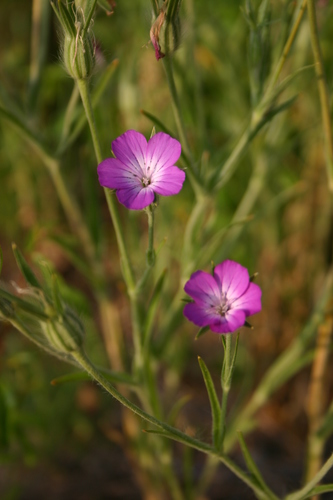
(c) Bart Wursten, some rights reserved (CC BY-NC), uploaded by Bart Wursten

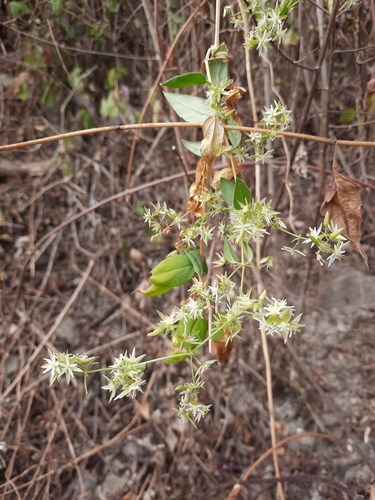
no rights reserved, uploaded by Emily Langdon-Lassagne

(c) Douglas Goldman, some rights reserved (CC BY-SA), uploaded by Douglas Goldman
What to Eat
Edible parts: Seeds
The seeds can be cooked, dried, and ground into a meal that is mixed with flour to make bread and similar foods. This is considered a famine food, eaten only when no other options are available.
Where to Find It
It is a temperate plant. It grows in sands, salty soils, forests, shallow watersides at ca. 800 m altitude in China. Tasmania Herbarium.
Afghanistan, Asia, Australia, Britain, Central Asia, China, Europe, India, Iraq, Japan, Kazakhstan, Korea, Luxembourg, Mediterranean, Middle East, North America, Russia, Spain, Turkey, Türkiye, Tasmania, USA,
How to Identify
An annual herb. It can continue growing for some years. It grows 5-20 cm high. It often lies along the ground. The leaves are 3-10 mm long and 1 mm wide. They are narrow and sword shaped. There are membrane like stipules near the base of the leaves. The flowers are pink and about 5 mm across. They are clustered at the ends of stems. The seeds do not have wings.
How to Grow
Propagation: Sow seed in situ in spring or autumn. In the wild, some seed germinates in autumn and some in spring.
Medicinal Uses
The leaves are diuretic and lithontripic. The plant contains a resinous aromatic substance thought to be the active principle. An infusion is believed to relax the muscle walls of the urinary tubules, making it useful for treating kidney stones, acute and chronic cystitis, and catarrh of the bladder.
Other Uses
None known.
Wikipedia
Source ↗Spergularia rubra, the red sandspurry or red sand-spurrey, is a plant species in the family Caryophyllaceae. It is native to Europe, Asia and North Africa, and it is present on other continents, including North and South America and Australia, as an introduced species and in many areas a common weed. It grows in a wide variety of habitat types. It is an annual or perennial herb producing a slender, glandular stem up to about 25 centimeters long. It is lined with slightly fleshy linear or threadlike leaves each under 2 centimeters long. The leaves may be tipped with hard points or spines, and they are accompanied by shiny white lance-shaped stipules. Flowers occur in the leaf axils and at the tips of the stems. They have hairy, glandular sepals and five round-oval pink petals.
Other Information
An emergency or famine food.
Notes
It is used in medicine.
Names & Synonyms
References (13)
- Ambasta, S.P. (Ed.), 2000, The Useful Plants of India. CSIR India. p 591
- Blamey, M and Grey-Wilson, C., 2005, Wild flowers of the Mediterranean. A & C Black London. p 43
- Cronin, L., 1989, The Concise Australian Flora. Reed. p 83
- Curtis, W.M., 1956, The Students Flora of Tasmania Vol 1 p 71
- Fl. cech. 94. 1819
- Harris, S., Buchanan, A., Connolly, A., 2001, One Hundred Islands: The Flora of the Outer Furneaux. Tas Govt. p 232
- Hussey, B.M.J., Keighery, G.J., Cousens, R.D., Dodd, J., Lloyd, S.G., 1997, Western Weeds. A guide to the weeds of Western Australia. Plant Protection Society of Western Australia. p 132
- Kermath, B. M., et al, 2014, Food Plants in the Americas: A survey of the domesticated, cultivated and wild plants used for Human food in North, Central and South America and the Caribbean. On line draft. p 832
- Lamp, C & Collet F., 1989, Field Guide to Weeds in Australia. Inkata Press. p 285
- Lazarides, M. & Hince, B., 1993, Handbook of Economic Plants of Australia, CSIRO. p 226
- Lu Dequan, Wu Zhengyi, Zhou Lihua, Chen Shilong; Michael G. Gilbert, Magnus Lidén, John McNeill, John K. Morton, Bengt Oxelman, Richard K. Rabeler, Mats Thulin, Nicholas J. Turland, Warren L. Wagner, CARYOPHYLLACEAE, Flora of China.
- Paczkowska, G. & Chapman, A.R., 2000, The Western Australian Flora. A Descriptive Catalogue. Western Australian Herbarium. p 197
- Plants for a Future database, The Field, Penpol, Lostwithiel, Cornwall, PL22 0NG, UK. http://www.scs.leeds.ac.uk/pfaf/