Spiraea prunifolia
Siebold. & Zucc.
Plum-leaved Spiraea

(c) Paul B., some rights reserved (CC BY-NC-ND), uploaded by Paul B.

(c) James Steamer, some rights reserved (CC BY-NC), uploaded by James Steamer
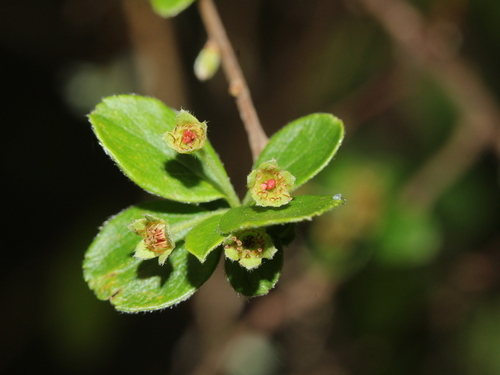
(c) Lijin Huang (紫楝), some rights reserved (CC BY-NC), uploaded by Lijin Huang (紫楝)
What to Eat
Edible parts: Leaves
Young leaves can be cooked and eaten.
Where to Find It
It is a temperate plant. It suits hardiness zones 4-10. Arboretum Tasmania. In Sichuan and Yunnan.
Asia, Australia, China, Europe, India, Japan, Korea, Taiwan, Tasmania,
How to Identify
A small shrub or rounded bush. It grows 2 m high and spreads 2 m wide. It loses its leaves during the year. The leaves are egg shaped and have very small teeth. The leaves turn reddish-orange in autumn. The flowers are white and double. They are in clusters.
How to Grow
Tolerates most soils, but prefers a good loamy soil, abundant moisture and full sunlight. Hardy to about -20°c. Hybridizes freely with other members of this genus. Flowers are produced on the previous seasons growth and any pruning is best done immediately after flowering in order to promote new growth and plenty of flowers in the following year. This species is notably resistant to honey fungus.
Propagation: Sow seed as soon as it is ripe in a cold frame where possible. Stratification is likely required before germination, so stored seed should be sown in a cold frame as early in the year as received. Prick out seedlings into individual pots when large enough to handle and grow on in a cold frame for the first winter, then plant out in late spring or early summer the following year. Take half-ripe cuttings in July/August in a light sandy soil in a frame. Take cuttings of mature wood from the current season's growth, 15cm long, in October/November in an outdoor frame (September has also been reported as suitable). Divide suckers in early spring and plant directly into permanent positions.
Medicinal Uses
The plant is emetic and is used in the treatment of malaria and fever.
Other Uses
None known.
Wikipedia
Source ↗Spiraea prunifolia, commonly called bridalwreath spirea, is a species of the genus Spiraea, sometimes also spelled Spirea. It flowers mid-spring, around May 5, and is native to Japan, Korea, China, and Taiwan. It is sometimes cultivated as a garden plant elsewhere.
Notes
There are about 70-100 Spiraea species.
Names & Synonyms
Bridalwreath spiraea, Liye Xiuxianju, Laughing face flower, Shoe button Spirea
References (7)
- Ambasta, S.P. (Ed.), 2000, The Useful Plants of India. CSIR India. p 594
- Cundall, P., (ed.), 2004, Gardening Australia: flora: the gardener's bible. ABC Books. p 1364
- Fl. jap. 1:131, t. 70. 1840
- Flora of China @ efloras.org Volume 9
- Lord, E.E., & Willis, J.H., 1999, Shrubs and Trees for Australian gardens. Lothian. p 264
- Plants for a Future database, The Field, Penpol, Lostwithiel, Cornwall, PL22 0NG, UK. http://www.scs.leeds.ac.uk/pfaf/
- Valder, P., 1999, The Garden Plants of China. Florilegium. p 333
More from Rosaceae


