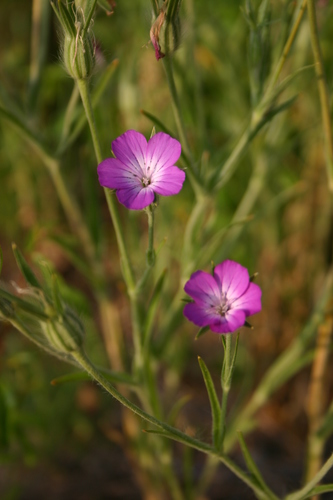
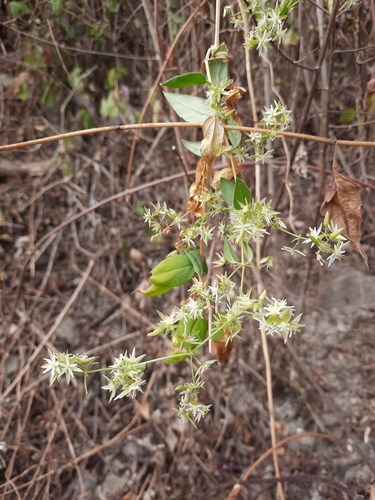
Stellaria neglecta

Weihe.

Common Chickweed, Greater Chickweed

CaryophyllaceaeLeavesPotential hazards — see below
Caution — Parts of this plant may be toxic or require specific preparation. Verify with multiple sources before consuming.
Stellaria neglecta
iNaturalist · cc-by
(c) Thomas Gyselinck, some rights reserved (CC BY), uploaded by Thomas Gyselinck
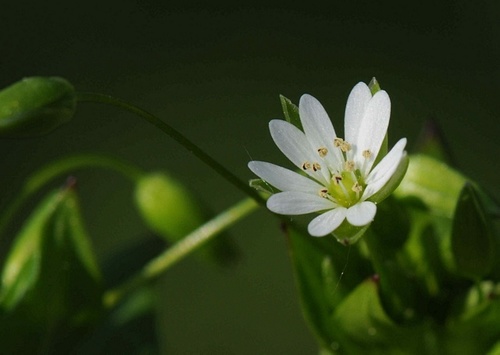
Stellaria neglecta
iNaturalist · cc-by-nc
(c) Biopix, some rights reserved (CC BY-NC)
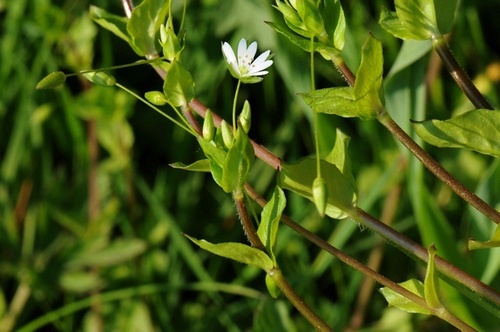
Stellaria neglecta
iNaturalist · cc-by-nc
(c) Biopix, some rights reserved (CC BY-NC)

What to Eat

Edible parts: Leaves

Young leaves can be eaten raw or cooked, though this plant is considered a famine food, used only when nothing else is available.

Known Hazards

Although no mention has been seen for this species, the leaves of some members of this genus contain saponins. Although toxic, these substances are very poorly absorbed by the body and so tend to pass through without causing harm. They are also broken down by thorough cooking. Saponins are found in many plants, including several that are often used for food, such as certain beans. It is advisable not to eat large quantities of food that contain saponins. Saponins are much more toxic to some creatures, such as fish, and hunting tribes have traditionally put large quantities of them in streams, lakes etc in order to stupefy or kill the fish.

Where to Find It

It grows in mixed forests between 900–1200 m altitude in China.

Afghanistan, Africa, Britain, Central Asia, China, Europe, Himalayas, Japan, Kazakhstan, Nepal, North Africa, Russia, SW Asia, Tajikistan,

Countries: Andorra, Afghanistan, Albania, Angola, Austria, Bosnia & Herzegovina, Belgium, Burkina Faso, Bulgaria, Burundi, Benin, Bhutan, Botswana, Belarus, Congo (DRC), Central African Republic, Congo (Republic), Switzerland, Cote d'Ivoire, Cameroon, China, Cape Verde, Cyprus, Czechia, Germany, Djibouti, Denmark, Algeria, Estonia, Egypt, Eritrea, Spain, Ethiopia, Finland, France, Gabon, United Kingdom, Ghana, Gambia, Guinea, Equatorial Guinea, Greece, Guinea-Bissau, Croatia, Hungary, Ireland, India, Iceland, Italy, Japan, Kenya, Kyrgyzstan, Comoros, Kazakhstan, Liechtenstein, Liberia, Lesotho, Lithuania, Luxembourg, Latvia, Libya, Morocco, Monaco, Moldova, Montenegro, Madagascar, North Macedonia, Mali, Mauritania, Malta, Mauritius, Malawi, Mozambique, Namibia, Niger, Nigeria, Netherlands, Norway, Nepal, Poland, Portugal, Romania, Serbia, Russia, Rwanda, Seychelles, Sudan, Sweden, Slovenia, Slovakia, Sierra Leone, San Marino, Senegal, Somalia, South Sudan, Sao Tome & Principe, Eswatini, Chad, Togo, Tajikistan, Turkmenistan, Tunisia, Tanzania, Ukraine, Uganda, Uzbekistan, South Africa, Zambia, Zimbabwe

How to Identify

A herb. It can grow for one or two years. It grows 30-80 cm tall. It has one line of hairs. The leaves have only a short or no leaf stalk. The leaves are narrowly oval. They are 2-3 cm long by 1 cm wide.

How to Grow

Prefers a moist soil.

Propagation: Sow seed in spring directly in situ.

Medicinal Uses

None known

Other Uses

None known

Wikipedia

Source ↗

Stellaria neglecta, greater chickweed, is an annual to short-lived herbaceous perennial flowering plant in the family Caryophyllaceae. It is native to Europe and Asia, where it grows in hedges and woodland margins on neutral to slightly acid, damp soils, and is widespread but rarely abundant. It has been introduced to North America, where it has been spreading in recent decades.

Notes

There are about 130 Stellaria species. They are mostly in temperate regions.

Names & Synonyms

Ji chang fan lu

S. media neglecta. (Weihe.)Murr.
References (4)
  • Chen, B. & Qiu, Z., Consumer's Attitudes towards Edible Wild Plants, Ishikawa Prefecture, Japan. p 26 www.hindawi.com/journals/ijfr/aip/872413.pdf
  • Lu Dequan, Wu Zhengyi, Zhou Lihua, Chen Shilong; Michael G. Gilbert, Magnus Lidén, John McNeill, John K. Morton, Bengt Oxelman, Richard K. Rabeler, Mats Thulin, Nicholas J. Turland, Warren L. Wagner, CARYOPHYLLACEAE, Flora of China.
  • Plants for a Future database, The Field, Penpol, Lostwithiel, Cornwall, PL22 0NG, UK. http://www.scs.leeds.ac.uk/pfaf/
  • www.efloras.org Flora of China Vol 6

More from Caryophyllaceae