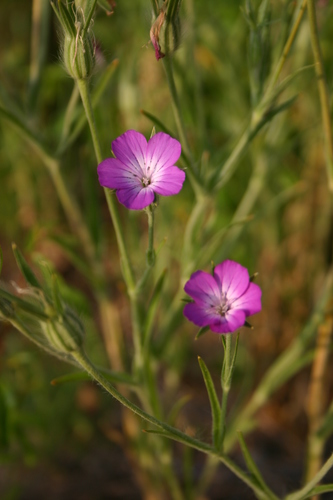
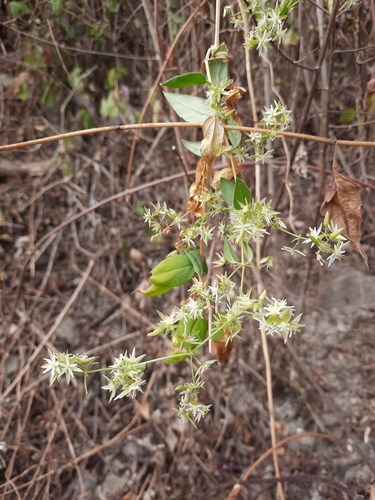
Stellaria pubera
Michx.
Star chickweed

(c) Annkatrin Rose, some rights reserved (CC BY-NC)

(c) Annkatrin Rose, some rights reserved (CC BY-NC)

(c) Annkatrin Rose, some rights reserved (CC BY-NC)
What to Eat
Edible parts: Leaves
The leaves make lettuce-like greens and can be eaten fresh in salads, cooked as a potherb, or dried and added to soups. Seeds can also be sprouted and eaten. The plant likely has similar qualities to Stellaria media.
Known Hazards
Where to Find It
It is a temperate plant. It suits hardiness zones 5-8.
North America, USA,
How to Identify
A herb. It grows 15-40 cm tall. The stems are erect and 4 sided. They have hairs. The leaves usually do not have a stalk but are oval or sword shaped and 1-10 cm long by 5-35 mm wide. The base is wedge shaped. The flowering shoots are at the top with 3-70 flowers. The fruit are green broadly capsules 3.5-5.5 mm long.
How to Grow
A perennial herbaceous wildflower for Partial or Dappled Shade. Water Preferences: Mesic (environment or habitat containing a moderate amount of moisture). Soil pH preferences: Slightly acid (6.1 – 6.5). Flowers: White/Showy. Bloom Time: Mar to May. Resistances: Humidity tolerant.
Propagation: Propagate by seed.
Medicinal Uses
No specific information has been found for this species, but it is likely to share similar properties with Stellaria media (Chickweed). Chickweed has a long history of herbal use, particularly valued for externally treating itching skin conditions, including severe cases where other remedies have failed. In excess doses it can cause diarrhoea and vomiting, and should not be used medicinally by pregnant women. The whole plant is astringent, carminative, demulcent, diuretic, expectorant, laxative, refrigerant, and vulnerary. Taken internally, it is useful for chest complaints and in small quantities aids digestion. Applied as a poultice, it relieves roseola and is effective where there are fragile superficial veins. An infusion of the fresh or dried herb added to bathwater can help reduce inflammation — in rheumatic joints, for example — and encourage tissue repair. The plant is best harvested between May and July and can be used fresh or dried for later use. A decoction of the whole plant is taken internally as a post-partum depurative, emmenagogue, galactogogue, and circulatory tonic, and is also believed to relieve constipation and benefit kidney complaints. The same decoction is used externally to treat rheumatic pains, wounds, and ulcers. The expressed juice has been used as an eyewash.
Other Uses
Makes a good medium to high density groundcover. The plant contains saponins, making it potentially useful for soap. The flowers of Star Chickweed attract a range of pollinators including cuckoo bees (Nomada spp.), mason bees (Osmia spp.), Halictid bees (Augochlorella spp., Lasioglossum spp.), Andrenid bees (Andrena spp.), the Giant Bee Fly (Bombylius major), Syrphid flies, and other flies. Butterflies and skippers are rare visitors, drawn mainly to the nectar, though some bees collect pollen for their larvae and some flies feed on pollen as adults. Insects known to feed on Stellaria spp. — possibly including this species — include the aphid Abstrusomyzus phloxae, the Pale Tortoise Beetle (Cassida flaveola), and caterpillars of the moth Lobocleta ossularia (Drab Brown Wave). The plant is also used as forage for chickens.
Wikipedia
Source ↗Stellaria pubera, commonly called the star chickweed, is a spring-flowering plant in the carnation family Caryophyllaceae, native to the eastern United States.
Notes
There are about 130 Stellaria species. They are mostly in temperate regions.
Names & Synonyms
Star Chickweed
References (2)
- Elias, T.S. & Dykeman P.A., 1990, Edible Wild Plants. A North American Field guide. Sterling, New York p 85
- Jackes, D. A., 2007, Edible Forest Gardens