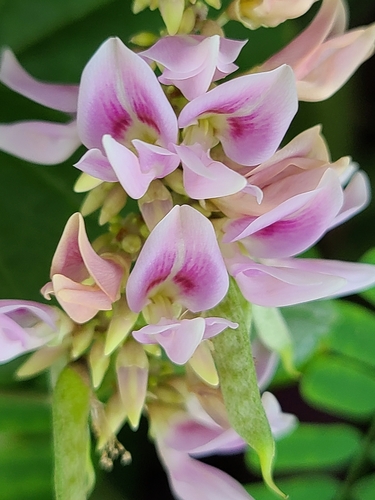
Strongylodon macrobotrys
A. Gray
Jade Vine, Emerald Creeper
(c) guanhong, some rights reserved (CC BY-NC)
(c) guanhong, some rights reserved (CC BY-NC)
(c) guanhong, some rights reserved (CC BY-NC)
What to Eat
Edible parts: Flowers
Jade vine flowers are edible. People of its native island of Luzon (name in Tagalog: tayabak) eat them as vegetables in a similar manner as katurai.
Where to Find It
A tropical plant. They need a temperature above 15°C. They occur from Cagayan, Bataan, Cavite, Laguna, Quezon, Sorsogon, Catanduanes and Mindoro in the Philippines. Plants are frost tender. It does best in seasonally moist and dry climates. It needs a reasonably fertile and well-drained soil. It can grow in full sun or light shade. It suits hardiness zones 11-12. In Adelaide Botanical Gardens hot house. In Townsville Queens BG.
Asia, Australia, Fiji, Hawaii, India, Malaysia, Pacific, Papua New Guinea, PNG, Philippines*, SE Asia, Sri Lanka, Triniada-Tobago, USA,
How to Identify
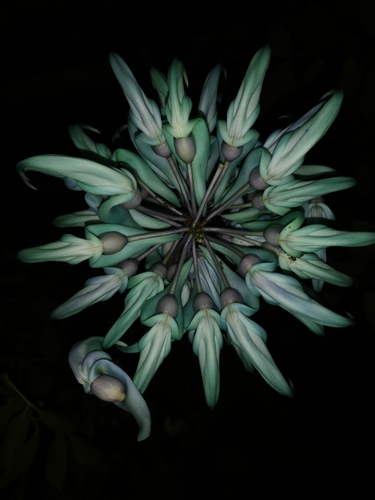
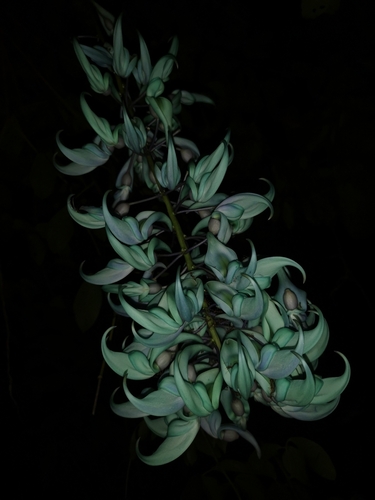
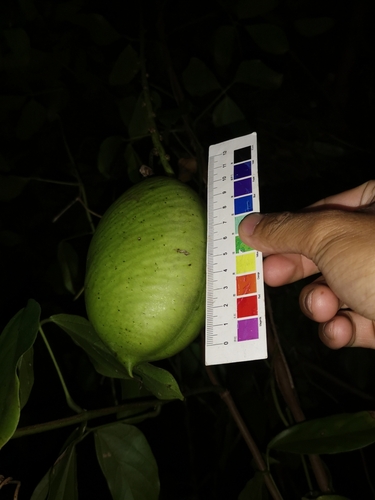
A tall tree climber. They can grow to 20 m high. The leaves are 15 cm long. The leaves are widely scattered and with 3 leaflets. They are on 5 to 8 cm long leaf stalks. The leaflets pinkish bronze and are paler underneath. The leaves change to rich green. The flower cluster is made up of flowers on short stalks along a central stem. These stalks can be 40-90 cm long. The flowers are pea-like and blue-green. They are 8 cm long. The pods are hard, fleshy and green. They have few seeds and do not split open. They are 10 cm long and shaped like a mango.
How to Grow
Plants can be grown from fresh seed sown into warm soil. Plants can also be grown from cuttings. Aerial layering is also possible.
Wikipedia
Source ↗Strongylodon macrobotrys, commonly known as the jade vine, emerald vine, or turquoise jade vine, is a leguminous vine endemic to the Philippines. It is a popular ornamental plant known for its cascading clusters of vibrant turquoise or greenish-blue claw-shaped flowers. Cultivating jade vine requires a tropical environment, making it a popular choice in botanical gardens and conservatories. The plant's striking appearance and limited distribution contribute to its allure among plant enthusiasts worldwide.
Production
Plants grown from seed flower in the third year.
Notes
There are (4) 12-20 Strongylodon species.
Names & Synonyms
Cascada de jade
References (14)
- Bodkin, F., 1991, Encyclopedia Botanica. Cornstalk publishing, p 955
- Brickell, C. (Ed.), 1999, The Royal Horticultural Society A-Z Encyclopedia of Garden Plants. Convent Garden Books. p 987 (Photo)
- Cundall, P., (ed.), 2004, Gardening Australia: flora: the gardener's bible. ABC Books. p 1380
- Flowers of the Philippines, National Media production Centre, Manila. p 8
- Kew Plants of the World Online
- Llamas, K.A., 2003, Tropical Flowering Plants. Timber Press. p 223
- Lord, E.E., & Willis, J.H., 1999, Shrubs and Trees for Australian gardens. Lothian. p 338
- Marinelli, J. (Ed), 2004, Plant. DK. p 218
- Monsalud, M.R., Tongacan, A.L., Lopez, F.R., & Lagrimas, M.Q., 1966, Edible Wild Plants in Philippine Forests. Philippine Journal of Science. p 488
- Polinag, M. A., 2003, Food from the Wilderness. Department of Environment and Natural Resources. Laguna.
- Smith, A.C., 1985, Flora Vitiensis Nova, Lawaii, Kuai, Hawaii, Volume 3 p 209
- Staples, G.W. and Herbst, D.R., 2005, A tropical Garden Flora. Bishop Museum Press, Honolulu, Hawaii. p 327 (Drawing)
- Verdcourt, B., 1979, Manual of New Guinea Legumes. Botany Bulletin No 11, Division of Botany, Lae, Papua New Guinea. p 432
- C. Wilkes, U.S. Expl. Exped., Phan. 15:448. 1854; t. 49. 1856