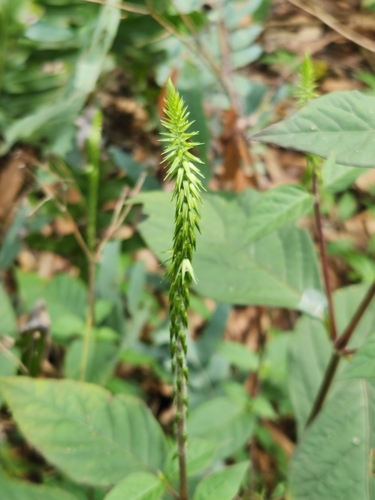
Suaeda linearis
(Elliott) Moq.
Annual Seepweed, Tall sea-blite

(c) Peggy Romfh, some rights reserved (CC BY-NC)
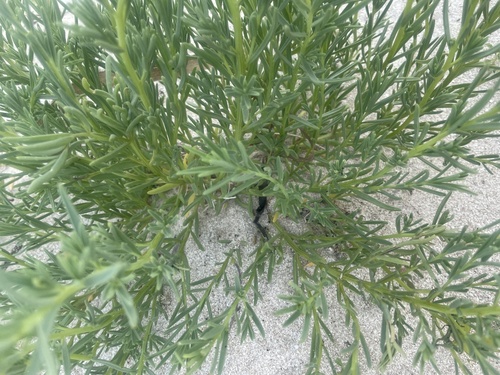
(c) maxannews, some rights reserved (CC BY-NC)
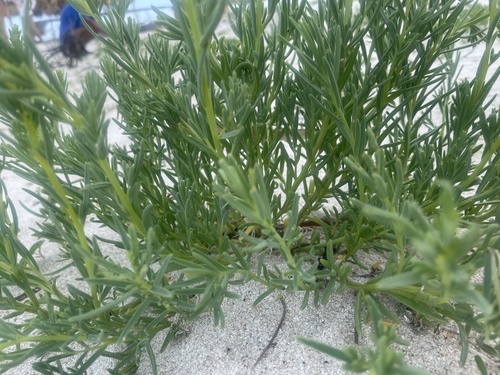
(c) maxannews, some rights reserved (CC BY-NC)
What to Eat
Edible parts: Leaves, Seeds
The leaf tips can be cooked or used as a salty flavouring. The seeds, approximately 2mm in diameter, can be eaten raw or cooked — they are ground into a meal and prepared as a mush, or added to cereals and used in making bread.
Where to Find It
It is a tropical plant.
Bahamas, Central America*, Cuba, Dominican Republic, Jamaica*, Mexico*, North America, USA, West Indies*,
How to Identify
Annual or perennial herb reaching 1 m tall with wind-pollinated hermaphrodite flowers blooming August to September and seeds maturing September to October. Grows in light sandy, medium loamy, or heavy clay soils across mildly acidic to basic pH ranges, including saline conditions. Requires full sun and moist soil, tolerating coastal exposure well.
How to Grow
Propagation: Sow seed in spring, direct in situ.
Medicinal Uses
None known
Other Uses
None known
Wikipedia
Annual or perennial herb reaching 1 m tall with wind-pollinated hermaphrodite flowers blooming August to September and seeds maturing September to October. Grows in light sandy, medium loamy, or heavy clay soils across mildly acidic to basic pH ranges, including saline conditions. Requires full sun and moist soil, tolerating coastal exposure well.
Notes
Also put in the family Chenopodiaceae.
Names & Synonyms
References (3)
- Kermath, B. M., et al, 2014, Food Plants in the Americas: A survey of the domesticated, cultivated and wild plants used for Human food in North, Central and South America and the Caribbean. On line draft. p 840
- Plants for a Future database, The Field, Penpol, Lostwithiel, Cornwall, PL22 0NG, UK. http://www.scs.leeds.ac.uk/pfaf/
- Plants of Haiti Smithsonian Institute http://botany.si.edu