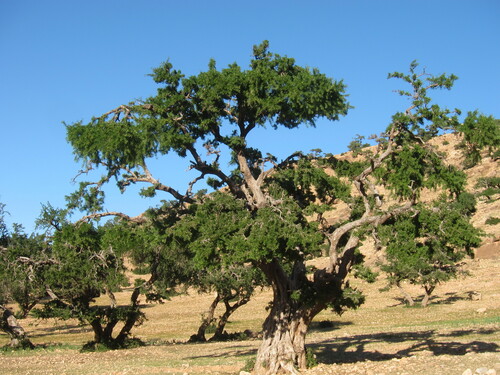
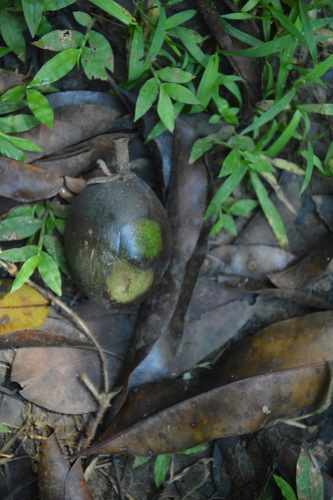
Synsepalum stipulatum
(Radlk.) Engl.
Miraculous fruit
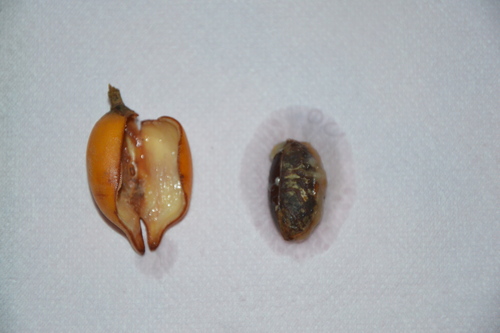
iNaturalist · cc-by-nc
(c) clementine_db, some rights reserved (CC BY-NC), uploaded by clementine_db
(c) clementine_db, some rights reserved (CC BY-NC), uploaded by clementine_db
What to Eat
Edible parts: Fruit, Seed
The fruit pulp is eaten raw and used to make jams and jellies. The seeds are also edible.
Where to Find It
A tropical plant. It grows in the lowland rain-forest in West Africa. It grows in the humid zone. It grows on rocky outcrops.
Africa, Central Africa, Congo DR, Nigeria, West Africa,
Countries: Angola, Burkina Faso, Burundi, Benin, Botswana, Congo (DRC), Central African Republic, Congo (Republic), Cote d'Ivoire, Cameroon, Cape Verde, Djibouti, Algeria, Egypt, Eritrea, Ethiopia, Gabon, Ghana, Gambia, Guinea, Equatorial Guinea, Guinea-Bissau, Kenya, Comoros, Liberia, Lesotho, Libya, Morocco, Madagascar, Mali, Mauritania, Mauritius, Malawi, Mozambique, Namibia, Niger, Nigeria, Rwanda, Seychelles, Sudan, Sierra Leone, Senegal, Somalia, South Sudan, Sao Tome & Principe, Eswatini, Chad, Togo, Tunisia, Tanzania, Uganda, South Africa, Zambia, Zimbabwe
How to Identify
A tree. It grows 15 m high. It branches low down. The leaves can be 25 cm long by 6 cm wide but are often smaller. The flowers are in groups in the axils of leaves. The flowers are white. The fruit are oval and 2 cm long by 1.5 cm wide. They contain one seed.
Production
Fruiting is seasonal.
Names & Synonyms
Onga, Shonga, Tonga, Tongase, Tunga, Yonga
Pouteria longicuneata (De Wild.) BaehniPouteria stipulata (Radlk.) BaehniStironeurum stipulatum Radlk.Synsepalum attenuatum Hutch. & Dalz.[Invalid]
Synsepalum longicuneatum De Wild.
References (11)
- Burkill, H. M., 1985, The useful plants of west tropical Africa, Vol. 5. Kew.
- Jardin, C., 1970, List of Foods Used In Africa, FAO Nutrition Information Document Series No 2.p 23
- Keay, R.W.J., 1989, Trees of Nigeria. Clarendon Press, Oxford. p 398
- Latham, P & Mbuta, A., 2017, Useful Plants of Central Province, Democratic Republic of Congo. Volume 2. Salvation Army p 196
- Liengola, I. B., 2001, A contribution to the study of native edible plants by the Turumbu and Lokele of the Tshopo District, Province Orientale, D. R. Congo. Syst. Geogr. Pl. 71:687-698
- Monogr. afrik. Pflanzen-Fam. 8:33. 1904
- Mosango, M., Szafranski, F., 1985, Plantes sauvages à fruits comestibles dans les environs de Kisangani (Zaïre). In: Journal d'agriculture traditionnelle et de botanique appliquée, 32e année, pp. 177-190
- Termote, C., et al, 2011, Eating from the wild: Turumbu, Mbole and Bali traditional knowledge of non-cultivated edible plants, District Tshopo, DRCongo, Gen Resourc Crop Evol. 58:585-618
- Termote, C., et al, 2012, Wild Edible Plant Markets in Kisangani, Democratic Republic of Congo. Human Ecology 40:269-285
- Vascular Plants of Korup National Park. korupplants.myspecies.info
- World Checklist of Useful Plant Species 2020. Royal Botanic Gardens, Kew