Talinum arnotii
Hook. f.
Porcupine root, Kalahari butterweed

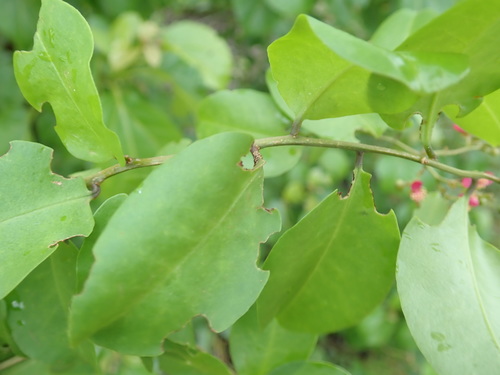
(c) Richard Johnstone, some rights reserved (CC BY-NC), uploaded by Richard Johnstone

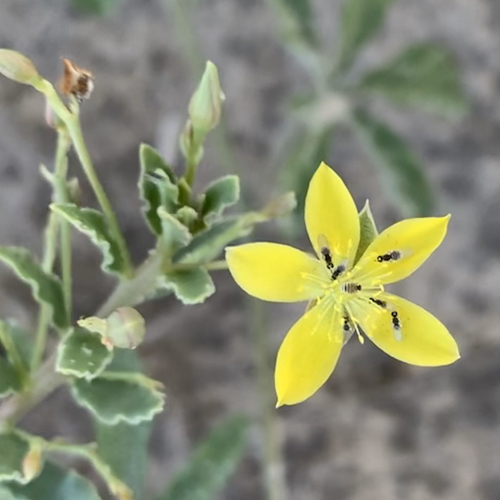
(c) Tony Rebelo, some rights reserved (CC BY-SA), uploaded by Tony Rebelo

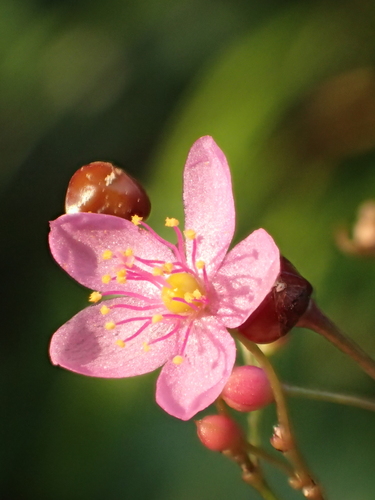
(c) Kyle Campbell, some rights reserved (CC BY-ND), uploaded by Kyle Campbell

Susan Brown

Susan Brown

Susan Brown
What to Eat
Edible parts: Leaves, Stems, Vegetable
The leaves and stems are used as a green vegetable in savoury dishes, pounded into a mash, or eaten raw as a salad.
Where to Find It
A tropical plant. It can grow in sandy and clay soils. It grows in areas with an annual rainfall between 50-700 mm. It can grow in arid places.
Africa, Botswana, East Africa, Eswatini, Namibia, South Africa, Southern Africa, South America, Swaziland, Zambia, Zimbabwe,
How to Identify
A herb or small shrub. It can be an annual plant or grow for a few years. It grows 40 cm high. The roots are thick and succulent. They can be 38 cm long.
Nutrition Score: 25/100
| Part | Moisture | kJ | kcal | Protein | Vit A | Vit C | Iron | Zinc |
|---|---|---|---|---|---|---|---|---|
| Leaves | 93.1 | 105 | 25 | 1.6 | — | 4.9 | 1.5 | 0.5 |
Notes
There are about 50 Talinum species. They grow in warm places. Also put in the family Portulacaceae.
Names & Synonyms
Kgalahete, Mphunyuka, Muloho, Umpunyu
References (19)
- Fox, F. W. & Young, M. E. N., 1982, Food from the Veld. Delta Books. p 311
- Grubben, G. J. H. and Denton, O. A. (eds), 2004, Plant Resources of Tropical Africa 2. Vegetables. PROTA, Wageningen, Netherlands. p 518
- Jardin, C., 1970, List of Foods Used In Africa, FAO Nutrition Information Document Series No 2.p 105
- Long, C., 2005, Swaziland's Flora - siSwati names and Uses http://www.sntc.org.sz/flora/
- Lu De-Quan, Portulacaceae, Flora of China.
- Maguire, 1978,
- Marshall, 1976,
- Martin, F.W. & Ruberte, R.M., 1979, Edible Leaves of the Tropics. Antillian College Press, Mayaguez, Puerto Rico. p 215
- Matlhare, T., et al, Vegetables in Botswana. p 21 Bioversity website.
- Peters, C. R., O'Brien, E. M., and Drummond, R.B., 1992, Edible Wild plants of Sub-saharan Africa. Kew. p 163
- Royal Botanic Gardens, Kew (1999). Survey of Economic Plants for Arid and Semi-Arid Lands (SEPASAL) database. Published on the Internet; http://www.rbgkew.org.uk/ceb/sepasal/internet [Accessed 6th June 2011]
- Ruiters-Welcome, A. K., 2019, Food plants of southern Africa. Ph.D. thesis. Univ. of Johannesburg p 91
- Silberbauer, 1965, 1981,
- Story, 1958,
- Swaziland's Flora Database http://www.sntc.org.sz/flora
- Terra, G.J.A., 1973, Tropical Vegetables. Communication 54e Royal Tropical Institute, Amsterdam, p 77
- van Wyk, Be., & Gericke, N., 2007, People's plants. A Guide to Useful Plants of Southern Africa. Briza. p 76
- Wehmeyer, A. S, 1986, Edible Wild Plants of Southern Africa. Data on the Nutrient Contents of over 300 species
- Welcome, A. K. & Van Wyk, B.-E., 2019, An inventory and analysis of the food plants of southern Africa. South African Journal of Botany 122 (2019) 136–179