Trochocarpa cunninghamii
(DC.) W. M. Curtis
Cunningham's trochocarpa, Straggling purpleberry, Flat heath

(c) Tindo2, some rights reserved (CC BY-NC-SA)
(c) Nick Fitzgerald, some rights reserved (CC BY-NC)
What to Eat
Edible parts: Fruit
The fruit can be eaten raw and has a sweet flavour with a dry, mealy texture.
Where to Find It
It is a temperate plant. It grows in the rainforest. It needs well drained, moist soil and shade. It is resistant to frost but sensitive to drought. Tasmania Herbarium. Arboretum Tasmania.
Australia*, Tasmania*,
How to Identify
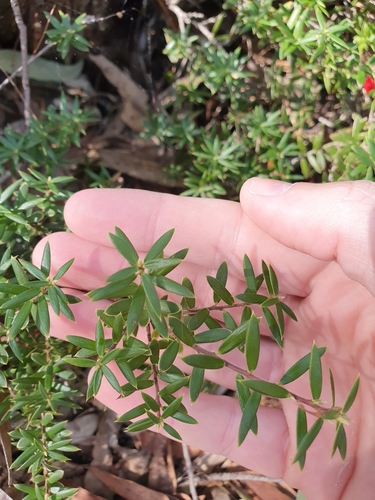
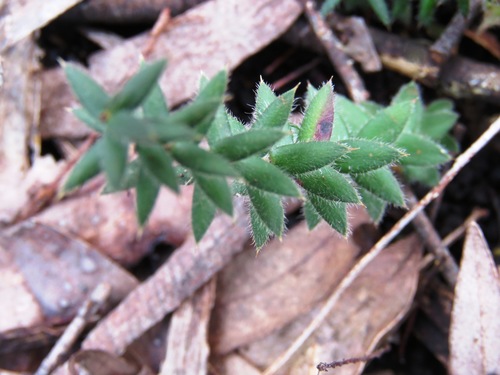
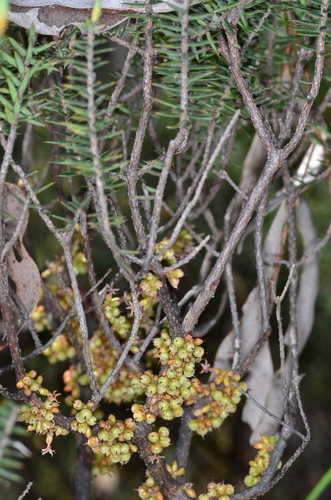
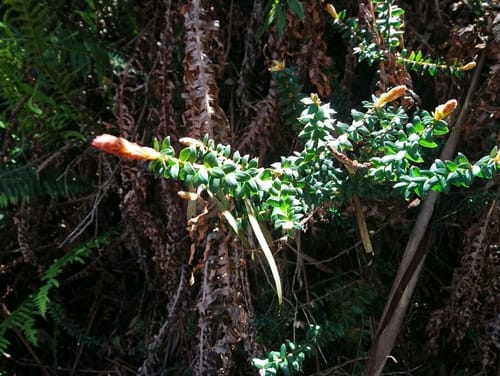
A straggling or sprawling shrub. It grows from 20 cm to 1 m high. The branches are widely spreading. They can spread 2 m wide. The branches often form roots. The young shoots are dark brown and downy. The leaves are scattered and oval. They are in opposite rows at right angles to the stem. The leaves are 0.7-1 cm long and with small teeth around the edge. The young leaves can be red. The flowers are pink or white and tube shaped. They are waxy and hang in spikes. They are near the ends of branches. The fruit is flattened and round. It is fleshy with one stone inside. They are dark blue and 8 mm long.
How to Grow
It can be grown from seed or tip cuttings.
Propagation: Sow seed in a greenhouse as soon as it is ripe where possible, otherwise in early spring. Prick seedlings out into individual pots once large enough to handle and grow on in the greenhouse for at least their first winter. Cuttings are best taken in July or August in a frame. As with many members of this family, plants likely have very fine root systems, so take great care when transplanting. Division of self-layered branches is also possible.
Medicinal Uses
None known.
Other Uses
None known.
Wikipedia
Source ↗Trochocarpa cunninghamii is a flowering plant species of the family Ericaceae and is endemic to Tasmania. It is commonly referred to as straggling purpleberry due to its round flattened mauve drupe fruits. It is a woody shrub usually found in the understorey of rainforests and subalpine forests in the Central Plateau and western Tasmania.
References (5)
- Hibbert, M., 2002, The Aussie Plant Finder 2002, Florilegium. p 302
- Kirkpatrick, J., 1997, Alpine Tasmania, An Illustrated guide to the flora and vegetation. Oxford, p 37
- Minchin, R.F., Tasmanian Wildflowers. A Field Guide. Volume one. Regal Publications, Launceston p 88
- Tasmanian Herbarium Vascular Plants list p 27
- Whiting, J. et al, 2004, Tasmania's Natural Flora. Tasmania's Natural Flora Editorial Committee PO Box 194, Ulverstone, Tasmania, Australia 7315 p 151