Ulmus thomasii
Sarg.
Rock elm, Cork elm
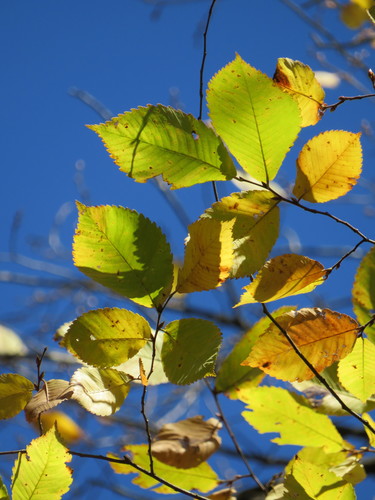
(c) Owen Clarkin, some rights reserved (CC BY-NC), uploaded by Owen Clarkin

(c) Douglas Goldman, some rights reserved (CC BY-SA), uploaded by Douglas Goldman

(c) jlmason, some rights reserved (CC BY-NC), uploaded by jlmason
What to Eat
Edible parts: Leaves
The leaves can be eaten raw or cooked.
Where to Find It
It often grows on heavy clay soils near limestone ridges. It grows between 60-760 m altitude. It suits hardiness zones 2-9.
Australia, Canada, North America, USA,
How to Identify
A medium sized tree. It grows to 25-30 m high. It spreads 12 m wide. The trunk is 75 cm across. It is an upright tree with a narrow rounded crown. The young branches have corky bark. The leaves are 5-10 cm long and 2-5 cm wide. They have teeth along the edge. The leaves are shiny dark green above and pale green with soft hairs underneath. The flowers are 3 mm wide and green. They occur in long drooping clusters. The fruit are 10-19 mm long and flat keys. They have one seed and wide wings. These are notched at the tip.
How to Grow
Prefers a deep fertile soil in full sun, but can be grown in any soil of at least moderate quality so long as it is well drained. Plants are tolerant of poor soil conditions in the wild. Although perfectly hardy, this species does not thrive in Britain. It is very slow growing, even in its native range. Susceptible to 'Dutch elm disease', a disease that has destroyed the greater part of all the elm trees growing in Britain. The disease is spread by means of beetles. There is no effective cure (1992) for the problem, but most E. Asian, though not Himalayan, species are resistant (though not immune) to the disease so the potential exists to use these resistant species to develop new resistant hybrids with the native species. The various species of this genus hybridize freely with each other and pollen is easily saved, so even those species with different flowering times can be hybridized.
Propagation: Seed sown in a cold frame as soon as it is ripe usually germinates within a few days. Stored seed germinates less reliably and is best sown in early spring. Seed can also be harvested green — fully developed but before drying on the tree — and sown immediately in a cold frame, where it germinates quickly and produces a larger plant by the end of the growing season. Once large enough to handle, prick seedlings into individual pots and grow on in a greenhouse through their first winter, then plant out in late spring or early summer after the last expected frosts. Do not leave plants in a nursery bed for more than two years, as they develop a tap root and transplant poorly after that point. Can also be propagated by layering suckers or coppiced shoots.
Medicinal Uses
None known
Other Uses
The wood is very strong, hard, heavy, tough, elastic, durable, close and beautifully grained, and difficult to split. Weighing 45lb per cubic foot, it is used for furniture, agricultural implements, wheel hubs, and other applications requiring toughness, solidity, and flexibility.
Wikipedia
Source ↗Ulmus thomasii, the rock elm or cork elm (or orme liège in Québec), is a deciduous tree native primarily to the Midwestern United States. The tree ranges from southern Ontario and Quebec, south to Tennessee, west to northeastern Kansas, and north to Minnesota.
Production
Trees live for 175 years.
Names & Synonyms
References (5)
- Cundall, P., (ed.), 2004, Gardening Australia: flora: the gardener's bible. ABC Books. p 1451
- Farrar, J.L., 1995, Trees of the Northern United States and Canada. Iowa State University press/Ames p 356
- Little, E.L., 1980, National Audubon Society Field Guide to North American Trees. Alfred A. Knopf. p 425
- Plants for a Future database, The Field, Penpol, Lostwithiel, Cornwall, PL22 0NG, UK. http://www.scs.leeds.ac.uk/pfaf/
- Silva 14:102. 1902 "thomasi"


