Uvaria afzelii
Scott-Elliot
Monkey finger
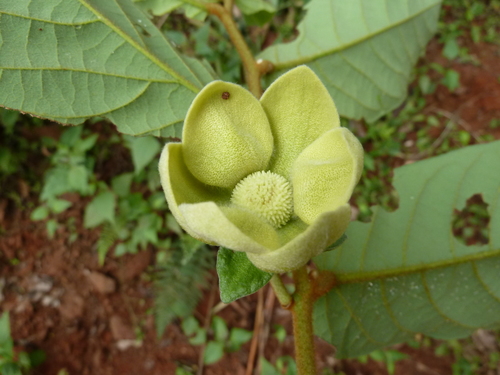
(c) Carel Jongkind, some rights reserved (CC BY-NC), uploaded by Carel Jongkind
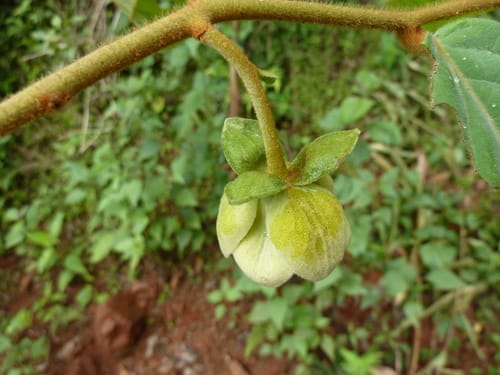
(c) Carel Jongkind, some rights reserved (CC BY-NC)
What to Eat
Edible parts: Fruit
The fruit is edible. The bark or pieces of the stem are sometimes put into palm-wine to add potency, or are added to the distillate to give colour to the spirit.
Where to Find It
A tropical plant. It grows in areas that are flooded in the rainy season.
Africa, Côte d'Ivoire, Ivory Coast, Nigeria, Sierra Leone, West Africa,
How to Identify
A climber or spreading shrub. It grows 5 m tall. The branches are hairy. The leaves are oblong and 15 cm long by 5 cm wide. They are hairy. The flowers are yellow-green. The fruit are hairy.
How to Grow
The flowers are very heavily scented.
Medicinal Uses
The plant is held to be good for treating fevers, bronchial troubles and stomach-ache. The leaves are used in the treatment of fevers and, boiled with pepper, are taken in draught, or rubbed on the skin in cases of 'yellow fever'. The pulped leaves are eaten with (? Oil-) palm seeds for treating coughs. The leaf-sap is used as a nasal instillation for treating epileptic fits and fainting Applied externally, a decoction is used to wash a person with small-pox or mange. The bark is antitussive, diuretic, febrifuge, hepatic and purgative. It is used to treat infections of the liver, kidneys and bladder and as a cough medicine. The root is antidote, stomachic. It is used to treat inflammations of the bladder and kidneys; digestive problems; gonorrhoea; and as an antidote for poisoning due to eating bad food. The root-bark on its own is taken internally for treating catarrhal inflammations of the mucous membranes; bronchitis; as well as for gonorrhoea. Examination of the roots has shown no alkaloid present. The bark contains some tannin.
Other Uses
The wood is hard.
Notes
There are 110 Uvaria species.
Names & Synonyms
Doudouglon
References (7)
- Burkill, H. M., The Useful Plants of West Tropical Africa.
- Busson, 1965,
- Dalziel, J. M., 1937, The Useful plants of west tropical Africa. Crown Agents for the Colonies London.
- Diop, A. l., et al, 2021, Cultural importance of wild edible plants in three sympatric communities: Agni, Akyé and Gwa in the Department of Alépé (Southeast of Côte d’Ivoire). Ethnobotany Research and Applications 22:35. p 6
- Jardin, C., 1970, List of Foods Used In Africa, FAO Nutrition Information Document Series No 2.p 166
- JSTOR Global Plants edible
- Peters, C. R., O'Brien, E. M., and Drummond, R.B., 1992, Edible Wild plants of Sub-saharan Africa. Kew. p 55


