Vaccinium vacillans
Kalm ex Torr.
Dryland blueberry, Low Blueberry, Late low blueberry

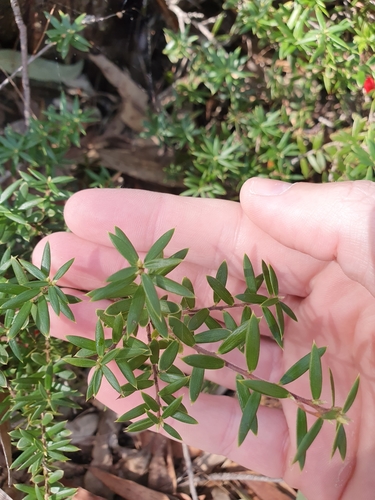
(c) Claire Ciafré, some rights reserved (CC BY-NC)

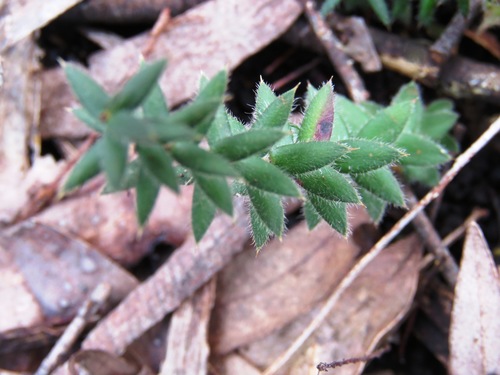
(c) Claire Ciafré, some rights reserved (CC BY-NC)

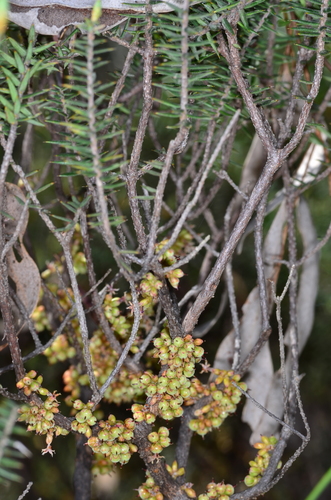
(c) davidenrique, some rights reserved (CC BY-NC-SA)
What to Eat
Edible parts: Fruit
The fruit can be eaten raw or cooked. It is very sweet and is considered one of the best-tasting blueberries. The fruit is about 5mm in diameter.
Dangerous Lookalikes
This plant can be confused with the following toxic species. Always verify identification carefully before consuming any wild plant.


Deadly Nightshade: Tall herbaceous plant (1-2m), single shiny black cherry-sized berries, star-shaped calyx, large oval leaves, sweet but dangerous taste.
Dryland blueberry: Low woody shrub, berries in clusters with crown/remnant calyx ring, sweet taste.
Where to Find It
It is a temperate plant. It suits USDA hardiness zones 5-9.
North America, USA,
How to Identify
A small shrub. It grows 1.2 m tall. It loses its leaves during the year. The leaves are alternate and have short leaf stalks. They are 3 cm long and 2 cm wide. The flowers are tube or urn shaped and 5-6 mm long. The fruit are 5 mm across.
How to Grow
Requires a moist but freely-draining lime free soil, preferring one that is rich in peat or a light loamy soil with added leaf-mould. Prefers a very acid soil with a pH in the range of 4.5 to 6, plants soon become chlorotic when lime is present. Succeeds in full sun or light shade though it fruits better in a sunny position. Requires shelter from strong winds. Plants often form extensive colonies in the wild. Dislikes root disturbance, plants are best grown in pots until being planted out in their permanent positions. Plants in this genus are notably resistant to honey fungus.
Propagation: Sow seed in late winter in a greenhouse using a lime-free potting mix, barely covering the seed. Stored seed may need up to 3 months of cold stratification. Alternatively, sow fresh seed in a greenhouse as soon as it is ripe. When seedlings reach about 5cm tall, prick them out into individual pots and grow on in a lightly shaded greenhouse position for at least their first winter. Plant out into permanent positions in late spring or early summer, after the last expected frosts. Half-ripe cuttings, 5–8cm with a heel, can be taken in August and rooted in a frame, though this is slow and difficult. Layering can be done in late summer or early autumn (though one source suggests spring is preferable) and takes around 18 months. Division of suckers can be carried out in spring or early autumn.
Medicinal Uses
None known.
Other Uses
None known.
Wikipedia
Source ↗A deciduous shrub growing to 1.2m (4ft), hardy to UK zone 6, flowering in May. Hermaphrodite flowers are pollinated by insects. Tolerates light sandy to medium loamy, well-drained soil in mildly acid to very acid conditions. Grows in semi-shade or full sun and adapts to dry or moist soil.
Names & Synonyms
References (7)
- Beckstrom-Sternberg, Stephen M., and James A. Duke. "The Foodplant Database." http://probe.nalusda.gov:8300/cgi-bin/browse/foodplantdb.(ACEDB version 4.0 - data version July 1994)
- Duke, J.A., 1992, Handbook of Edible Weeds. CRC Press. p 209
- Facciola, S., 1998, Cornucopia 2: a Source Book of Edible Plants. Kampong Publications, p 99
- Fl. New York 1:444. 1843
- Hedrick, U.P., 1919, (Ed.), Sturtevant's edible plants of the world. p 669
- Plants for a Future database, The Field, Penpol, Lostwithiel, Cornwall, PL22 0NG, UK. http://www.scs.leeds.ac.uk/pfaf/
- Toupal, R. S. & Hollenback, K., 2009, An Ethnobotany of Indiana Dunes National Lakeshore: Plant Uses of the Ojibwa People. Bureau of Applied Research in Anthropology. University of Arizona