Washingtonia robusta
H. Wendl.
Desert Fan Palm
(c) itazura, some rights reserved (CC BY-NC)
(c) Octavio Rivera Hernández, some rights reserved (CC BY-NC)

(c) Thibaud Aronson, some rights reserved (CC BY-SA), uploaded by Thibaud Aronson
What to Eat
Edible parts: Fruit, Seeds, Palm heart, Cabbage
The fruit, seeds, and palm heart are edible, and the plant also produces edible cabbage. Traditionally, the fruit are eaten.
Where to Find It
It does best in warm temperate to tropical places. It often grows near the sea in Mexico. It suits arid regions. In Adelaide Botanical Gardens. It suits plant hardiness zones 9-11. Hobart Botanical Gardens.
Africa, Antigua and Barbuda, Asia, Australia, Central America, Colombia, East Africa, Ecuador, Europe, Hawaii, India, Indonesia, Italy, Mediterranean, Mexico*, North America, Pacific, SE Asia, Slovenia, South America, Tasmania, USA, Zimbabwe,
How to Identify
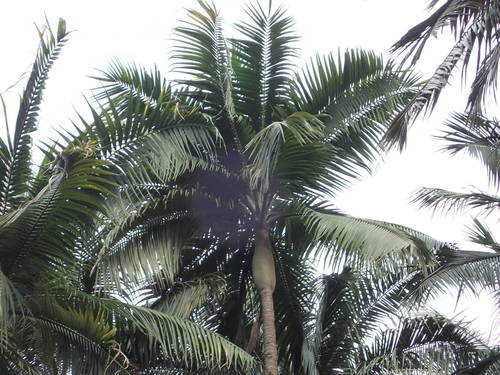
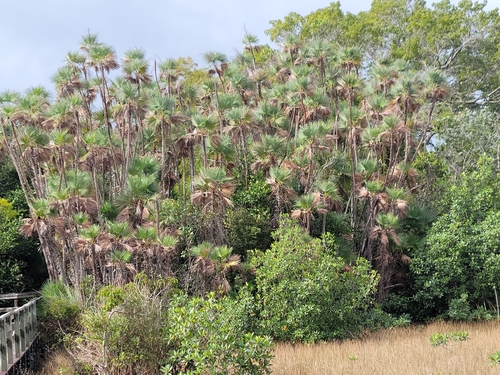
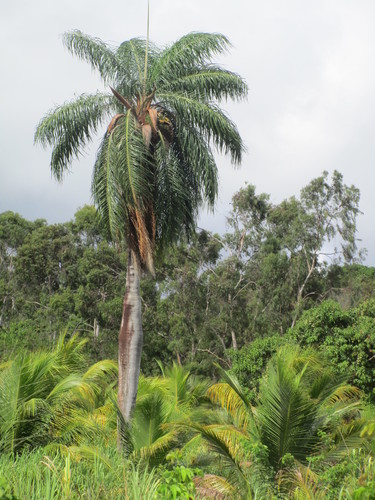
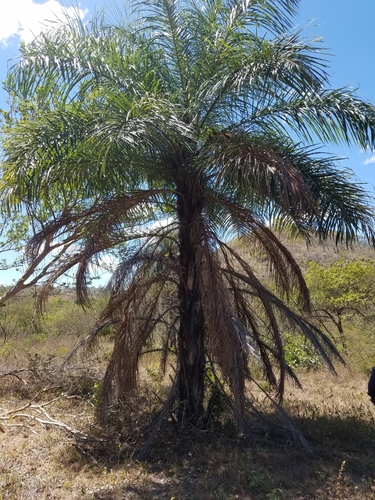
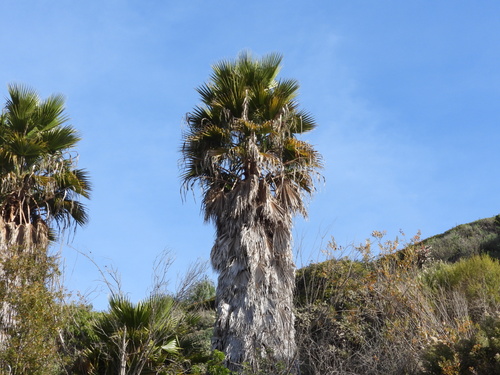
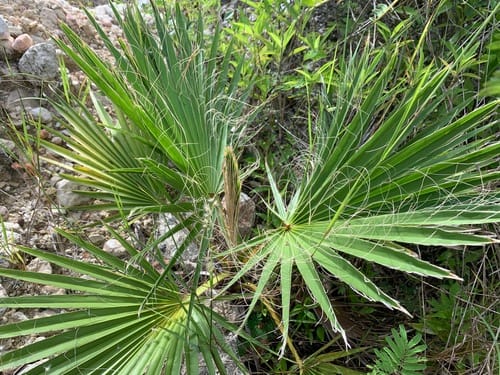
A fan palm. It can be 40 m tall. The trunk is thinner than Washingtonia filifera. It is flared widely at the base. The trunk can be covered with dead leaves. The leaves are large and fan shaped. They are green on both surfaces. There are brown thorns on the leaf stalk. The base of the leaf has a red-brown sheath. Mature palms do not have threads on the leaf blades. The flowering stalk grows from among the leaves and extends beyond them. They are 2-3 m long. Flowers are pink. The fruit are round and black when ripe.
How to Grow
Plants can be grown from seeds. The small seeds grow very easily.
Medicinal Uses
Seeds grow very easily, making propagation straightforward.
Names & Synonyms
Mexican Fan palm, Palma abanico, Skyduster palm, Thread palm, Washington Palm
References (24)
- Ambasta, S.P. (Ed.), 2000, The Useful Plants of India. CSIR India. p 687
- Blamey, M and Grey-Wilson, C., 2005, Wild flowers of the Mediterranean. A & C Black London. p 502
- Blomberry, A. & Rodd, T., 1982, Palms. An informative practical guide. Angus & Robertson. p 179
- Cundall, P., (ed.), 2004, Gardening Australia: flora: the gardener's bible. ABC Books. p 1482
- Felger, R.S., Ancient Crops for the Twenty first century, in Rickie, G.A., (ed), 1979, New Agricultural Crops, AAAS Selected Symposium 38. Westview Press, Colarado. p 10
- Gart.-Zeitung (Berlin) 2:198. 1883
- Gibbons, M., 1993, Palms. Compact study Guide and Identifier. Sandstone. p 79
- Gibbons, M., 2003, A pocket guide to Palms. Chartwell Books. p 224
- Grandtner, M. M., 2008, World Dictionary of Trees. Wood and Forest Science Department. Laval University, Quebec, Qc Canada. (Internet database http://www.wdt.qc.ca)
- Haynes, J., & McLaughlin, J., 2000, Edible palms and Their Uses. University of Florida Fact sheet MCDE-00-50-1 p 2
- Henderson, A., Galeano, G and Bernal, R., 1995, Field Guide to the Palms of the Americas. Princeton. p 62
- Hibbert, M., 2002, The Aussie Plant Finder 2002, Florilegium. p 308
- http://www.botanic-gardens-ljubljana.com/en/plants
- Jones, D.L., 1994, Palms throughout the World. Smithtonian Institution, Washington. p 379
- Kermath, B. M., et al, 2014, Food Plants in the Americas: A survey of the domesticated, cultivated and wild plants used for Human food in North, Central and South America and the Caribbean. On line draft. p 924
- Marcia, M. J., et al, 2011, Palm Uses in Northwestern South America: A Quantitative Review. Bot. Rev. (2011) 77:462-570
- Pio-Leon, J. F., et al, 2017, Prioritizing Wild Edible Plants of potential new crops based on Deciduous Forest traditional knowledge by a Rancher community. Botanical Sciences 95(1): 47-59
- Riffle, R.L. & Craft, P., 2003, An Encyclopedia of Cultivated Palms. Timber Press. p 473
- Roa, J. A. G. & Boada, D. S. G., 2018, Fundación para el Fortalecimiento de la Fruticultura y Plantas Alimenticias no Convencionales en Colombia.
- Segura, S. et al, 2018, The edible fruit species in Mexico. Genet Resour Crop Evol (2018) 65:1767–1793
- Staples, G.W. and Herbst, D.R., 2005, A tropical Garden Flora. Bishop Museum Press, Honolulu, Hawaii. p 630 (Drawing)
- Sukarya, D. G., (Ed.) 2013, 3,500 Plant Species of the Botanic Gardens of Indonesia. LIPI p 823
- Swaminathan, M.S., and Kochnar, S.L., 2007, An Atlas of major Flowering Trees in India. Macmillan. p 281
- Wickens, G.E., 1995, Edible Nuts. FAO Non-wood forest products. FAO, Rome. p171