Basselinia glabrata
Becc.
(c) Emilie Ducouret, some rights reserved (CC BY-NC-ND), uploaded by Emilie Ducouret
(c) Emilie Ducouret, some rights reserved (CC BY-NC-ND), uploaded by Emilie Ducouret
(c) Emilie Ducouret, some rights reserved (CC BY-NC-ND), uploaded by Emilie Ducouret
What to Eat
Edible parts: Palm heart, Cabbage
The palm heart (cabbage) is edible, though harvesting it kills the palm.
Known Hazards
Where to Find It
It is a tropical plant. It needs a moist, well drained soil. It grows in the undergrowth of the rainforest. It does not suit high pH soils.
New Caledonia, Pacific,
How to Identify
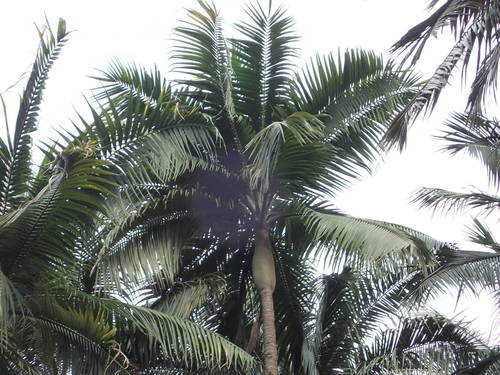
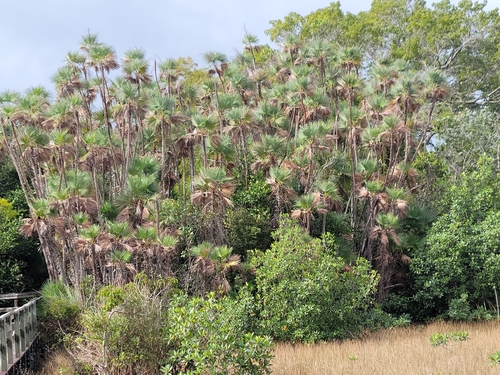
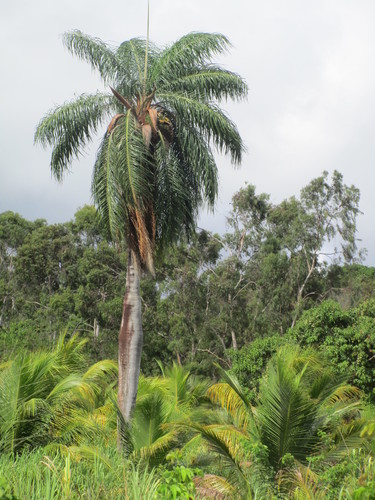
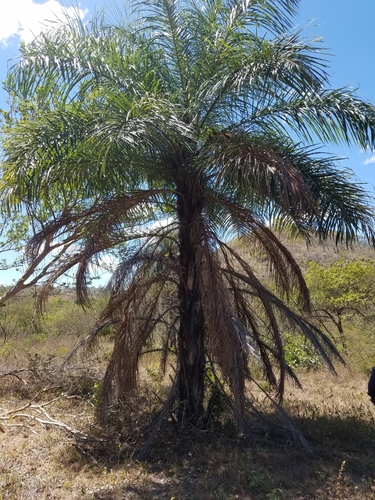
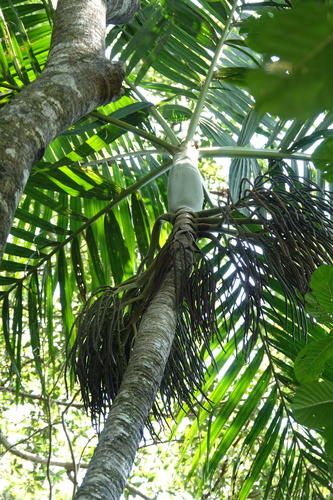
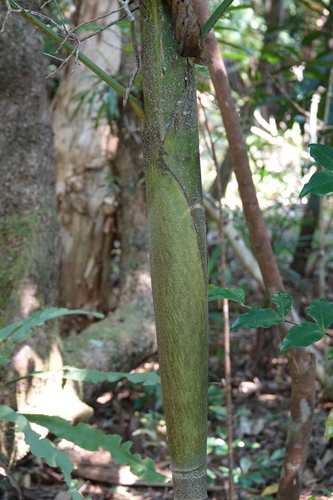
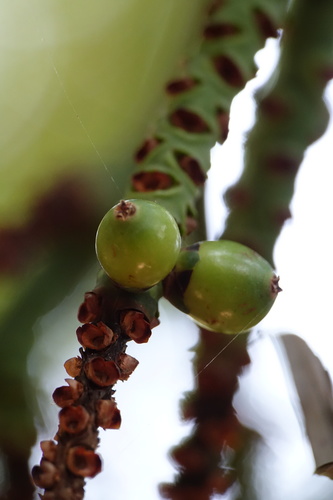
A solitary palm. It grows 13 m high. The trunk is 12 cm across. It is light grey. The crown-shaft is olive-green. It is 45 cm long. The leaves are on short leaf stalks. The leaves are 45 cm long and have 24 pairs of leaflets. These are slightly S shaped and are 45 cm long. There are several flowering stalks at one time at different stages of maturity on one plant. Each flowering stalk has male and female flowers. The fruit are 10 cm long. They are black when mature.
Wikipedia
Source ↗Basselinia glabrata is a species of palm tree endemic to New Caledonia. It was formerly placed in the genus Alloschmidia.
Production
It is a slow growing palm.
Notes
This is a palm under threat of extinction. Plants should be cultivated before harvesting, not collected from the wild. (There is only one Alloschmidia species.)
Names & Synonyms
References (4)
- Haynes, J., & McLaughlin, J., 2000, Edible palms and Their Uses. University of Florida Fact sheet MCDE-00-50-1 p 2 (As Alloschmidia glabrata)
- Johnson, D.V., 1998, Tropical palms. Non-wood Forest products 10. FAO Rome. p 79 (As Alloschmidia glabrata)
- Oldfield, S., et al, 1998, The World List of Threatened Trees. World Conservation Press. p 51 (As Alloschmidia glabrata)
- Riffle, R.L. & Craft, P., 2003, An Encyclopedia of Cultivated Palms. Timber Press. p 26, 249 (As Alloschmidia glabrata)