Carpoxylon macrospermum
H. A. Wendl. & Drude
Carpoxylon palm
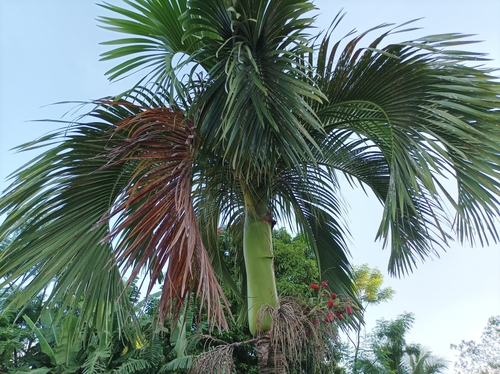
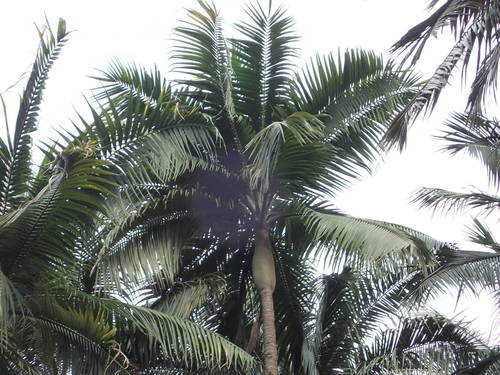
(c) Dominik Maximilián Ramík, some rights reserved (CC BY), uploaded by Dominik Maximilián Ramík
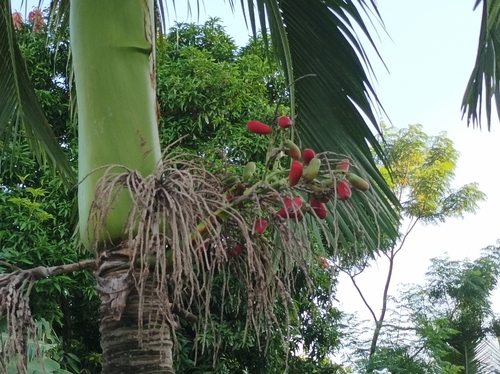
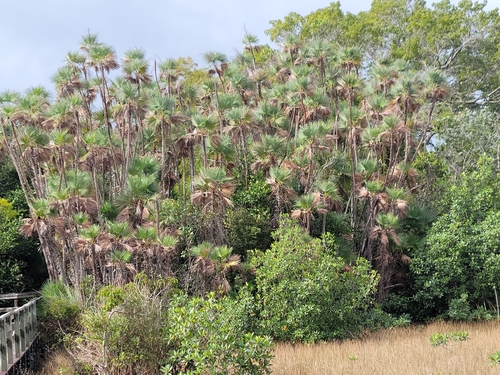
(c) Dominik Maximilián Ramík, some rights reserved (CC BY), uploaded by Dominik Maximilián Ramík

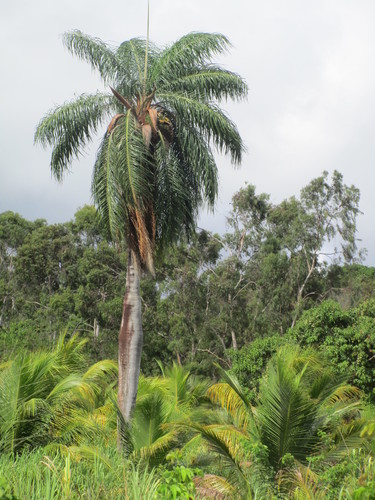
(c) Arthur Chapman, some rights reserved (CC BY-NC-SA)
What to Eat
Edible parts: Fruit, Cabbage, Palm heart
The young, immature fruit are edible, and the palm heart (cabbage) and fruit kernels can be consumed.
Known Hazards
Where to Find It
A tropical plant. It grows in partial shade or full sun. It needs plenty of moisture. It is damaged by frost. It needs humus-rich soil. In the Cairns Botanical Gardens. In Townsville palmetum.
Australia, North America, Pacific, USA, Vanuatu,
How to Identify
A solitary feather-leafed palm. It has a prominent green crown-shaft. The stem has prominent rings. The trunk can be 18 m tall and 35 cm across. The leaves have leaflets along the stalk. The leaves are long and feathery. The leaves arch over. The flowering stalk comes from below the crown-shaft. The fruit are 6 cm long by 3.5 cm wide. They are red. These have an edible kernel.
How to Grow
Plants are grown from seed. Seed take 3-6 months to germinate. Young plants require shade for the first few years.
Production
Seedling growth is very rapid providing it has plenty of moisture.
Other Information
It is a cultivated plant.
Notes
There is only one Carpoxylon species. It is an endangered species.
Names & Synonyms
Bungool, Nibaglou, Nohoej
References (8)
- Dowe, J.L., 1989, Palms of the South-West Pacific. Palm and Cycad Society of Australia. p 106
- Gibbons, M., 2003, A pocket guide to Palms. Chartwell Books. p 65
- Haynes, J., & McLaughlin, J., 2000, Edible palms and Their Uses. University of Florida Fact sheet MCDE-00-50-1 p 4
- Johnson, D.V., 1998, Tropical palms. Non-wood Forest products 10. FAO Rome. p 79
- Jones, D.L., 2000, Palms of Australia 3rd edition. Reed/New Holland. p 131
- Marinelli, J. (Ed), 2004, Plant. DK. p 362
- Riffle, R.L. & Craft, P., 2003, An Encyclopedia of Cultivated Palms. Timber Press. p 289
- www.virtualherbarium.org