Wallichia disticha
T. Anders
Wallich's disticha palm, Fan-shaped feathery palm
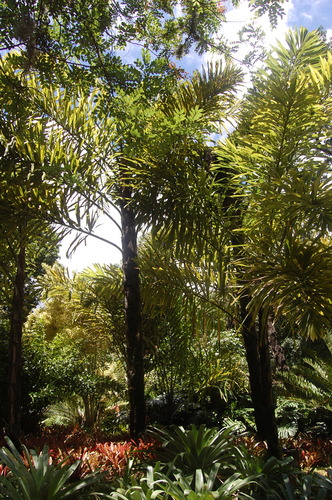
(c) Igor Azevedo, some rights reserved (CC BY-NC), uploaded by Igor Azevedo

Wikimedia Commons - Photo by David J. Stang
What to Eat
Edible parts: Starch, Pith, Fruit
The starch extracted from the stem pith is edible. The fruit are eaten. It serves as a famine food.
Where to Find It
It is a tropical plant. It grows in the hilly districts in the foothills of the Himalayas. They grow to about 600 m altitude in the Himalayas. It will grow to 1200 m altitude in N India. It can grow on sandy granitic soils or limestone rocks. Seedlings are fairly sensitive to the cold. In Yunnan.
Asia, Australia, Bangladesh, Bhutan, China, Himalayas, India, Indochina, Indonesia, Laos, Myanmar*, Nepal, Northeastern India, SE Asia, Sikkim, Singapore, Thailand,
How to Identify
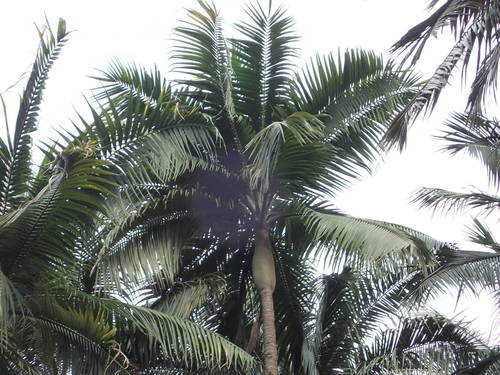
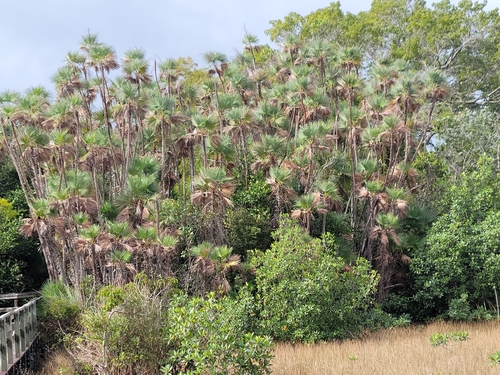
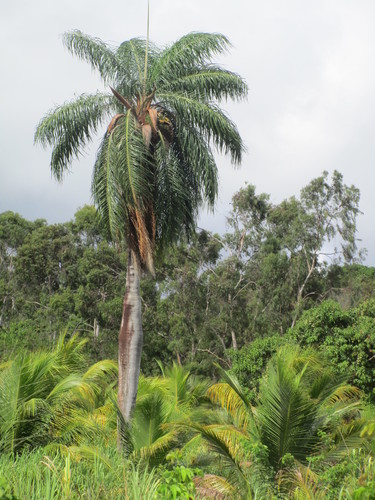
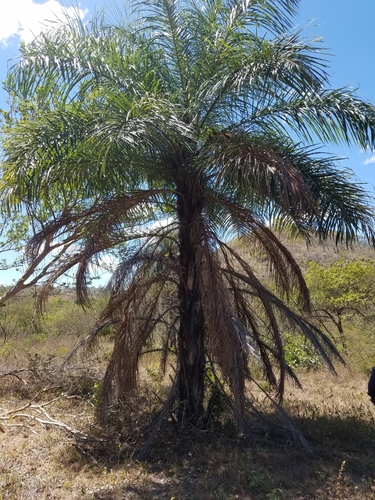
A palm. It grows 6 m high. The trunk is fibrous and covered with old leaf bases. These form an interesting pattern. The leaves are 2.4-3 m long, The leaves are feather like and arranged in 2 opposite rows on each side of the trunk. This makes the palm appear flat from one side. The leaflets are broad and with ragged edges. They are grouped in bundles. The flowering stalk appears amongst the leaf bases. It is very large with thousands of fruit. The fruit are round and 1.5 cm across. They are dark red when ripe.
How to Grow
Plants can be grown from seeds.
Medicinal Uses
The plant is used as a famine food, suggesting nutritional significance.
Production
It is very fast growing. It is short lived. Plants can reach 7 m in 10-15 years. They then flower and die 4-5 years later.
Other Information
It is a famine food.
Notes
There are 7 Wallichia species.
Names & Synonyms
Katong, Ketong, Letme, Min-baw, Palem walih distica, Tali, Tashe, Taw-ohn, Thakal, Zanaung
References (17)
- Ambasta, S.P. (Ed.), 2000, The Useful Plants of India. CSIR India. p 686
- Burkill, I.H., 1966, A Dictionary of the Economic Products of the Malay Peninsula. Ministry of Agriculture and Cooperatives, Kuala Lumpur, Malaysia. Vol 2 (I-Z) p 2293
- Gautam, R. S., et al, 2020, Wild Edible Fruits of Nepal. Int. J. Appl. Sci. Biotechnol. Vol 8(3): 289-304
- Gautam, R. S., et al, 2022, Ethnobotanical Review of Wild Edible Plants of Nepal. Journal of Natural History Museum Volume 32, 2021-22 p 105
- Ghimeray, A. K., Lamsal, K., et al, 2010, Wild edible angiospermic plants of the Illam Hills (Eastern Nepal) and their mode of use by local community. Korean J. Pl. Taxon. 40(1)
- Gibbons, M., 2003, A pocket guide to Palms. Chartwell Books. p 222
- Hibbert, M., 2002, The Aussie Plant Finder 2002, Florilegium. p 308
- Johnson, D.V., 1998, Tropical palms. Non-wood Forest products 10. FAO Rome. p 40
- Jones, D.L., 1994, Palms throughout the World. Smithtonian Institution, Washington. p 376
- Murtem, G. & Chaudhrey, P., 2016, An ethnobotanical note on wild edible plants of Upper Eastern Himalaya, India. Brazilian Journal of Biological Sciences, 2016, v. 3, no. 5, p. 63-81
- Riffle, R.L. & Craft, P., 2003, An Encyclopedia of Cultivated Palms. Timber Press. p 472
- Savita, et al, 2006, Studies on wild edible plants of ethnic people in east Sikkim. Asian J. of Bio Sci. (2006) Vol. 1 No. 2 : 117-125
- Sukarya, D. G., (Ed.) 2013, 3,500 Plant Species of the Botanic Gardens of Indonesia. LIPI p 823
- Sundriyal, M., et al, 1998, Wild edibles and other useful plants from the Sikkim Himalaya, India. Oecologia Montana 7:43-54
- Sundriyal, M., et al, 2004, Dietary Use of Wild Plant Resources in the Sikkim Himalaya, India. Economic Botany 58(4) pp 626-638
- Wild edible plants of Himachal Pradesh
- World Checklist of Useful Plant Species 2020. Royal Botanic Gardens, Kew