Areca macrocarpa
Becc.
Bungang-lakihan

iNaturalist · cc-by-nc
(c) shiveshnair, some rights reserved (CC BY-NC)
(c) shiveshnair, some rights reserved (CC BY-NC)

iNaturalist · cc-by-nc
(c) shiveshnair, some rights reserved (CC BY-NC)
(c) shiveshnair, some rights reserved (CC BY-NC)

iNaturalist · cc-by-nc
(c) shiveshnair, some rights reserved (CC BY-NC)
(c) shiveshnair, some rights reserved (CC BY-NC)
What to Eat
Edible parts: Nuts, Palm heart, Cabbage
The nuts are occasionally used as a betel substitute. The palm heart is edible, as is the cabbage (heart of palm).
Where to Find It
A tropical plant. It needs hot humid conditions. It needs a deep soil rich in organic matter.
Asia, Pacific, Philippines, SE Asia,
Countries: United Arab Emirates, Afghanistan, Armenia, Australia, Azerbaijan, Bangladesh, Bahrain, Brunei, Bhutan, China, Fiji, Micronesia, Georgia, Indonesia, Israel, India, Iraq, Iran, Jordan, Japan, Kyrgyzstan, Cambodia, Kiribati, North Korea, South Korea, Kuwait, Kazakhstan, Laos, Lebanon, Sri Lanka, Marshall Islands, Myanmar, Mongolia, Maldives, Malaysia, Nepal, Nauru, New Zealand, Oman, Papua New Guinea, Philippines, Pakistan, Palau, Qatar, Saudi Arabia, Solomon Islands, Singapore, Syria, Thailand, Tajikistan, Timor-Leste, Turkmenistan, Tonga, Turkey, Tuvalu, Taiwan, Uzbekistan, Vietnam, Vanuatu, Samoa, Yemen
How to Identify
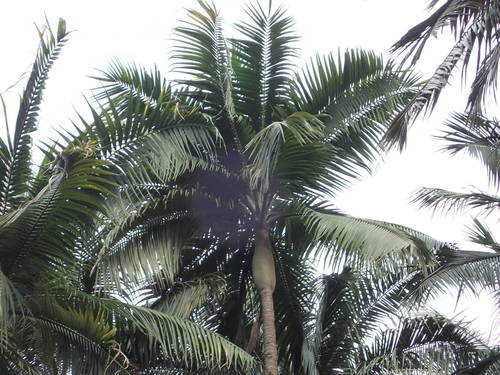
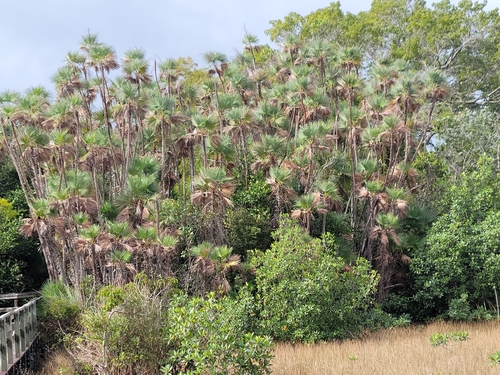
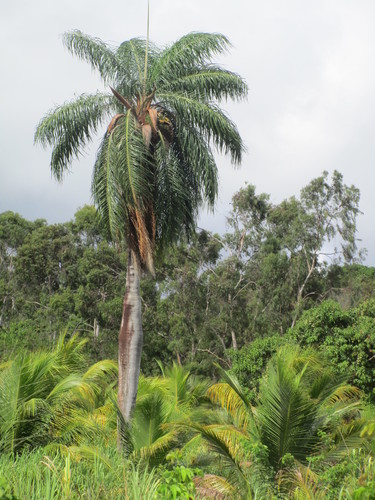
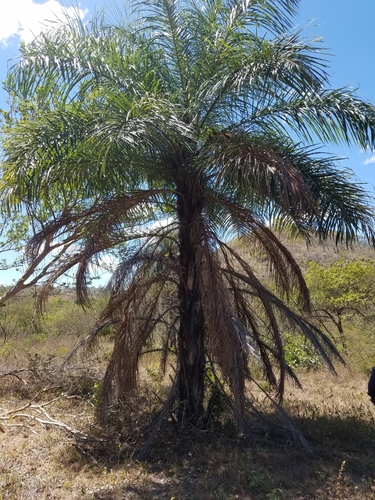
A cluster palm. It forms clumps of slender stems. The crowns overlap with dark green leaves. The fruit are 7 cm long by 3.5 cm wide.
Notes
There are 60 Areca species. They are tropical.
References (4)
- Haynes, J., & McLaughlin, J., 2000, Edible palms and Their Uses. University of Florida Fact sheet MCDE-00-50-1 p 2
- Johnson, D.V., 1998, Tropical palms. Non-wood Forest products 10. FAO Rome. p 44
- Jones, D.L., 1994, Palms throughout the World. Smithtonian Institution, Washington. p 130
- Jones, D.L., 2000, Palms of Australia 3rd edition. Reed/New Holland. p 116