Areca parens
Becc.
Takobtob

wikimedia · pd
Franz Eugen Köhler, Köhler's Medizinal-Pflanzen (via Wikimedia Commons)
Franz Eugen Köhler, Köhler's Medizinal-Pflanzen (via Wikimedia Commons)

gbif · cc-by
Royal Botanic Gardens, Kew
Royal Botanic Gardens, Kew
What to Eat
Edible parts: Nuts, Palm heart, Cabbage
The nuts are occasionally used as a betel substitute. The palm heart is edible, as is the cabbage (heart of palm).
Where to Find It
A tropical plant. It grows in Luzon. In Cairns Botanical Garden.
Asia, Australia, Pacific, Philippines, SE Asia,
Countries: United Arab Emirates, Afghanistan, Armenia, Australia, Azerbaijan, Bangladesh, Bahrain, Brunei, Bhutan, China, Fiji, Micronesia, Georgia, Indonesia, Israel, India, Iraq, Iran, Jordan, Japan, Kyrgyzstan, Cambodia, Kiribati, North Korea, South Korea, Kuwait, Kazakhstan, Laos, Lebanon, Sri Lanka, Marshall Islands, Myanmar, Mongolia, Maldives, Malaysia, Nepal, Nauru, New Zealand, Oman, Papua New Guinea, Philippines, Pakistan, Palau, Qatar, Saudi Arabia, Solomon Islands, Singapore, Syria, Thailand, Tajikistan, Timor-Leste, Turkmenistan, Tonga, Turkey, Tuvalu, Taiwan, Uzbekistan, Vietnam, Vanuatu, Samoa, Yemen
How to Identify
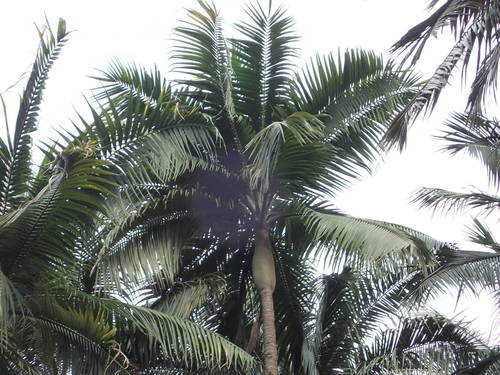
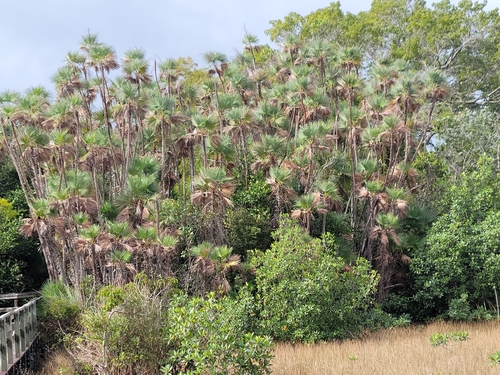
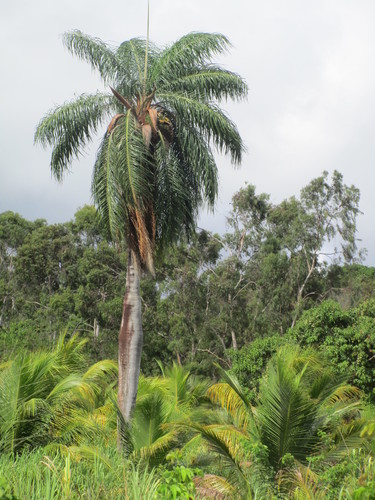
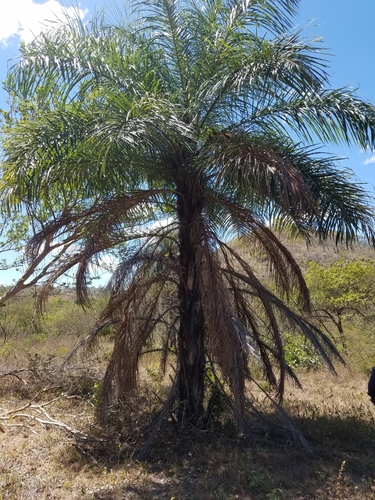
A solitary tropical palm found in Luzon and cultivated in botanical gardens such as Cairns Botanical Garden.
Wikipedia
Source ↗Areca parens is a species of flowering plant in the family Arecaceae. It is found only on the island of Luzon in the Philippines. It is threatened by habitat loss and listed on the IUCN Red List as Endangered.
Notes
There are 60 Areca species. They are tropical.
References (3)
- Haynes, J., & McLaughlin, J., 2000, Edible palms and Their Uses. University of Florida Fact sheet MCDE-00-50-1 p 2
- Johnson, D.V., 1998, Tropical palms. Non-wood Forest products 10. FAO Rome. p 44
- World Checklist of Useful Plant Species 2020. Royal Botanic Gardens, Kew