Caryota no
Becc.
Giant fishtail palm

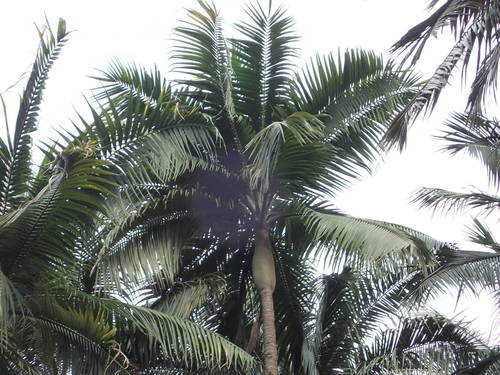
(c) Bernard DUPONT, some rights reserved (CC BY-NC-SA)
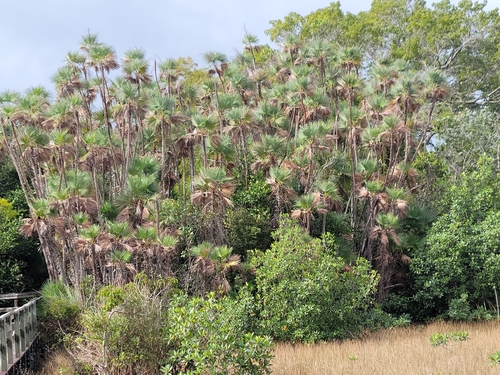
(c) T R Shankar Raman, some rights reserved (CC BY)
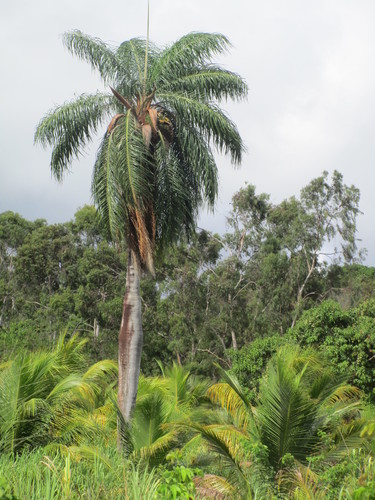
(c) T R Shankar Raman, some rights reserved (CC BY)
What to Eat
Edible parts: Stem starch, Palm heart, Cabbage
The stem starch is edible. The palm heart (cabbage) is edible.
Where to Find It
It is a tropical plant. It is a native of Borneo. It suits the tropical lowlands. It needs humus rich, well drained soil. It can grow in full sun or light shade. It suits hardiness zones 10-12.
Asia, Australia, Indonesia, Malaysia, SE Asia,
How to Identify
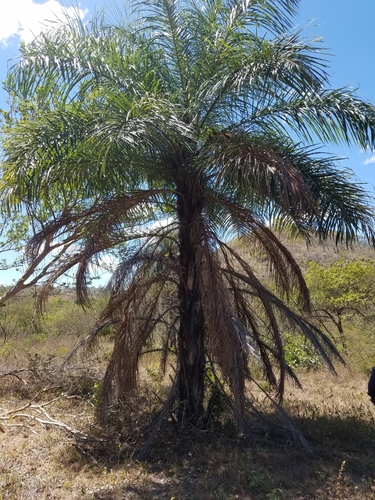
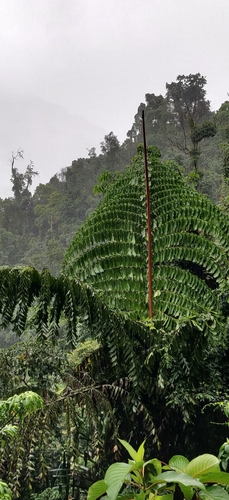
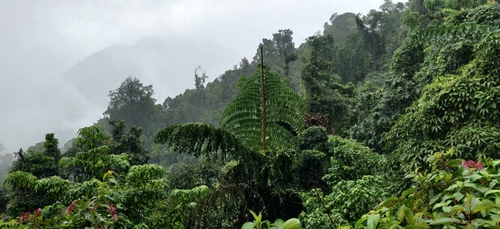
A large fishtail palm. Plants can be 25 m tall. The trunk can be 50 cm across. The trunk is grey and stout. It has distinct rings. It bulges. The fronds slightly arch over. They are 5 m long and 4 m wide. The leaflets hang down. The leaf bases usually hide the trunk. The leaflets are triangle shaped and 30 cm long. The flowering stalk can be 2.5 m long. The flowers are cream coloured. The fruit are large and black. Each fruit contains 2 seeds.
Wikipedia
Source ↗Caryota no is a species of flowering plant in the family Arecaceae. It is endemic to the Island of Borneo. Its specific epithet is from the common name in Malaysian, cajù nó. It is called baroch by the Dayak people of Singhi. The fibers, which are used for fishing lines or woven into baskets, are called talì onus. The extremely hard wood is also used like similar species.
Notes
There are 12 Caryota species. They are tropical.
Names & Synonyms
Entibap mudol
References (11)
- Cundall, P., (ed.), 2004, Gardening Australia: flora: the gardener's bible. ABC Books. p 336
- Blomberry, A. & Rodd, T., 1982, Palms. An informative practical guide. Angus & Robertson. p 73
- Etherington, K., & Imwold, D., (Eds), 2001, Botanica's Trees & Shrubs. The illustrated A-Z of over 8500 trees and shrubs. Random House, Australia. p 186
- Haynes, J., & McLaughlin, J., 2000, Edible palms and Their Uses. University of Florida Fact sheet MCDE-00-50-1 p 4
- Hibbert, M., 2002, The Aussie Plant Finder 2002, Florilegium. p 61
- Johnson, D.V., 1998, Tropical palms. Non-wood Forest products 10. FAO Rome. p 44
- Jones, D.L., 1994, Palms throughout the World. Smithtonian Institution, Washington. p 164
- Riffle, R.L. & Craft, P., 2003, An Encyclopedia of Cultivated Palms. Timber Press. p 291
- Soepadmo, E., 1998, Plants. The Encyclopedia of Malaysia. Archipelago press. p 54
- Sosef, M. S. M., Hong, L. T., & Prawirohatmodjo, S., (Eds.), 1998, Timber tree: Lesser-known timbers. Plant Resources of South-East Asia, 5(3), p 140
- World Checklist of Useful Plant Species 2020. Royal Botanic Gardens, Kew