Salacca glabrescens
Griffith
Salak, Salak hutan, Pokok rengam
ArecaceaeFruit

iNaturalist · cc-by-nc
(c) Joshua Hall, some rights reserved (CC BY-NC), uploaded by Joshua Hall
(c) Joshua Hall, some rights reserved (CC BY-NC), uploaded by Joshua Hall

iNaturalist · cc-by-nc
(c) David Horcajada Tejero, some rights reserved (CC BY-NC), uploaded by David Horcajada Tejero
(c) David Horcajada Tejero, some rights reserved (CC BY-NC), uploaded by David Horcajada Tejero

iNaturalist · cc-by-nc-sa
(c) Nick Lambert, some rights reserved (CC BY-NC-SA), uploaded by Nick Lambert
(c) Nick Lambert, some rights reserved (CC BY-NC-SA), uploaded by Nick Lambert

gbif · cc-by
Royal Botanic Gardens, Kew
Royal Botanic Gardens, Kew

gbif · cc-by
Royal Botanic Gardens, Kew
Royal Botanic Gardens, Kew

gbif · cc-by
Royal Botanic Gardens, Kew
Royal Botanic Gardens, Kew
What to Eat
Edible parts: Fruit
The ripe fruit are eaten fresh.
Where to Find It
It is tropical. It grows on forested slopes. It grows between 320 and 850 m altitude.
Asia, Indochina, Malaysia, SE Asia, Thailand,
Countries: United Arab Emirates, Afghanistan, Armenia, Azerbaijan, Bangladesh, Bahrain, Brunei, Bhutan, China, Georgia, Indonesia, Israel, India, Iraq, Iran, Jordan, Japan, Kyrgyzstan, Cambodia, North Korea, South Korea, Kuwait, Kazakhstan, Laos, Lebanon, Sri Lanka, Myanmar, Mongolia, Maldives, Malaysia, Nepal, Oman, Philippines, Pakistan, Qatar, Saudi Arabia, Singapore, Syria, Thailand, Tajikistan, Timor-Leste, Turkmenistan, Turkey, Taiwan, Uzbekistan, Vietnam, Yemen
How to Identify
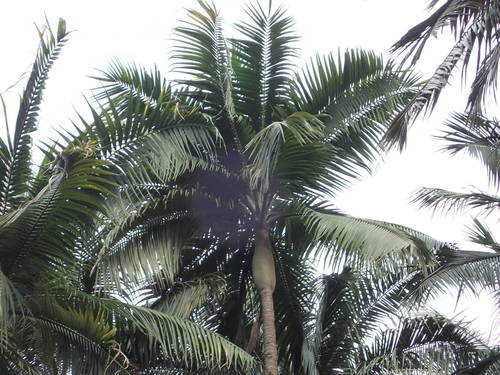
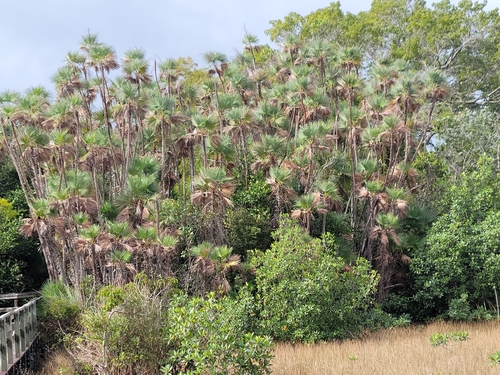
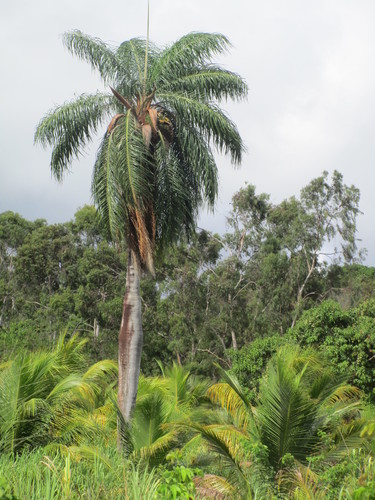
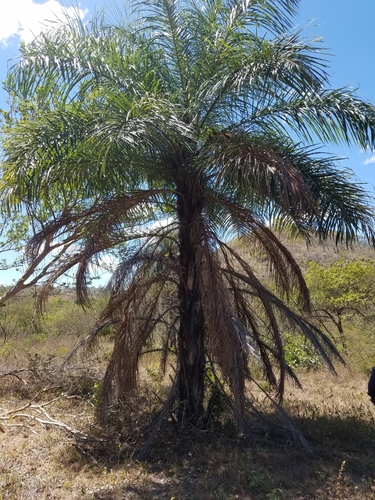
A palm that grows in clumps. Plants have an underground trunk. The stems can be creeping and above ground. They are 1 m long. The leaves are large and spiny. They are 5 m long. The leaflets are shallowly curved. They are arranged in groups of 2 or 3 along the stalk. There are small spines along the edges. The flowering stalk has a few hairs. The fruit are pear shaped. They are 5 cm long by 4 cm wide. They narrow in a beak. The fruit are edible.
Other Information
It is cultivated for its fruit.
References (8)
- Burkill, I.H., 1966, A Dictionary of the Economic Products of the Malay Peninsula. Ministry of Agriculture and Cooperatives, Kuala Lumpur, Malaysia. Vol 2 (I-Z) p 2325 (As Zalacca glabrescens)
- Haynes, J., & McLaughlin, J., 2000, Edible palms and Their Uses. University of Florida Fact sheet MCDE-00-50-1 p 13
- Johnson, D.V., 1998, Tropical palms. Non-wood Forest products 10. FAO Rome. p 48
- Jones, D.L., 1994, Palms throughout the World. Smithtonian Institution, Washington. p 54, 352
- Milow, P., et al, 2013, Malaysian species of plants with edible fruits or seeds and their evaluation. International Journal of Fruit Science. 14:1, 1-27
- PROSEA No. 2
- Riffle, R.L. & Craft, P., 2003, An Encyclopedia of Cultivated Palms. Timber Press. p 450
- World Checklist of Useful Plant Species 2020. Royal Botanic Gardens, Kew