Euterpe catinga
Wallace
Catinga palm

(c) Santiago Mailhos, some rights reserved (CC BY-NC)
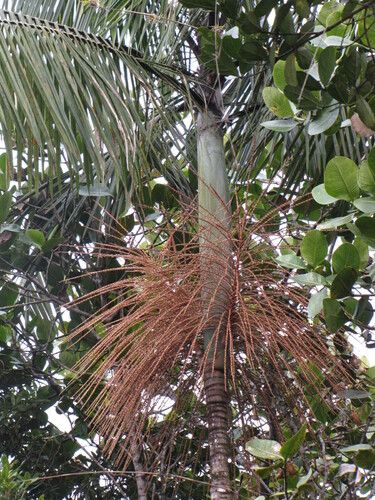
(c) nelson_miranda, some rights reserved (CC BY-NC)

(c) Santiago Mailhos, some rights reserved (CC BY-NC)
What to Eat
Edible parts: Fruit, Flower
Leaves - cooked. The apical bud, often known as a 'palm heart', is eaten as a vegetable. Eating this bud leads tot he death of the individual stem since it is unable to produce side shoots. However, in multi-stemmed species the plant is often able to replace this loss by producing more stems from below ground level. The fruits are used to make a drink.
Where to Find It
A tropical plant. It grows in open forest on poorly drained acidic soils. It grows between 1,100-1,800 m altitude. In the Cairns Botanical Gardens.
Amazon, Andes, Australia, Bolivia, Brazil, Colombia, Ecuador, Guyana, Peru, South America, Venezuela,
How to Identify
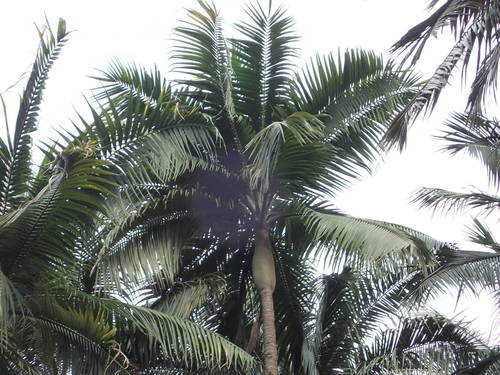
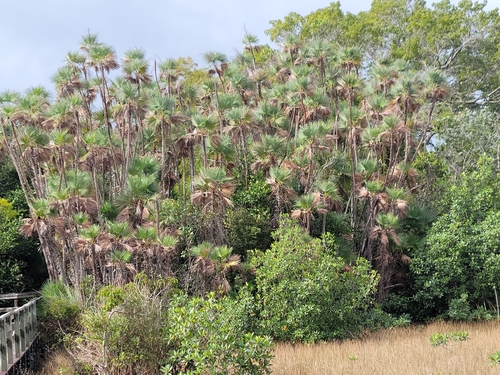
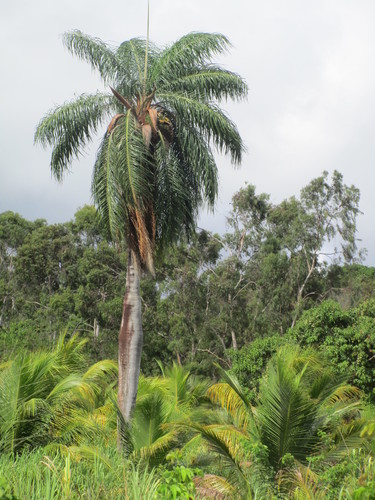
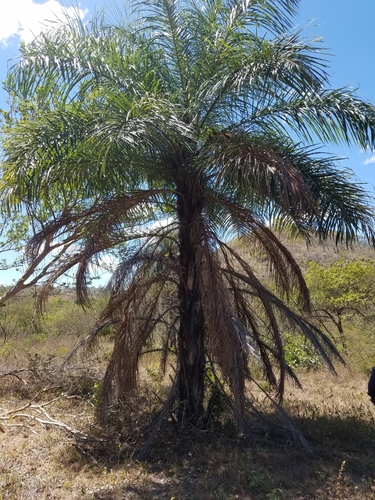
A palm. It can be in clusters or be solitary. It grows 4-16 m tall. The trunks are 3.5-15 cm across. They are grey and have a cone of roots at the base. There are 6-11 leaves. The crown-shaft is usually orange. It often has black fibres at the top. The leaf stalk has black scales. The leaflets spread horizontally. The flowering branches are 2.5-4 mm across. They are covered with light brown hairs. The fruit are round and purple-black. They are 0.8-1.3 cm across.
Other Uses
The leaves are used for thatching. The stems are used in construction.
Wikipedia
Source ↗Euterpe catinga is a palm species in the genus Euterpe. It is found in forests of a dry, sandy soil and very peculiar vegetation, known as catinga forests or Campinarana in northern South America (Guyana, Venezuela, Colombia, Ecuador, Peru, Brazil). Two varieties are recognized: Euterpe catinga var. catinga - Venezuela, Colombia, Peru, northern Brazil Euterpe catinga var. roraimae (Dammer) A.J.Hend. & Galeano - Guyana, Venezuela, Ecuador, Peru, Brazil
Notes
There are between 7 and 18 Euterpe species.
Names & Synonyms
Acaf de Catinga, Acaizinho, Asai de sabana, Asai paso, Guasi pequeno, Huasai de varillal, Manaca, Manaca banera
References (9)
- Grandtner, M. M. & Chevrette, J., 2013, Dictionary of Trees, Volume 2: South America: Nomenclature, Taxonomy and Ecology. Academic Press p 246
- Haynes, J., & McLaughlin, J., 2000, Edible palms and Their Uses. University of Florida Fact sheet MCDE-00-50-1 p 6
- Henderson, A., Galeano, G and Bernal, R., 1995, Field Guide to the Palms of the Americas. Princeton. p 122
- Johnson, D.V., 1998, Tropical palms. Non-wood Forest products 10. FAO Rome. p 86
- Kermath, B. M., et al, 2014, Food Plants in the Americas: A survey of the domesticated, cultivated and wild plants used for Human food in North, Central and South America and the Caribbean. On line draft. p 361
- Lopez-Diago, D. & Garcia, N., 2021, Wild edible fruits of Colombia. Biota ColomBiana 22 (2) p 31
- Marcia, M. J., et al, 2011, Palm Uses in Northwestern South America: A Quantitative Review. Bot. Rev. (2011) 77:462-570
- Roa, J. A. G. & Boada, D. S. G., 2018, Fundación para el Fortalecimiento de la Fruticultura y Plantas Alimenticias no Convencionales en Colombia.
- World Checklist of Useful Plant Species 2020. Royal Botanic Gardens, Kew