Allagoptera campestris
(Mart.) Kuntze
Buri palm, Imburi

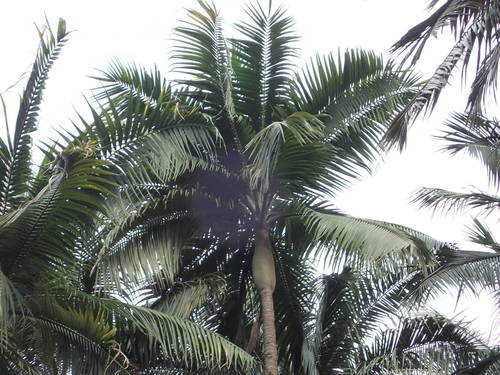
(c) Rich Hoyer, some rights reserved (CC BY-NC-SA), uploaded by Rich Hoyer

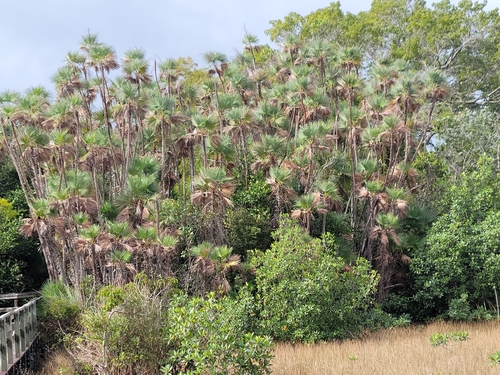
(c) Guillermo Menéndez, some rights reserved (CC BY-NC)
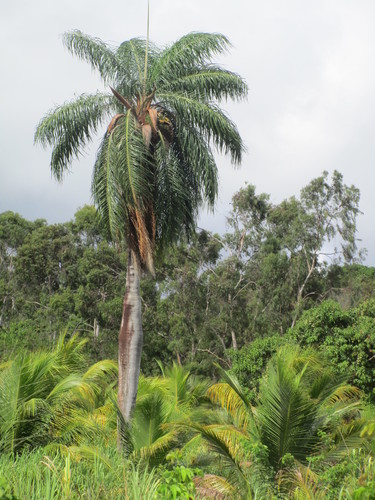
(c) Laurent Quéno, some rights reserved (CC BY-NC), uploaded by Laurent Quéno
What to Eat
Edible parts: Fruit, Seed
The immature fruit and seeds are edible.
Where to Find It
It grows at higher altitudes. In Brazil they grow from the coast to 1500 m altitude. In Argentina it grows up to 200m above sealevel. It needs good drainage and a sunny location.
Argentina, Brazil, Paraguay, South America,
How to Identify
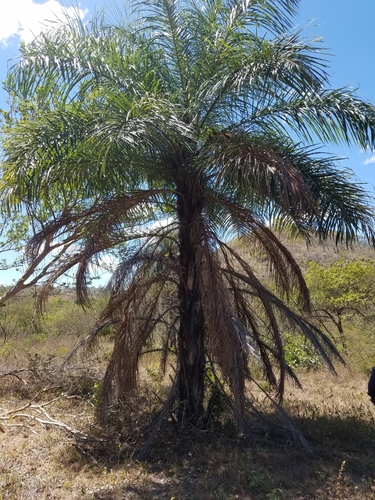
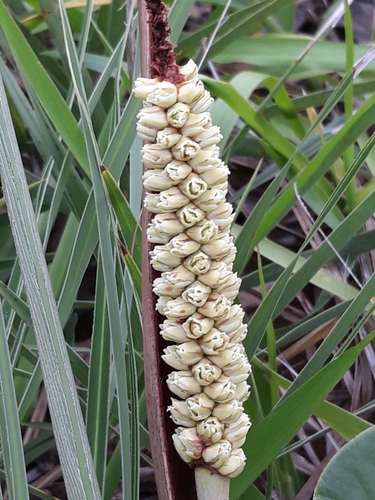
A small clumping palm. It is like Allagoptera arenaria but smaller. The trunks are short and may be underground. The leaves are leathery. The leaflets are curly and like feathers. They usually split at the tip. The leaflets are usually arranged in groups of 2-4. The fruit are greenish yellow and held upright. They look like corn cobs. They are oval and individual fruit are 1 cm long.
How to Grow
The seeds germinate irregularly over some months.
Propagation: Seed - germinates easily when fresh.
Medicinal Uses
The juice of the unripe nuts is used to treat infections. The flesh of the fruit is antipyretic, bitter.
Production
The seedlings are slow to establish.
Notes
There are 4 Allagoptera species.
Names & Synonyms
Coco licuri, Licuri rasteiro da mata
References (11)
- Balick, M.J. and Beck, H.T., (Ed.), 1990, Useful palms of the World. A Synoptic Bibliography. Colombia p 434 (As Diplothemium campestre),
- Bortolotto, I. M., et al, 2018, Lista preliminar das plantas alimenticias nativas de Mato Grosso do Sul, Brasil. Iheringia, Serie Botanica, Porto Alegre, 73 (supl.):101-116
- Gibbons, M., 2003, A pocket guide to Palms. Chartwell Books. p 34
- Haynes, J., & McLaughlin, J., 2000, Edible palms and Their Uses. University of Florida Fact sheet MCDE-00-50-1 p 2
- Henderson, A., Galeano, G and Bernal, R., 1995, Field Guide to the Palms of the Americas. Princeton. p 152
- Johnson, D.V., 1998, Tropical palms. Non-wood Forest products 10. FAO Rome. p 90
- Jones, D.L., 1994, Palms throughout the World. Smithtonian Institution, Washington. p 125
- Martins, R. C., et al, 2014, Use and Diversity of Palm (Arecaceae) Resources in Central Western Brazil. The Scientific World Journal.. Volume 2014, Article ID 942043
- Monica Moraes, R., 1996, Allagoptera (Palmae). Flora Neotropica Vol. 73 pp 1-34.
- Revis. gen. pl. 2:726. 1891
- www.colecionandofrutas.org