Allagoptera leucocalyx
(Drude) & Kunze
Buri
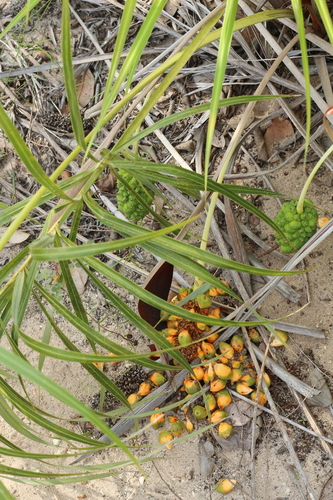
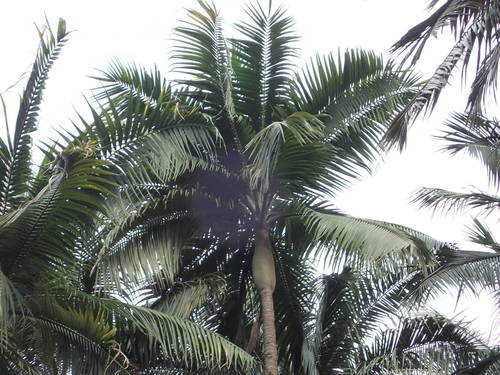
(c) Germaine Alexander Parada, some rights reserved (CC BY-NC), uploaded by Germaine Alexander Parada
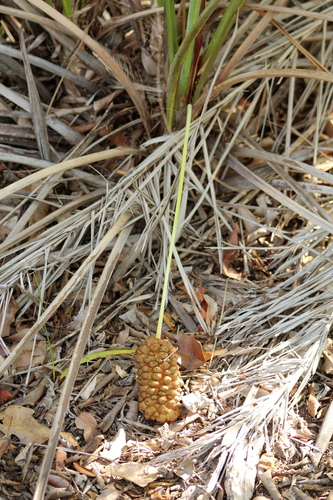
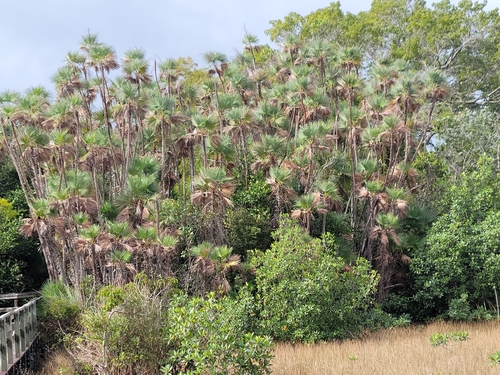
(c) Germaine Alexander Parada, some rights reserved (CC BY-NC), uploaded by Germaine Alexander Parada
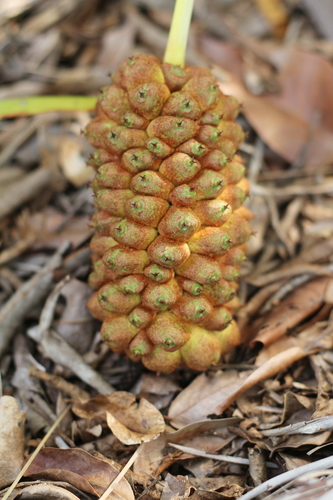
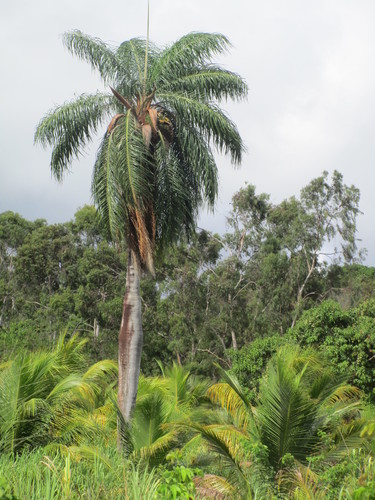
(c) Germaine Alexander Parada, some rights reserved (CC BY-NC), uploaded by Germaine Alexander Parada
What to Eat
Edible parts: Fruit, Seeds, Palm heart
The flesh of the fruit is eaten fresh. Fat is extracted from the seeds by repeated boiling and skimming.
Where to Find It
It is a tropical plant. It survives in places that are often burnt. In Bolivia it grows up to 500 m altitude. In Argentina it grows between 100-1,100 m above sea level.
Amazon, Argentina, Bolivia, Brazil, Paraguay, South America,
How to Identify
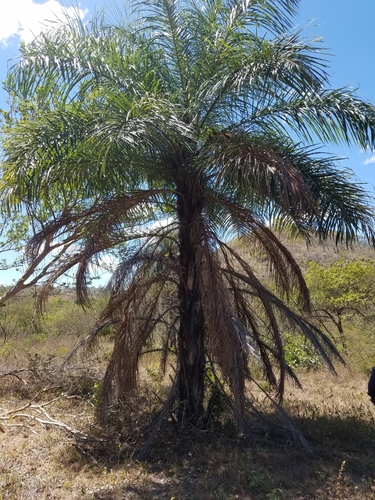
A small clumping palm. The trunk is underground. The leaves are in a small crown. They are greyish-green. The fronds are 1.5 m long. They have leaflets along the stalk. The leaflets are pointed and leathery. They are in groups of 2 or 3 along the stalk. The flowers are in a spiral. The fruit are oval and hairy.
How to Grow
A plant of the subtropics to the tropics, it is probably capable of withstanding at least some frost. Succeeds in full sun to light shade.
Production
There are between 40-100 seeds in each fruit.
Notes
There are 4 Allagoptera species.
Names & Synonyms
Buri, Coco da chapada, Masuncotos, Motacuchi, Yatay pony
References (12)
- Bircher, A. G. & Bircher, W. H., 2000, Encyclopedia of Fruit Trees and Edible Flowering Plants in Egypt and the Subtropics. AUC Press. p 18
- Bortolotto, I. M., et al, 2015, Knowledge and use of wild edible plants in rural communities along Paraguay River, Pantanal, Brazil. Journal or Ethnobiology and Ethnomedicine. 11:46
- Bortolotto, I. M., et al, 2018, Lista preliminar das plantas alimenticias nativas de Mato Grosso do Sul, Brasil. Iheringia, Serie Botanica, Porto Alegre, 73 (supl.):101-116
- Haynes, J., & McLaughlin, J., 2000, Edible palms and Their Uses. University of Florida Fact sheet MCDE-00-50-1 p 2
- Henderson, A., Galeano, G and Bernal, R., 1995, Field Guide to the Palms of the Americas. Princeton. p 152
- Johnson, D.V., 1998, Tropical palms. Non-wood Forest products 10. FAO Rome. p 90
- Jones, D.L., 1994, Palms throughout the World. Smithtonian Institution, Washington. p 125
- Marcia, M. J., et al, 2011, Palm Uses in Northwestern South America: A Quantitative Review. Bot. Rev. (2011) 77:462-570
- Martins, R. C., et al, 2014, Use and Diversity of Palm (Arecaceae) Resources in Central Western Brazil. The Scientific World Journal.. Volume 2014, Article ID 942043
- Monica Moraes, R., 1996, Allagoptera (Palmae). Flora Neotropica Vol. 73 pp 1-34.
- Vasquez, Roberto Ch. & Coimbra, German S., 1996, Frutas Silvestres Comestibles de Santa Cruz. p 154
- World Checklist of Useful Plant Species 2020. Royal Botanic Gardens, Kew