Syagrus comosa
(Mart.) Mart.
Babo

(c) Donald Davesne, some rights reserved (CC BY)
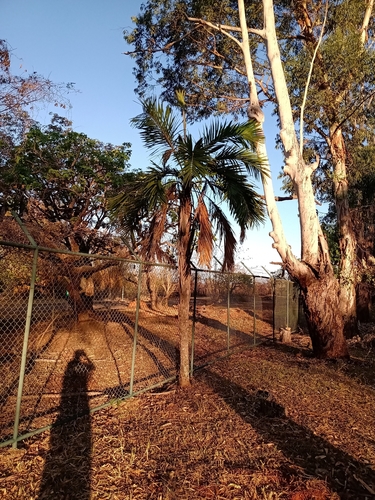
(c) Eric Fischer Rempe, some rights reserved (CC BY-NC)
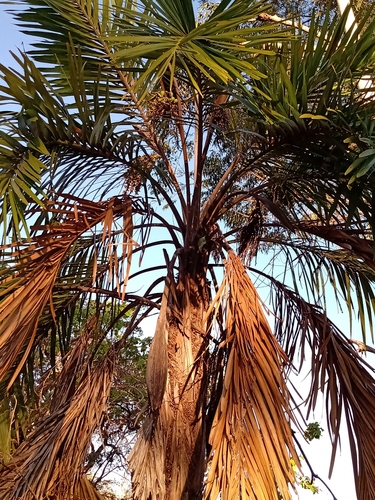
(c) Eric Fischer Rempe, some rights reserved (CC BY-NC)
What to Eat
Edible parts: Fruit, Palm heart, Cabbage, Seed
The fruit, palm heart, cabbage (terminal bud), and seed are all edible. The mature fruit are oval or round, 3 cm across, and deep yellow-green in color.
Where to Find It
It is a tropical plant. It grows in woodland. It occurs in dry monsoonal climate. It is fairly cold hardy. It needs to be in the sun. It grows below 1,200 m altitude.
Bolivia, Brazil, South America,
How to Identify
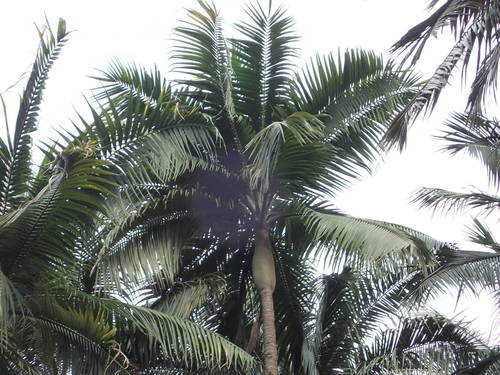
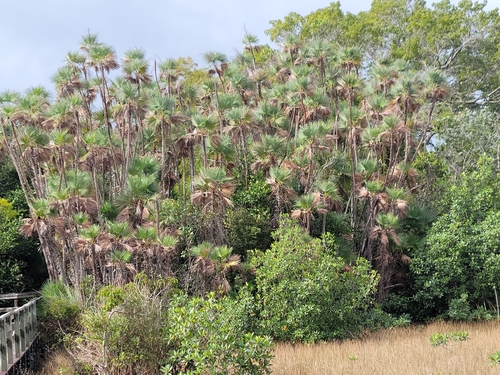
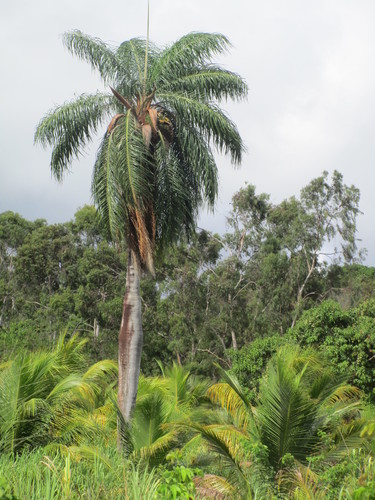
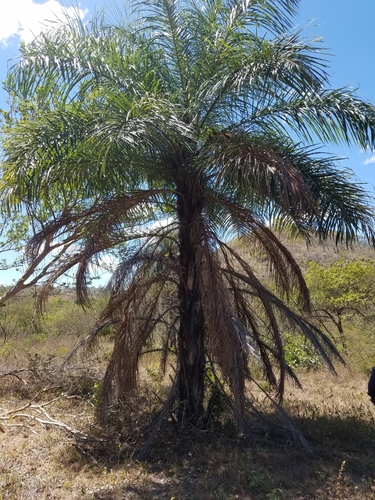
A slender palm. The trunk is 10-15 cm across. It can grow 5-10 m tall. The trunk has triangle shaped leaf scars. The leaves are 1.3-1.6 m long. The fronds arch over. They are green to grey. The leaflets are clustered along the stalk. They are wide and closely set together. The fruit are oval or round. They are 3 cm across. They are deep yellow-green when mature.
How to Grow
Plants are likely to be able to tolerate at least light frosts. Grows best in a sunny position. Prefers a moist, well drained soil. Established plants are drought tolerant. A slow growing plant.
Medicinal Uses
The apical bud is bitter and stomachic. It is used as an aid to digestion. The fruit pulp is diuretic and mucilaginous. The roasted seeds are used as a treatment for diarrhoea.
Other Information
It is a cultivated plant.
Notes
There are about 30 Syagrus species. Chemical composition: Moisture = 3.50%. Ether extract = 67.30%. Protein = 8.77%. Minerals = 1.64%. Fibre (crude etc.) [sic] = 18.79% Ash: Si02 = trace. Ca0 = 9.5%. Fe203 = negative. Saponification index: 263.3. Acid index: Oleic = 1%. Iodine index = 5.9%. Melting point = 200 210 C.
Names & Synonyms
Babao, Catole, Coco catolé, Garioba, Palmito amargo, Woti
References (12)
- Bortolotto, I. M., et al, 2018, Lista preliminar das plantas alimenticias nativas de Mato Grosso do Sul, Brasil. Iheringia, Serie Botanica, Porto Alegre, 73 (supl.):101-116
- DE CASTRO, (As Cocos comosa)
- A. D. d'Orbigny, Voy. Amerique mer. 7(3). Palmiers 134. 1847
- Haynes, J., & McLaughlin, J., 2000, Edible palms and Their Uses. University of Florida Fact sheet MCDE-00-50-1 p 13
- Henderson, A., Galeano, G and Bernal, R., 1995, Field Guide to the Palms of the Americas. Princeton. p 144
- Janick, J. & Paul, R. E. (Eds.), 2008, The Encyclopedia of Fruit & Nuts. CABI p 159
- Johnson, D.V., 1998, Tropical palms. Non-wood Forest products 10. FAO Rome. p 95
- Jones, D.L., 1994, Palms throughout the World. Smithtonian Institution, Washington. p 359
- Kermath, B. M., et al, 2014, Food Plants in the Americas: A survey of the domesticated, cultivated and wild plants used for Human food in North, Central and South America and the Caribbean. On line draft. p 842
- Martins, R. C., et al, 2014, Use and Diversity of Palm (Arecaceae) Resources in Central Western Brazil. The Scientific World Journal.. Volume 2014, Article ID 942043
- Poset, D. A., 2002, Kayapo Ethnoecology and Culture. Routledge
- Riffle, R.L. & Craft, P., 2003, An Encyclopedia of Cultivated Palms. Timber Press. p 456