Dypsis decaryi
(Jum.) Beentje & J. Dransf.
Triangle palm, Three-cornered palm
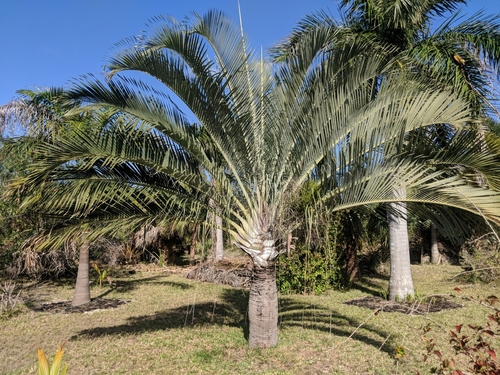
no rights reserved, uploaded by Steve Plumb
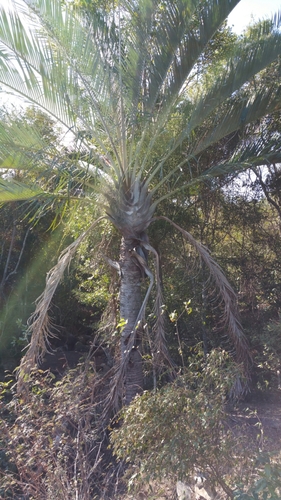
(c) mamy_andriamahay, some rights reserved (CC BY-NC)
What to Eat
Edible parts: Fruit
The palm is a fine ornamental plant and is most valuable as a specimen tree or accent plant when grown out in the open to display show its remarkable shape to best advantage. In suitable climates it blooms all year. What with its colourful flowers and fruit and shapely habit, it is unusually showy for a palm. It prefers full sun and regular watering, although it is not vulnerable to occasional dryness and partial shade. Over-watering and poor drainage are far greater hazards than drought. For example, the palm is best suited to well drained sandy soil. Dypsis decaryi does not transplant well, so it is a bad choice for commercial field growing. However, it is a fast grower once established, and its seed normally germinates within a month of being planted, so propagation by seed is a good option.
Where to Find It
It is a tropical plant. It grows naturally in S Madagascar. It prefers full sun and is somewhat drought tolerant. It grows in dry forest on poor soil. It needs well drained soil. It grows between 80-600 m above sea level. It suits hardiness zones 10-12. Coffs Harbour Botanical Gardens. Brisbane Botanical Gardens.
Africa, Asia, Australia, East Africa, Hawaii, Indonesia, Madagascar*, Pacific, SE Asia, USA,
How to Identify
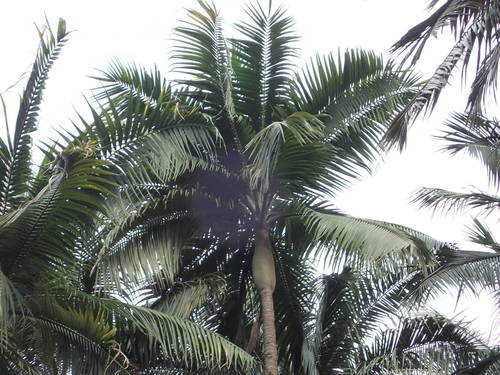
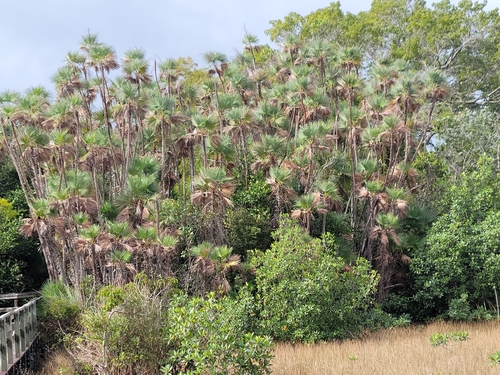
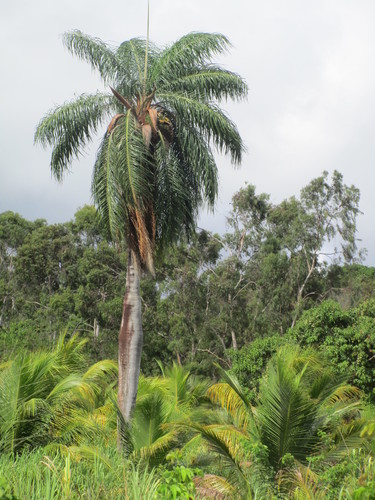
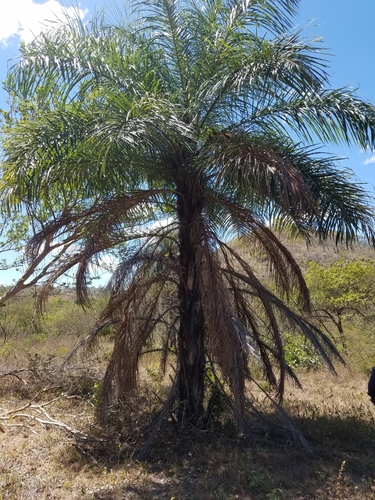
A solitary palm. It grows 3-12 m high. The trunk is 30-40 cm across. There is often a reddish brown velvety covering over the plant near the top. The trunk is free of leaves below the crown-shaft. There are close, dark grey leaf scars. The leaf crown is 5 m wide. The leaves radiate out in 3 ranks. The bases of the living leaves form a triangle at the top of the trunk. The leaves are 3.1 m long and stiffly erect with just the tips bending over. The leaflets are 50 cm long and grow at a stiff angle forming a V shape. The tips of the leaflets form long thin threadlike filaments. The flowering stalk has many branches and appears from among the leaves. It is 1.3-1.6 m long. The flowers are separately male and female with both on the one stalk. The fruit are oval and 1-2 cm long. They are light brown when ripe.
How to Grow
Plants can be grown from seeds. The seeds germinate readily.
Wikipedia
Source ↗Dypsis decaryi, commonly known as the triangle palm, is a species of flowering plant in the Arecaceae family.
Production
Seedling growth is rapid.
Notes
There are 140 Dypsis species.
Names & Synonyms
Laafa, Menavozona, Palem segitiga
References (15)
- Cundall, P., (ed.), 2004, Gardening Australia: flora: the gardener's bible. ABC Books. p 519
- Dransfield, J. & Beentje, H., 1995, The Palms of Madagascar. Royal Botanical Gardens, Kew and The International Palm Society. p 187
- Etherington, K., & Imwold, D., (Eds), 2001, Botanica's Trees & Shrubs. The illustrated A-Z of over 8500 trees and shrubs. Random House, Australia. p 271
- Gibbons, M., 2003, A pocket guide to Palms. Chartwell Books. p 100
- Hibbert, M., 2002, The Aussie Plant Finder 2002, Florilegium. p 90
- http://www.ntbg.org/plants/plant details.php
- Johnson, D.V., 1998, Tropical palms. Non-wood Forest products 10. FAO Rome. p 113
- Kew Plants of the World Online
- Llamas, K.A., 2003, Tropical Flowering Plants. Timber Press. p 104
- Marinelli, J. (Ed), 2004, Plant. DK. p 368
- Palms of Madagascar 187. 1995
- Riffle, R.L. & Craft, P., 2003, An Encyclopedia of Cultivated Palms. Timber Press. p 327
- Staples, G.W. and Herbst, D.R., 2005, A tropical Garden Flora. Bishop Museum Press, Honolulu, Hawaii. p 622
- Sukarya, D. G., (Ed.) 2013, 3,500 Plant Species of the Botanic Gardens of Indonesia. LIPI p 776
- World Checklist of Useful Plant Species 2020. Royal Botanic Gardens, Kew