Dypsis ligulata
(Jum.) Beentje & J Dransf.
ArecaceaeShoots

wikimedia · pd
Franz Eugen Köhler, Köhler's Medizinal-Pflanzen (via Wikimedia Commons)
Franz Eugen Köhler, Köhler's Medizinal-Pflanzen (via Wikimedia Commons)

gbif · cc-by
Royal Botanic Gardens, Kew
Royal Botanic Gardens, Kew
What to Eat
Edible parts: Palm heart, Cabbage
Leaves - cooked. The apical bud, known as a 'palm heart', is eaten as a vegetable. Eating this bud leads to the death of the plant because it is unable to make side-shoots.
Where to Find It
A tropical plant.
Africa, East Africa, Madagascar,
Countries: Angola, Burkina Faso, Burundi, Benin, Botswana, Congo (DRC), Central African Republic, Congo (Republic), Cote d'Ivoire, Cameroon, Cape Verde, Djibouti, Algeria, Egypt, Eritrea, Ethiopia, Gabon, Ghana, Gambia, Guinea, Equatorial Guinea, Guinea-Bissau, Kenya, Comoros, Liberia, Lesotho, Libya, Morocco, Madagascar, Mali, Mauritania, Mauritius, Malawi, Mozambique, Namibia, Niger, Nigeria, Rwanda, Seychelles, Sudan, Sierra Leone, Senegal, Somalia, South Sudan, Sao Tome & Principe, Eswatini, Chad, Togo, Tunisia, Tanzania, Uganda, South Africa, Zambia, Zimbabwe
How to Identify
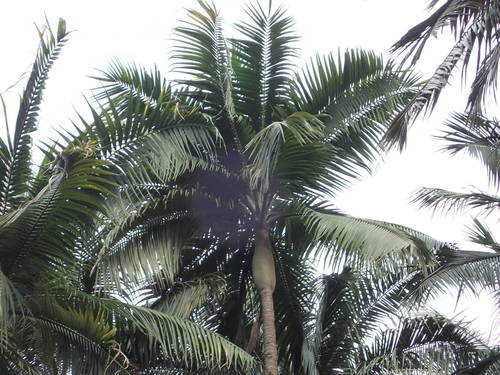
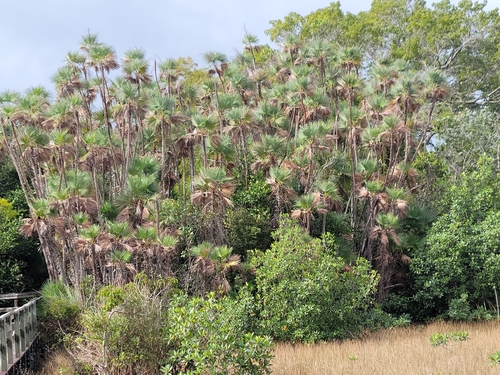
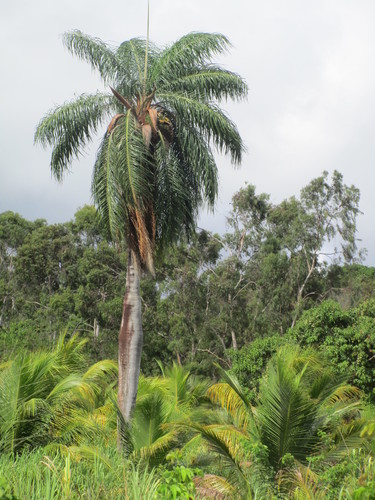
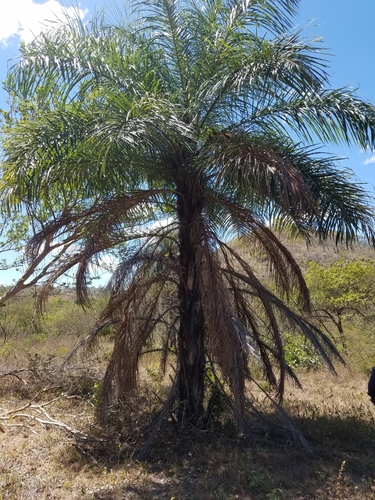
A solitary palm native to tropical regions, growing 4-6 m tall with a trunk approximately 20 cm across.
Medicinal Uses
The plant (parts not specified but probably the bark and/or the fruits) is used in the treatment of headaches, jaundice and hepatitis; and also as an aid to lactation.
Wikipedia
Source ↗Dypsis ligulata is a species of flowering plant in the family Arecaceae. It is found only in Madagascar. It is threatened by habitat loss.
Notes
There are 140 Dypsis species.
Names & Synonyms
Neodypsis ligulatus Jum.
References (3)
- Dransfield, J. & Beentje, H., 1995, The Palms of Madagascar. Royal Botanical Gardens, Kew and The International Palm Society. p 177
- Haynes, J., & McLaughlin, J., 2000, Edible palms and Their Uses. University of Florida Fact sheet MCDE-00-50-1 p 6
- Johnson, D.V., 1998, Tropical palms. Non-wood Forest products 10. FAO Rome. p 113