Dypsis malcomberi
Beentje

Franz Eugen Köhler, Köhler's Medizinal-Pflanzen (via Wikimedia Commons)
What to Eat
Edible parts: Palm heart
The palm heart is edible.
Known Hazards
Where to Find It
A tropical plant. It grows between 400-800 m altitude in Madagascar. It needs a tropical climate. It needs humus rich soils with adequate moisture and good drainage.
Africa, East Africa, Madagascar,
How to Identify
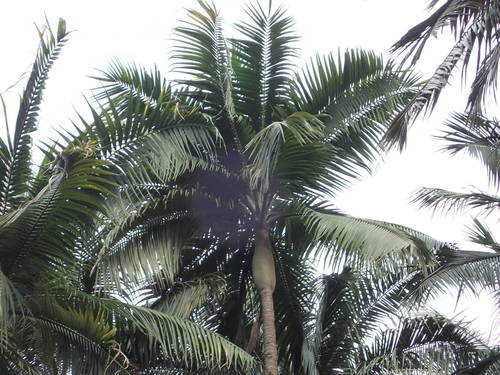
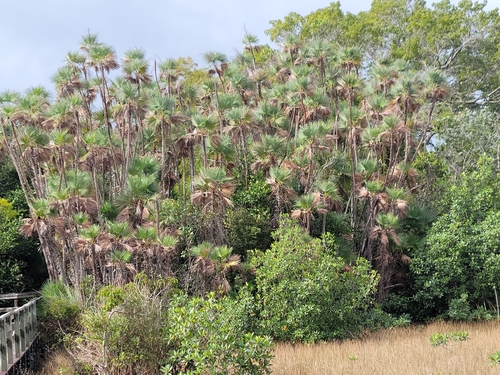
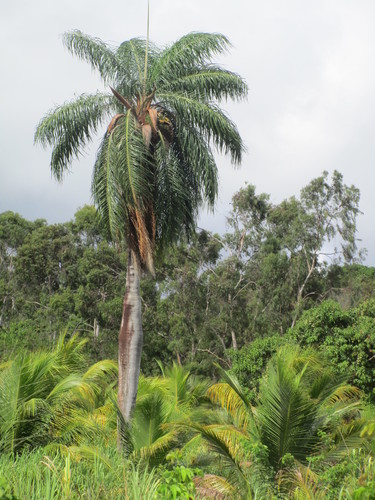
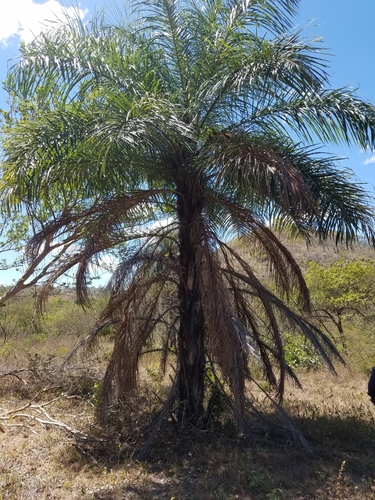
A solitary palm. It grows 15-25 m tall. The trunk is 25-35 cm across. The trunk has distinct rings. The crown-shaft is green and wax covered. It is 2 m high. It bulges slightly at the base. There are few leaves and they form a half circle. The leaves are 3.1-4 m long and arch over slightly. The leaflets are deep green.
Wikipedia
Source ↗Dypsis malcomberi is a species of flowering plant in the family Arecaceae. It is found only in Madagascar. It is threatened by habitat loss.
Production
It grows quickly.
Notes
There are 140 Dypsis species. It is a vulnerable plant.
Names & Synonyms
Rahosy, Vakaka
References (3)
- Dransfield, J. & Beentje, H., 1995, The Palms of Madagascar. Royal Botanical Gardens, Kew and The International Palm Society. p 165
- Johnson, D.V., 1998, Tropical palms. Non-wood Forest products 10. FAO Rome. p 114
- Riffle, R.L. & Craft, P., 2003, An Encyclopedia of Cultivated Palms. Timber Press. p 330