Ravenea albicans
(Jum.) Beentje
Hozatsiketra
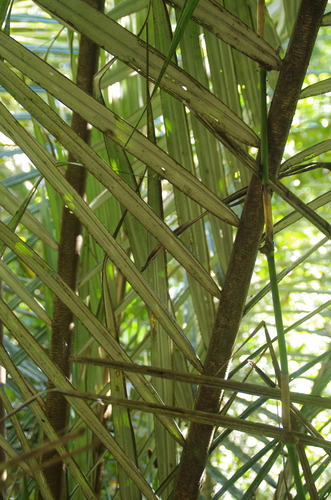
(c) Vincent Porcher, some rights reserved (CC BY-NC), uploaded by Vincent Porcher

Wikimedia Commons - Glpinagelpinagel
What to Eat
Edible parts: Palm heart, Vegetable
The palm heart is eaten. The apical bud, often known as a 'palm heart', is eaten as a vegetable. Eating this bud leads to the death of the tree because it is unable to make side shoots.
Known Hazards
Where to Find It
A tropical plant. The grow in rainforests. It suits humid locations.
Africa, Australia, East Africa, Madagascar,
How to Identify
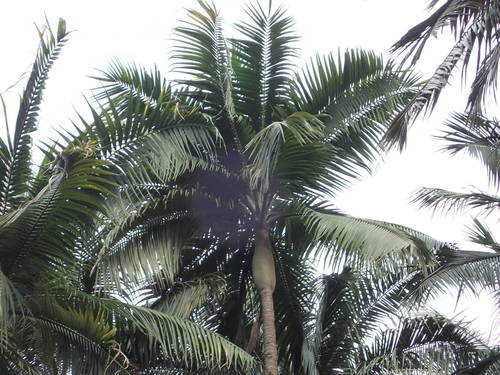
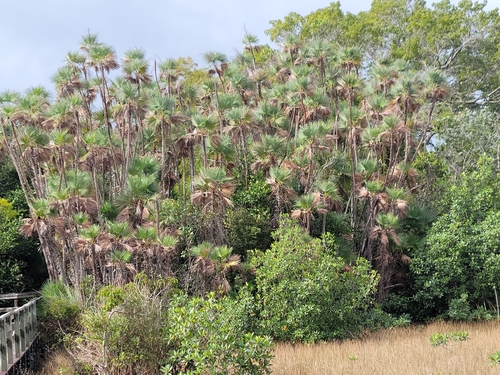
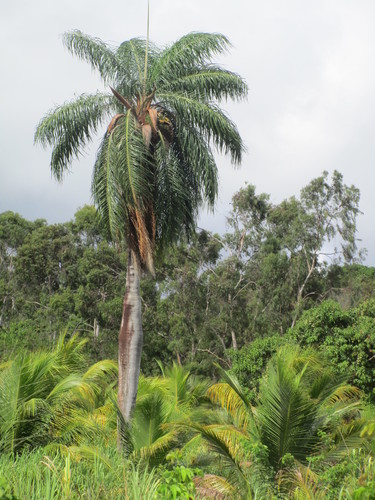
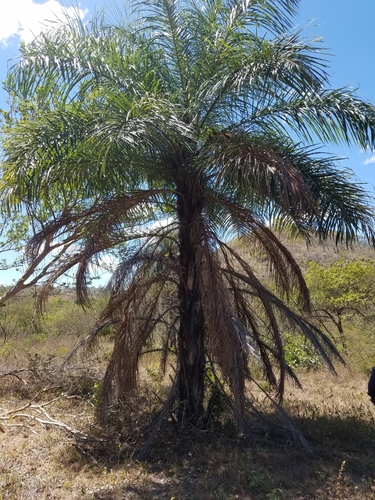
A solitary palm. A moderate sized undergrowth palm. It grows 3-9 m high. The leaves are feather like. There is no crown-shaft. The flowering stalk comes from amongst the leaves. The flowers are of opposite sexes on separate trees. Male and female trees are needed for fertile seed. Each fruit contains one seed.
How to Grow
Fresh seed germinate in 2-4 months.
Wikipedia
Source ↗Ravenea albicans is a species of flowering plant in the Arecaceae family. It is a palm endemic to northeast Madagascar and found in seven fragmented locations between the towns of Ampasimanolotra and Antalaha with the exception of one location much further south near Vondrozo. It is an endangered species threatened by habitat loss. There are perhaps 200 mature individuals remaining. In its natural range it tends to grow in humid forests within northeast Madagascar's mountain valleys. It is unique among the Ravenea genus because its pinnate leaves have an exotic, colorful appearance. Its species name, albicans, is derived from the Latin word for the color white, album, as is the word for albinism. The base of each frond is green, yet they become white to dark grey near the tip at maturity. Some individuals have completely white fronds.
Notes
There are 10-17 Ravenea species. They grow in Madagascar and the Comoros. It is an endangered species.
Names & Synonyms
References (5)
- Dransfield, J. & Beentje, H., 1995, The Palms of Madagascar. Royal Botanical Gardens, Kew and The International Palm Society. p 108
- Haynes, J., & McLaughlin, J., 2000, Edible palms and Their Uses. University of Florida Fact sheet MCDE-00-50-1 p 12
- Johnson, D.V., 1998, Tropical palms. Non-wood Forest products 10. FAO Rome. p 115
- van der Burg, W.J., 2004. Ravenea robustior Jum. & H.Perrier. [Internet] Record from Protabase. Grubben, G.J.H. & Denton, O.A. (Editors). PROTA (Plant Resources of Tropical Africa), Wageningen, Netherlands. < http://database.prota.org/search.htm>. Accessed 22 October 2009
- World Checklist of Useful Plant Species 2020. Royal Botanic Gardens, Kew